
Reviewed · COMMUNIST & YUGOSLAV HISTORY TOURS
Red Belgrade Communist Tour
Belgrade’s past refuses to sit quietly. The Red Belgrade Communist Tour connects Yugoslavia’s socialist years with the streets, monuments, public squares, and political wounds that still shape Serbia today. I like the way it combines guided city walking with a trolley ride to Dedinje, and I like that the Museum of Yugoslavia and Tito’s burial place are included rather than left for you to find alone. The main caution is that the name promises a sharper focus on communism than the tour may deliver. Much of the experience covers Serbia and Yugoslavia more broadly, including World War II, the breakup of the country, and the conflicts of the 1990s.
At about four hours, this is not a quick overview. You will be on your feet for much of the morning, and one stop includes a 90-minute museum visit. The tour costs $53.10 per person, with private and shared options available. Guides such as Nebo, Radica, Dragana, Marko, Hristina, and Borjan have been praised for clear explanations, humor, and personal insight. Bring good walking shoes, water, and an open mind.
In This Review
- Key points before you book
- Republic Square: Starting where Yugoslavia took shape
- Terazije Square: Work, glamour, and public life
- Pionirski Park: Socialist childhood and Western influence
- The trolley to Dedinje: Public transport as a history lesson
- Museum of Yugoslavia: Tito, gifts, and national memory
- House of Flowers: Ending with Tito’s burial place
- What the guides add to the experience
- Walking effort, group size, and price
- The English-language point to check
- Who should book this Belgrade tour?
- Should you book the Red Belgrade Communist Tour?
- FAQ
- How long is the Red Belgrade Communist Tour?
- Where does the tour begin?
- Where does the tour end?
- Is the tour offered in English?
- Is museum admission included?
- Is the trolley ride included?
- How many people can join the shared tour?
- What should I bring?
- Can I cancel for a full refund?
Key points before you book
- Tito’s Yugoslavia in real places: The story begins at Republic Square and follows the political and social changes of the period from World War II through the 1990s.
- A useful trolley connection: The included ride takes you from central Belgrade to Dedinje, where the Museum of Yugoslavia is located.
- House of Flowers included: You visit Tito’s mausoleum at the end of the museum section.
- Strong guide-led storytelling: Guides including Nebo, Radica, Dragana, and Hristina are praised for answering questions and explaining competing viewpoints.
- A full morning on foot: The route includes walking, hills, public transport, and a long museum visit, so it suits active visitors.
- Check the language carefully: The experience is offered in English, but one booking mix-up resulted in a group expecting English and receiving Spanish.
Republic Square: Starting where Yugoslavia took shape
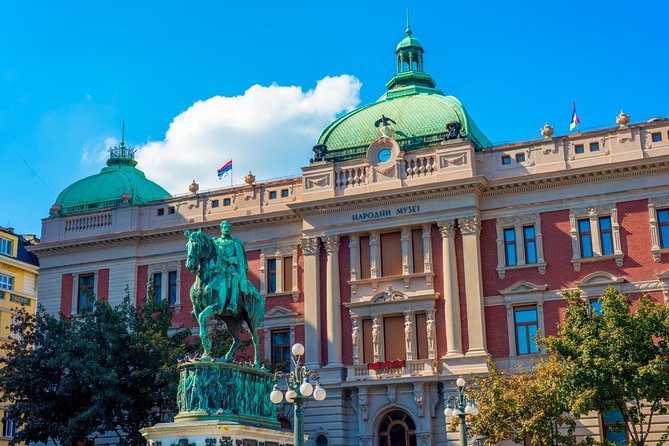
The tour begins at Trg Republike, or Republic Square, at 10:00 a.m. This is a useful starting point because the guide does not treat Yugoslav communism as an isolated chapter. Instead, the story begins with the political setting that allowed the socialist state to emerge after World War II.
The square is linked to Tito’s speech before the proclamation of the Socialist Federal Republic of Yugoslavia. From here, your guide sets up the central tension of the tour: Yugoslavia was socialist, but it did not follow the same path as the Soviet Union. It developed its own political model, its own public rituals, and its own uneasy balance between state control and personal freedom.
I appreciate this broader approach. You are not simply shown old government buildings and told when they were built. You are given a way to read Belgrade’s streets as evidence of changing power. Socialist-era gray buildings sit beside monuments from the Yugoslav Kingdom and newer construction. That mix makes the city itself part of the lesson.
The guide also brings in the stories, rumors, and urban legends that grew during the second half of the 20th century. Some are tied to Tito, some to the political system, and some to the way ordinary people remembered the period. These details help explain why nostalgia for Yugoslavia remains complicated. For some people, Tito’s era represents order, international respect, and a secure life. For others, it also carries censorship, political pressure, and painful memories.
This opening section lasts about 20 minutes. It is short, but it gives you the framework needed for the rest of the morning.
More Yugoslav history tours:
- Architecture of New Belgrade – Brutalism Decoded
★ 4.5 · 24 reviews - Communist Tour in Belgrade
★ 4.5 · 19 reviews - E-Scooter Communist Yugoslavia Tour
★ 5.0 · 15 reviews
Terazije Square: Work, glamour, and public life
The next stop is Terazije, another central square with a different mood. Here the tour moves from political beginnings to daily life, public spectacle, and the social ideals of socialist Yugoslavia.
You hear about celebrations and glamorous holidays, as well as famous visitors connected with Hotel Moskva. The hotel provides a useful contrast to the plain image many people have of a communist capital. Yugoslavia’s public life could be formal and grand, and Belgrade wanted to present itself as a modern European city.
The former Marx and Engels Square, with the Trade Union Hall, introduces the cult of work. The socialist state celebrated miners, factory workers, and other laborers as national heroes. One miner even became a superstar, showing how the regime turned productivity into both a political message and a form of popular culture.
This stop is valuable because it explains how ideology reached beyond government offices. Work was not merely a way to earn a living. It was tied to identity, public honor, and the ideal of building a better society together.
At the same time, you may notice one of the tour’s limits here. If you want a detailed architectural study of every socialist building, this is not that kind of walk. The focus is on stories and context rather than technical design. The buildings are evidence, but the guide’s interpretation is the main attraction.
Terazije takes roughly 20 minutes. It is also part of the easy-to-follow central walking route, making it a practical way to get familiar with Belgrade’s main streets.
Pionirski Park: Socialist childhood and Western influence
At Pionirski Park, the subject turns to childhood and the pioneer oath. Children in socialist Yugoslavia were introduced to state values through organized ceremonies and public rituals. The pioneer tradition helped create a shared identity across a country made up of several republics, languages, religions, and regional cultures.
This part of the tour asks how the state shaped young people’s sense of belonging. It also explains why Yugoslavia could feel more open than many other socialist countries. Western music and cultural influence were allowed to enter, helping change clothing, entertainment, and personal habits.
That openness is one of the most important parts of the story. Yugoslavia’s position between East and West affected what people listened to, watched, and wanted. The result was a society that could feel modern and outward-looking while still operating under one-party rule.
Your guide also covers the darker side of the period. The tour does not present Yugoslavia as a perfect golden age, nor does it reduce the system to a simple dictatorship. That balance matters, especially when discussing a country remembered with strong emotion by people who lived through it.
You pass the monument to Ivo Andrić, the Serbian Nobel Prize-winning writer who also served as a Serbian ambassador in Berlin at the beginning of World War II. His presence adds another layer to the route, linking literature, diplomacy, war, and national identity.
This section lasts about 40 minutes and leads to one of the tour’s most practical features: the trolley ride.
The trolley to Dedinje: Public transport as a history lesson
The included trolley ticket takes you toward Dedinje, an elite Belgrade district known for embassies, residential villas, and the Museum of Yugoslavia. The ride is more than a way to cover distance. It introduces the public transport system associated with the Yugoslav period and gives you a look at how central Belgrade connects with its more prestigious residential areas.
I like this part because getting to the museum independently can require extra planning. One person specifically found the guided ride useful because the museum sits outside the central walking area. Instead of losing time working out the route, you travel there with the guide and continue the story on the way.
The trolley also gives your feet a break after the central walking sections. Still, do not mistake the ride for a long sightseeing journey. It is a practical transfer within the four-hour program, with the guide using it as part of the historical narrative.
The move to Dedinje changes the setting. The central squares show public politics and mass life. Dedinje brings you closer to the world of state leadership, diplomatic connections, and Tito’s personal legacy.
Something different for your next free day:
- Northern Serbia: Sremski Karlovci and Novi Sad Full-Day Tour from Belgrade
★ 5.0 · 425 reviews - Day Trip from Belgrade: Gems of Eastern Serbia
★ 5.0 · 424 reviews - Belgrade Nightlife Bar Pub Club Crawl with Drinks
★ 5.0 · 277 reviews - Taxi to/from Belgrade Airport to/from Belgrade City Center
★ 5.0 · 241 reviews
Museum of Yugoslavia: Tito, gifts, and national memory
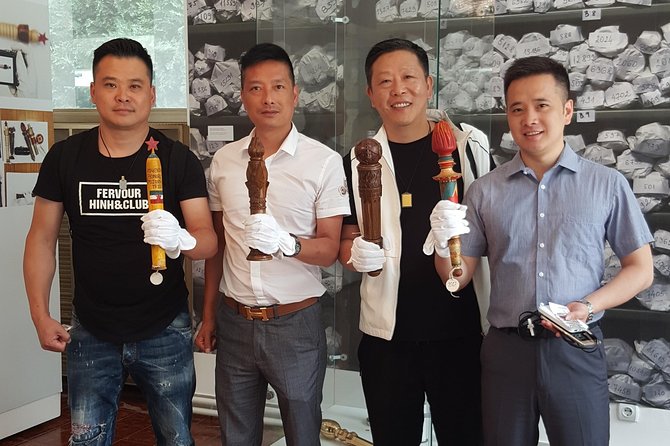
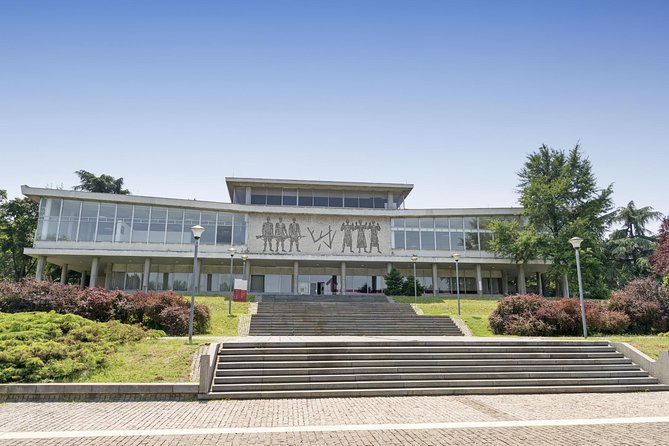
The Museum of Yugoslavia is the longest stop, lasting around 90 minutes. Admission is included, and this is where the tour’s central figure, Josip Broz Tito, receives the most attention.
The museum is devoted to Tito’s life and political work. You see ceremonial gifts presented to the Yugoslav president, including an especially notable gift from the crew of Apollo 11. Objects like these help explain Yugoslavia’s unusual international position. Tito was not simply a local communist leader. He cultivated relationships across the Cold War divide and presented Yugoslavia as an independent force.
The collection also shows how political leaders use objects and ceremony to shape public memory. A gift from astronauts, formal presents from foreign officials, and personal items connected with Tito all help create an image of national importance. Your guide’s role is to place those objects into context rather than letting the museum become a parade of impressive souvenirs.
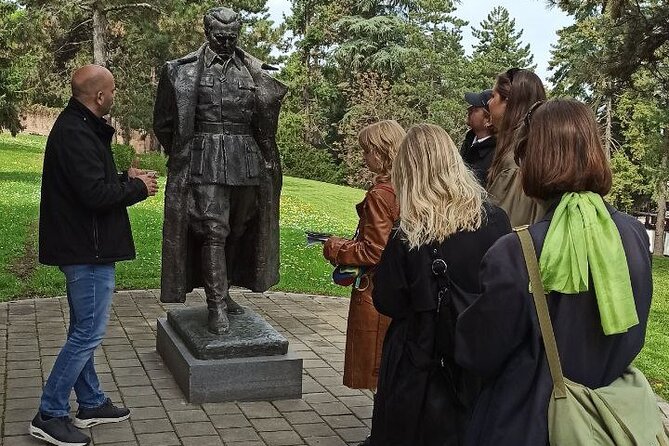
This is where the guide can make or break the experience. The strongest guiding style, reflected in the praise for Nebo, Dragana, Radica, and others, involves answering questions and allowing room for personal reactions. Several guides have been described as friendly, witty, and willing to explain the same event from more than one Serbian and Yugoslav viewpoint.
You should allow yourself to ask questions here. The museum covers a lot of ground, and a guide can help you sort out the difference between Tito’s official image, popular memory, and the political record. You may also find that the museum section feels more focused on Tito and Yugoslavia as a whole than on the mechanics of communist ideology.
House of Flowers: Ending with Tito’s burial place
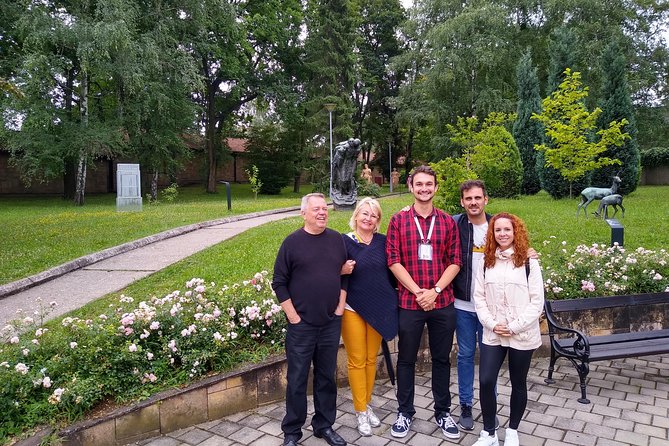
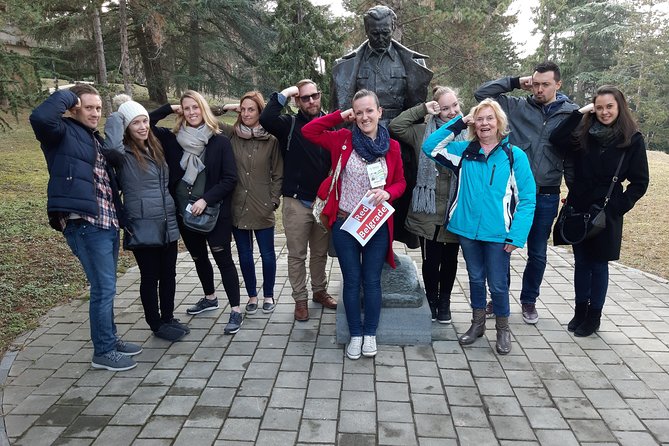
The final part of the visit is the House of Flowers, the mausoleum where Tito is buried. It gives the tour a quiet and symbolic ending.
Tito’s grave is not just another museum object. It reflects the lasting emotional power of the Yugoslav period and the way Tito was revered during his lifetime. The House of Flowers also brings the story forward to the end of the former republic, helping connect the leader’s death with the later breakup of Yugoslavia.
The tour aims to return you from the political world of Tito to present-day Belgrade. That transition is useful because the past is not sealed away here. The city still carries arguments about Yugoslavia, Serbian identity, the 1990s conflicts, and the meaning of Tito’s rule.
You finish at the Yugoslav History Museum after the visit. This is not back in Republic Square, so plan your next activity from Dedinje rather than assuming you will return to the city center with the group.
What the guides add to the experience
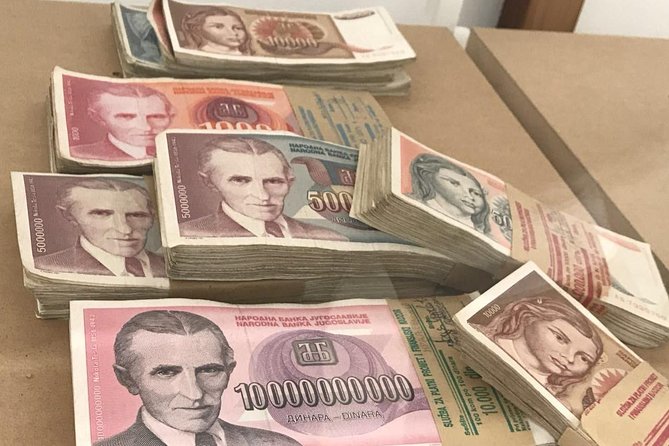
The guide is the main reason to book this tour instead of visiting the museum alone. The route covers a large amount of difficult material, including World War II, Tito’s rise, the socialist system, Yugoslavia’s breakup, and Serbia’s view of the 1990s conflicts.
Nebo is repeatedly praised for making the subject personal and for giving everyone time to ask questions. Marko handled a solo booking during city protests and still ran the tour rather than abandoning the appointment. Borjan has been praised for sharing personal experiences and checking that the group understood the events being discussed.
Radica and Dragana are also noted for their enthusiasm and clear delivery. Hristina’s style is described as sympathetic and thoughtful, with room for questions about both history and practical life in Belgrade.
Guides can differ, of course. The best approach is to listen carefully, ask direct questions, and remember that modern Serbian history includes strong political feelings. This tour is most useful when you treat it as an invitation to understand competing memories, not as a final verdict on the region.
Walking effort, group size, and price
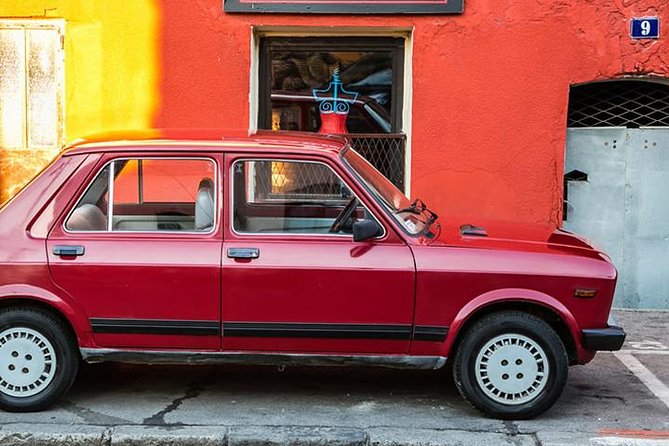
The tour lasts about four hours and has a maximum group size of 25. In practice, some departures may be much smaller. A group of six was described as personal and easy to engage with, while solo departures can involve a special arrangement.
The walking is not extreme, but it is long enough to matter. One account specifically warns that the route is hilly and recommends good shoes. Water is also recommended. There is no clearly stated dedicated refreshment stop, so you may want to carry a bottle and plan accordingly.
At $53.10 per person, the price is reasonable if you value the guide and the transport. You are paying for an English-speaking guide, trolley tickets, and museum entry, along with the work of connecting four separate locations into one story. The value is strongest for a first visit to Belgrade, when finding Dedinje and understanding the museum on your own may take extra effort.
A private option can suit couples or families who want more time for questions. A shared tour is the better budget choice, but it requires at least two participants. If you are the only person booked, the operator may offer cancellation without fees, another experience, or continuation with a 75 percent supplement. You should know this before booking, especially in a quiet season.
The experience is generally open to most people who can manage ordinary city walking and public transport. Comfortable shoes matter more than dressy clothes.
The English-language point to check
The stated tour language is English, but one serious booking problem involved two groups who expected English and were apparently scheduled for Spanish. That does not appear to be the normal arrangement, but it is worth checking your confirmation carefully.
If language is important to your trip, confirm the language before the 24-hour cancellation deadline. The operator provides confirmation at booking, so use that information to make sure the departure details match what you selected.
Who should book this Belgrade tour?
I would choose this tour if you want a clear introduction to Serbia’s 20th-century story and prefer discussion to a simple list of dates. It suits visitors interested in Tito, Cold War politics, public memory, architecture, literature, and the breakup of Yugoslavia.
It is also a good first or second morning in Belgrade. The central walking route helps you get your bearings, while the trolley ride takes you to a museum you might otherwise skip.
I would be more cautious if you want a narrowly focused study of communist ideology, secret police systems, or socialist architecture. The title suggests that focus, but the actual program covers a much wider account of Serbia and Yugoslavia. That broader scope is a strength for many people, but it may feel unfocused to a specialist.
Should you book the Red Belgrade Communist Tour?
Yes, if you want an informed, human account of Yugoslavia that connects political history with real streets and public places. The museum, trolley ride, and House of Flowers make the $53.10 fee good value, and the guides are the tour’s strongest feature.
Book it with realistic expectations: this is a broad Yugoslav and Serbian history tour, not four hours devoted only to communism. Wear good shoes, bring water, confirm the language, and leave room for questions. Free cancellation is available up to 24 hours before the 10:00 a.m. start, which gives you a useful safety net while you finalize your Belgrade plans.
FAQ
How long is the Red Belgrade Communist Tour?
The tour lasts approximately four hours, beginning at 10:00 a.m.
Where does the tour begin?
The meeting point is Trg Republike 9 in Belgrade, at Republic Square.
Where does the tour end?
The tour ends at the Yugoslav History Museum after the visit to the House of Flowers.
Is the tour offered in English?
Yes. The tour is offered in English, but you should check your confirmation carefully because one departure had a language mix-up involving Spanish.
Is museum admission included?
Yes. Entry to the Museum of Yugoslavia is included in the tour price.
Is the trolley ride included?
Yes. Trolley tickets are included, and the ride takes you from central Belgrade toward Dedinje and the museum.
How many people can join the shared tour?
The maximum group size is 25 people. A shared departure requires at least two passengers. If you are the only person booked, a 75 percent supplement may apply, or you may choose cancellation without fees or another experience.
What should I bring?
Comfortable walking shoes and a bottle of water are recommended. The route includes extended walking and some hills.
Can I cancel for a full refund?
Yes. You can cancel at least 24 hours before the local start time for a full refund. Cancellations or changes made less than 24 hours before the start are not accepted for a refund.
Just added around Belgrade
- Private Wine Tasting by Party in Belgrade★ 5.0 · 3 reviews
- Private Walking Tour of Belgrade and Old Zemun★ 5.0 · 3 reviews
- E-Scooter Serbian Food Tour★ 5.0 · 3 reviews
- Belgrade: The White Emigration in Serbia in the Wake of the Russian Revolution★ 5.0 · 3 reviews
- Zica and Studenica monastery From Belgrade★ 5.0 · 3 reviews
- Belgrade Private Driving & Walking Tour★ 5.0 · 4 reviews
- Feel Belgrade Welcome tour★ 4.5 · 3 reviews
- Novi Sad Saturday Full day trip★ 4.0 · 4 reviews
Communist & Yugoslav History Tours, compared.
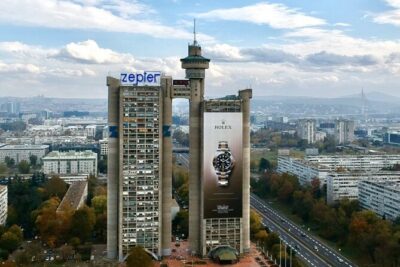
Architecture of New Belgrade – Brutalism Decoded
Read our review →

Browse the lists this tour appears in