
Reviewed · BELGRADE
Belgrade: The White Emigration in Serbia in the Wake of the Russian Revolution
Belgrade keeps its Russian past close. This three-hour private walk follows the White Russian émigré story through churches, royal sites, government buildings, theaters, cafés, and memorials. I like the way it links big events, such as the Russian Revolution and First World War, to ordinary city streets. I also like the chance to see Russian influence in Belgrade’s architecture and taste the historic Moskva and Aurora cakes at Hotel Moskva.
The main consideration is the price: $173.64 per person is a serious sum for a three-hour walking tour, especially since coffee and cakes are not included. Still, for a private group with a guide who can explain this specialized subject in depth, the cost may make sense for history-minded visitors who want more than a standard city overview.
In This Review
- What makes this Belgrade walk different
- Why the White Russian story matters in Belgrade
- Starting near St. Mark Orthodox Church
- Holy Trinity Church and Baron Wrangel
- Government buildings and the Russian mark on Belgrade
- Royal Palace, Nicholas II, and dynastic ties
- Hotel Moskva and two old Russian recipes
- The National Theatre, Russian ballet, and street songs
- University, the Academy, and émigré scientists
- Gavrilo Princip Square and the First World War
- The army in exile and Serbia’s difficult choice
- Price, private format, and who gets the best value
- Practical advice before you book
- Should you book the White Emigration walk?
- FAQ
- Where does the tour begin?
- Where does the tour end?
- How long does the experience last?
- Is this a private tour?
- What is included in the price?
- Are admission tickets included?
- Are coffee and cakes included?
- Are alcoholic beverages included?
- Can most people participate?
- Can I cancel for a full refund?
What makes this Belgrade walk different
- Baron Wrangel’s burial place: The tour begins at Holy Trinity Church, where you can connect the Russian Civil War to one of its most important military figures.
- A city shaped by Russian architects: Serbian government buildings, the post office, General Staff, and ministries become clues in a story about Russian professional influence.
- A rare look at an army in exile: The tour explores how Serbia hosted a trained and partly armed Russian force without allowing it to seize power, conquer territory, or collapse.
- Royal connections between Serbia and Russia: The walk passes the Royal Palace and the monument to Nicholas II while explaining the relationship between the two dynasties.
- Russian culture in everyday Belgrade: Ballet, theater, street songs, cafés, craft workshops, and Russian recipes all appear along the route.
- A focused private experience: Only your group takes part, making it easier to ask questions and follow the subject at your own pace.
Why the White Russian story matters in Belgrade
After the Bolshevik Revolution, between one and two million people left Russia over roughly three years. Up to 100,000 of them reached the Kingdom of Serbs, Croats and Slovenes, a large arrival for a country with a comparatively small population.
This was not simply a story of refugees passing through. Russian emigrants arrived as officers, engineers, architects, scientists, artists, teachers, dancers, and skilled workers. They brought useful abilities, difficult political baggage, and memories of a country that no longer existed in the same form.
The tour asks a practical question: did this Russian presence help or harm Belgrade? You are not handed a simple answer. Instead, the walk gives you buildings, institutions, personal stories, and political problems to weigh for yourself.
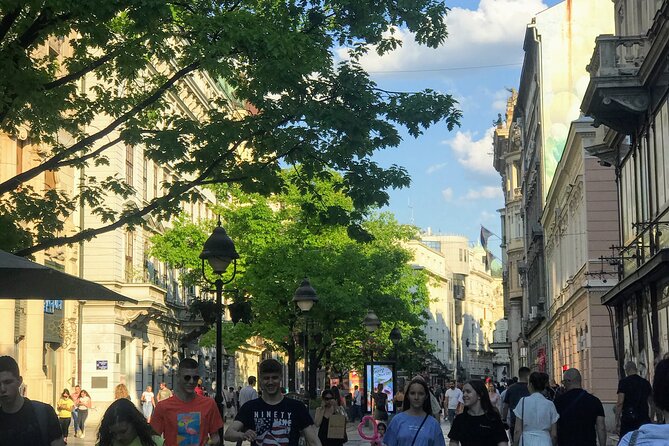
That approach suits Belgrade. The city often reveals its past in layers. A street may look Serbian, Austro-Hungarian, Ottoman, royal, socialist, and modern all at once. Here, the Russian layer is easy to miss unless someone points it out.
Trips other travellers in Belgrade book alongside this one:
- Northern Serbia: Sremski Karlovci and Novi Sad Full-Day Tour from Belgrade
★ 5.0 · 425 reviews - Day Trip from Belgrade: Gems of Eastern Serbia
★ 5.0 · 424 reviews - Belgrade Nightlife Bar Pub Club Crawl with Drinks
★ 5.0 · 277 reviews
Starting near St. Mark Orthodox Church
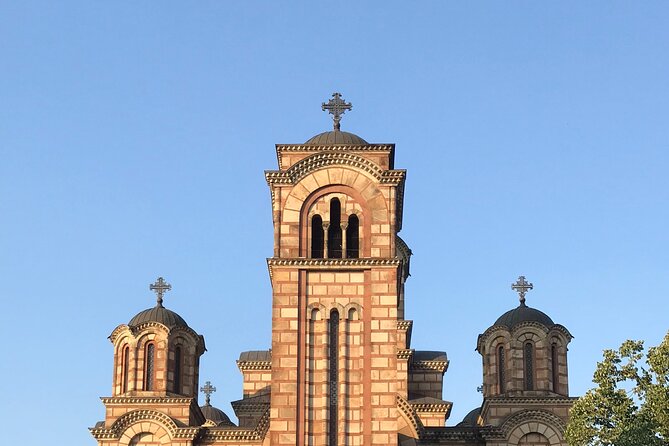
The meeting point is St. Mark Orthodox Church on Bulevar kralja Aleksandra 17. This gives you a central starting point, and the route then moves through important religious, political, royal, cultural, and academic parts of Belgrade.
The tour lasts about three hours. That is enough time for a serious narrative without turning the experience into an all-day history seminar. You should expect a walking program with repeated outdoor stops, so comfortable shoes are sensible even though the route includes indoor moments.
Because this is a private activity, your group alone participates. That matters here. The subject includes military exile, dynastic loyalty, national identity, and controversial political choices. You can stop to ask why a decision was made, request more detail about a person, or spend longer on a building that catches your attention.
Guide Julja receives particularly strong praise for knowing both Serbian history and the finer points of the subject. Her style is described as emotional, clear, and able to bring the city to life. If your booking is with Julja, you can expect the experience to depend heavily on her storytelling and answers to questions.
Holy Trinity Church and Baron Wrangel
One of the most important early stops is Holy Trinity Church, the Russian church where Baron Pyotr Wrangel is buried. The visit is listed as a 30-minute stop, with admission free.
Wrangel, often called the Black Baron, was a major commander of the anti-Bolshevik White forces during the Russian Civil War. His burial place gives the tour a human anchor. Instead of treating the White Emigration as a vague movement of anonymous people, you begin with a figure tied directly to the military defeat that forced many Russians into exile.
The church also helps explain how displaced Russians kept religious and cultural links alive. Exile did not mean cutting every connection with the old country. Churches could serve as places of worship, memory, community, and identity.
The exact experience inside a church can vary, so you should be prepared for a respectful visit rather than a guaranteed formal tour of every interior feature. The value lies in the story attached to the place, and in the way Julja connects Wrangel’s burial to the wider Russian presence in Serbia.
Government buildings and the Russian mark on Belgrade
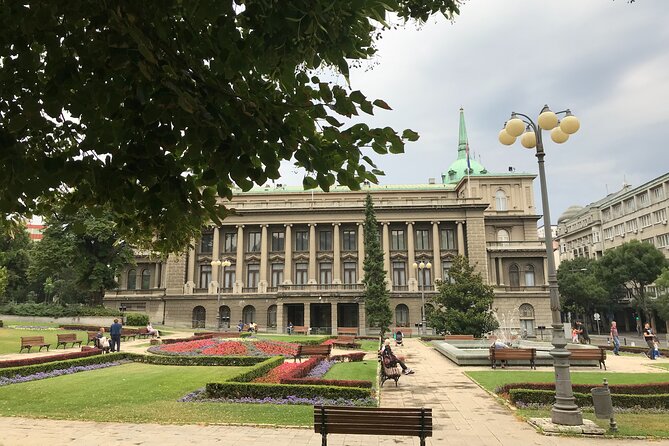
The next section leads through a picturesque former royal park and past the Serbian Parliament, post office, General Staff, and ministries. The walk uses these buildings to examine Russian architectural work in Belgrade.
This is one of the tour’s strongest ideas. You do not need to be an architecture specialist to enjoy it. A guide can show you details that might otherwise pass as simply Serbian or European, then explain why Russian architects contributed to the city’s appearance and why that contribution is not always acknowledged in a straightforward way.
That last point adds useful nuance. National identity is rarely tidy. A building designed or shaped by émigré professionals may later be absorbed into the visual identity of the country where it was built. The Russian connection can fade from public memory even when the building remains.
The stop is listed at 30 minutes, but the buildings are viewed as part of the walk rather than treated as a series of long interior visits. You should book this portion for architectural context and political history, not for extensive access inside government offices.
Something different for your next free day:
- Taxi to/from Belgrade Airport to/from Belgrade City Center
★ 5.0 · 241 reviews - Belgrade Big Tour: Top Attractions and Belgrade Neighborhoods
★ 5.0 · 232 reviews - Along the Danube: Golubac Fortress & Iron Gate Gorge day trip from Belgrade
★ 4.5 · 185 reviews - From Belgrade: Golubac Fortress & Iron Gate Danube Gorge
★ 4.8 · 185 reviews
Royal Palace, Nicholas II, and dynastic ties
The route continues past the Royal Palaces and a monument to Nicholas II. This provides a chance to discuss the relationship between the Serbian and Russian royal dynasties.
The subject is more than royal decoration. Dynastic connections could shape diplomacy, public feeling, military cooperation, and decisions about accepting displaced people. For Serbia, ties to Russia had emotional and political force. For Russian émigrés, Serbia could feel less foreign than many other possible destinations.
This section also helps explain why so many Russians settled in the Kingdom of Serbs, Croats and Slovenes. Geography mattered, but so did Orthodox religious links, cultural familiarity, political sympathy, and the willingness of the Serbian state to receive people who arrived with little certainty about their future.
The stop is planned for about 30 minutes. You will pass the palaces rather than enter them, so the point is the surrounding political story and the view of royal Belgrade.
Hotel Moskva and two old Russian recipes
Hotel Moskva brings the tour into a more relaxed setting. After passing along a street once filled with craft workshops and now associated with designers, you enter the luxurious hotel interiors for coffee and the Moskva and Aurora cakes.
The cakes are prepared according to recipes said to be about half a century old. That detail gives the stop a pleasant connection between memory and daily life. Political history can feel distant; a pastry recipe makes cultural survival easier to understand.
You can also use this pause to see a different side of Belgrade. The hotel is associated with the city’s social scene, so the stop offers a glimpse of the setting where Belgrade’s well-dressed public gathers.
The scheduled time is only 15 minutes. That is enough for a short coffee break and a taste, but not a leisurely café afternoon. Alcoholic drinks and snacks are not included, and the supplied details specifically note that food and beverages beyond the tour arrangements are your responsibility. You should budget for the coffee and cakes rather than assume they are covered by the ticket.
This is also the point where the value calculation becomes personal. If you enjoy historic hotels, old recipes, and a brief social pause, it adds charm. If you prefer every minute to go toward monuments and political history, you may see it as a short detour.
The National Theatre, Russian ballet, and street songs
At the National Theatre, the focus shifts to performance. Russian ballerinas performed here, while Russian scenic designers, choreographers, and directors worked in the Serbian cultural world.
This stop shows that emigration was not only about armies and government. Artists also carried ideas across borders. Ballet and theater can change a city’s cultural life without leaving an obvious Russian label on every performance.
The tour also introduces the subject of street songs and asks you to remember a particular figure whenever you hear a Serbian choir sing. The supplied details do not identify that person in advance, which is part of the appeal of hearing the explanation on site.
The visit lasts about 15 minutes. It is best understood as a focused story outside or around the National Theatre, not as a promise of a performance or a full theater tour. If you love music and stage history, this may be one of the most memorable sections. If your main interest is military history, it broadens the subject in a useful but less expected direction.
University, the Academy, and émigré scientists
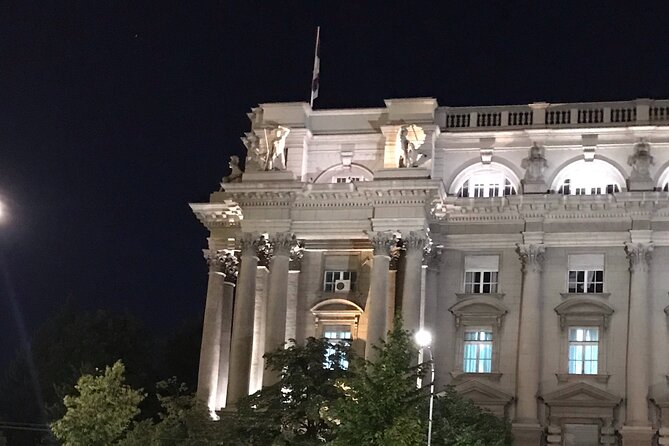
The walk then reaches Belgrade University and the Serbian Academy of Sciences and Arts. This 30-minute section considers what happened to Russian scientists who left their homeland.
The White Emigration included highly trained people whose careers had been interrupted by revolution and civil war. Serbia’s decision to receive such people could help its universities, public institutions, and professional life. At the same time, émigré academics had to rebuild careers in a new country, often while dealing with uncertain legal status and limited resources.
This is where the tour’s question about Nansen passports becomes important. These documents were created for people who had lost the protection of their original state and could not easily obtain a normal national passport. The subject has a modern echo because statelessness and displaced populations remain current concerns.
You should not expect a legal lecture. The point is to see how a passport can represent more than permission to cross a border. For an émigré, it could mean recognition, movement, work, and a basic chance to build a life.
Gavrilo Princip Square and the First World War
The final major section takes you to Gavrilo Princip Square and connects the First World War with the assassination that changed world history.
This is a careful topic because the event has been used to support different national memories and political arguments. The tour places it within the wider setting of the era, then links that period back to Russian migration and the forces that reshaped Europe.
The walk also visits places that Russian émigrés frequented a century ago and that remain open today. That detail gives the closing section a strong sense of continuity. You are not only hearing about people who disappeared from their homeland. You are tracing the places where they lived, worked, socialized, worshiped, and tried to rebuild.
Nemanjina is included in this part of the route. The exact amount of time spent at each location can depend on the group and the guide, so ask questions if a particular site matters to you.
The army in exile and Serbia’s difficult choice
One of the most unusual themes is Serbia’s decision to host a fully trained and partly armed army from another country. The tour asks how an army in exile could be organized without overthrowing the host government, conquering part of the country, or simply running out of food.
That is a practical puzzle, not just a dramatic historical anecdote. Soldiers need housing, leadership, supplies, legal status, and a clear relationship with the government around them. An armed force also creates fear, even when it claims to be a guest.
This part may be the strongest reason to choose the tour over a standard Belgrade walk. You get to examine statecraft at close range. Serbia had to balance sympathy, security, resources, and international pressure. The story also reveals how small countries can make decisions that larger powers might avoid.
The tour does not present Serbia as purely generous or purely self-interested. You are encouraged to consider why the decision was made and what its effects were. That balanced framing gives the subject more weight.
Price, private format, and who gets the best value
At $173.64 per person, this is not a budget walking tour. The price is easier to justify if you are traveling with family or friends who share a strong interest in Russian, Serbian, military, architectural, or cultural history.
The private format is a real advantage. You are not joining a large crowd, and only your group takes part. That makes the guide’s attention more valuable and lets you shape the conversation.
The tour also offers group discounts, which may improve the price for a larger party. Since the duration is about three hours, I would compare the cost with the importance you place on expert interpretation, not simply with the cost of a generic city walk.
Admission is free at the listed stops, and the guide is included. Coffee, cakes, alcoholic beverages, and snacks are not included. The Hotel Moskva pause is brief, so plan your spending and expectations accordingly.
Practical advice before you book
Wear comfortable shoes and allow enough time for a three-hour route. The program moves between churches, parks, public buildings, royal sites, cultural venues, academic institutions, and city streets.
This experience suits you best if you already have some interest in the Russian Revolution or want a city walk built around a single historical question. It also works well for repeat visitors to Belgrade who have already seen the main sights and want a more specialized story.
You may want a different tour if you prefer museum interiors, long visits inside monuments, or a broad introduction to Serbian food and daily life. This is a focused historical walk, with only a short café stop and no included meal.
Confirmation is provided when you book. Most people can participate, and you can cancel for a full refund if you do so at least 24 hours before the local start time. Changes or cancellations made later are not accepted for a refund.
Should you book the White Emigration walk?
Book it if you want Belgrade explained through exile, architecture, royal politics, science, music, and military diplomacy. I especially recommend it to anyone fascinated by the Russian Civil War or by the way a smaller country handles a large political crisis.
The best reason to choose this experience is its narrow focus. You will see familiar central Belgrade sights with a different set of questions in mind, and guide Julja’s praised storytelling can make those connections personal and memorable.
Skip it if the $173.64 price feels too high for a three-hour walk, or if you want a conventional sightseeing route with more interior visits. For the right audience, though, this is a thoughtful and unusual way to understand why Russian émigrés left such a lasting mark on Belgrade.
FAQ
Where does the tour begin?
The tour begins at St. Mark Orthodox Church, Bulevar kralja Aleksandra 17, in Belgrade.
Where does the tour end?
The activity ends back at the meeting point.
How long does the experience last?
The tour lasts approximately three hours.
Is this a private tour?
Yes. Only your group participates in the activity.
What is included in the price?
A guide is included.
Are admission tickets included?
The listed stops show free admission. The supplied details do not list any paid admission fees.
Are coffee and cakes included?
The tour includes a visit to Hotel Moskva for coffee and the Moskva and Aurora cakes, but the supplied details state that snacks are not included. You should be prepared to pay for food and drinks yourself.
Are alcoholic beverages included?
No. Alcoholic beverages are not included.
Can most people participate?
Yes. The activity information says most people can participate.
Can I cancel for a full refund?
Yes, if you cancel at least 24 hours before the experience starts. Cancellations made less than 24 hours before the start time are not refunded.
Just added around Belgrade
- Private Wine Tasting by Party in Belgrade★ 5.0 · 3 reviews
- Private Walking Tour of Belgrade and Old Zemun★ 5.0 · 3 reviews
- E-Scooter Serbian Food Tour★ 5.0 · 3 reviews
- Zica and Studenica monastery From Belgrade★ 5.0 · 3 reviews
- Belgrade Private Driving & Walking Tour★ 5.0 · 4 reviews
- Feel Belgrade Welcome tour★ 4.5 · 3 reviews
- Belgrade Fashion and Design Tour – Discover Local Designers★ 5.0 · 4 reviews
- Novi Sad Saturday Full day trip★ 4.0 · 4 reviews