
Reviewed · COMMUNIST & YUGOSLAV HISTORY TOURS
Communist Tour in Belgrade
Belgrade’s past is written in concrete. This three-hour Communist Tour connects Tito, Yugoslavia, the Non-Aligned movement, the NATO bombing, and Serbia’s democratic changes through central city landmarks. I like the small group size of up to 15 people and the way the tour ends at the Museum of Yugoslavia, where the story gains a personal focus through Tito’s memorial complex. The $24.03 price also includes museum admission and the trolleybus ride.
The main consideration is the subject itself. This is not a light sightseeing walk, and the tour covers painful conflicts and political change in a short time. I also like that the guides aim for an objective presentation. Stefan, Michael, and Milan have each been praised for clear English, strong command of the subject, and the ability to explain complicated events without turning the tour into a political speech.
In This Review
- Key points about the Belgrade Communist Tour
- Why this tour helps explain modern Belgrade
- Starting at Republic Square with Tito and the Youth Relay Baton
- Socialist realism at Dom Sindikata
- Parliament and the changing center of power
- Kneza Miloša Street and the machinery of government
- Generalštab, a damaged symbol of the 1999 bombing
- The trolleybus ride to the Museum of Yugoslavia
- One hour at the Museum of Yugoslavia
- Guide quality and the value of a small group
- Is $24.03 a fair price?
- Who should book this three-hour experience?
- Should you book the Communist Tour in Belgrade?
- FAQ
- Where does the Communist Tour in Belgrade start?
- What time does the tour begin?
- How long does the tour last?
- Where does the tour end?
- Is entrance to the Museum of Yugoslavia included?
- Is the trolleybus ticket included?
- What language is the tour offered in?
- How large is the tour group?
- Is the tour suitable for most people?
- Can I cancel for a full refund?
Key points about the Belgrade Communist Tour
- Tito’s Yugoslavia takes center stage: Learn about Tito, the Youth Relay Baton, the Non-Aligned movement, and the political system that shaped modern Serbia.
- The route moves through real symbols of power: Republic Square, Trade Union Hall, the National Assembly, Kneza Miloša Street, and the damaged General Staff building each add a different piece to the story.
- The General Staff building remains a powerful stop: The bomb-damaged structure offers a direct reminder of the 1999 NATO bombing.
- Museum entry is included: The final hour takes place at the Museum of Yugoslavia, including the House of Flowers and Tito’s grave.
- A trolleybus ride is part of the experience: The group travels from Generalštab to the museum by trolleybus, with the ticket included.
- Good value for a history-minded visitor: At $24.03, you get a professional guide, public transport, and museum admission in one compact afternoon tour.
Why this tour helps explain modern Belgrade
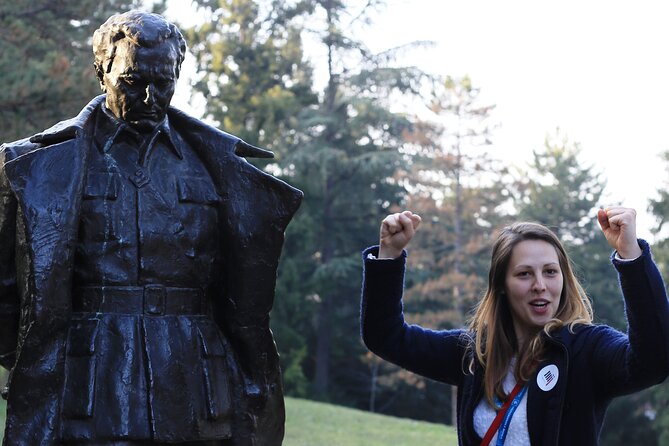
Belgrade is easy to visit as a city of cafés, riverside views, grand buildings, and lively streets. But much of what you see today makes more sense once you understand Yugoslavia, Josip Broz Tito, the breakup of the country, and the wars of the 1990s.
This tour gives you that framework while moving through places connected to power, public life, military policy, and memory. You do not simply hear a timeline in a classroom. You hear about political movements in Republic Square, see socialist architecture at Dom Sindikata, pass the seat of parliament, and finish at Tito’s burial place.
I find that structure useful because the subject can quickly become confusing. Yugoslavia was not the same as the Soviet Union, Tito’s rule changed over time, and Serbia’s modern political story cannot be reduced to one simple explanation. A guide who can keep those distinctions clear is worth paying for.
The tour is offered in English and starts at 3 p.m. at Trg Republike. With about three hours of activity, you should expect to finish around 6 p.m., though the exact end time can vary. The group is capped at 15 people, which gives the guide a better chance to answer questions than a large coach tour would.
More Yugoslav history tours:
- Red Belgrade Communist Tour
★ 5.0 · 78 reviews - Architecture of New Belgrade – Brutalism Decoded
★ 4.5 · 24 reviews - E-Scooter Communist Yugoslavia Tour
★ 5.0 · 15 reviews
Starting at Republic Square with Tito and the Youth Relay Baton
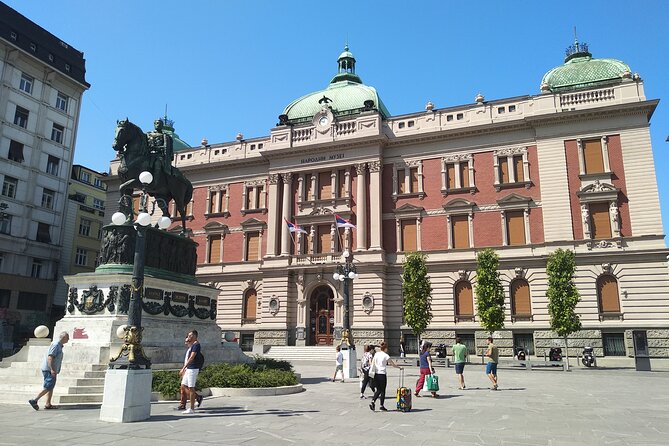
The tour begins at Trg Republike, one of Belgrade’s central squares. This is a sensible place to start because it lets the guide introduce the political and social themes before the group moves into more specific buildings.
Here you hear about the phenomenon of Tito, the Youth Relay Baton, the Non-Aligned movement, the conflicts of the 1990s, the NATO bombing of Serbia and Montenegro in 1999, and the democratic changes that followed at the beginning of the third millennium.
That is a lot for a 15-minute stop, so do not expect every topic to receive equal treatment. Instead, think of Republic Square as the tour’s opening map. It gives you the major names and turning points, then the later stops put those ideas into physical form.
The Youth Relay Baton is one of the more unusual subjects on the route. It helps show how political loyalty and public ritual were presented under Tito. The Non-Aligned movement is just as important because it points to Yugoslavia’s position between the major Cold War blocs. These topics add useful context beyond the familiar image of a communist state controlled from Moscow.
If you know little about Yugoslavia, pay close attention here. The guide’s opening explanation can make the rest of the afternoon easier to follow.
Socialist realism at Dom Sindikata
The next stop is mts Dvorana, formerly known as Dom Sindikata, or Trade Union Hall. The building was designed by Branko Petričić, and construction began in 1947. Its style is described as Socialist realism, making it a useful example of how architecture reflected the political mood of the period.
The stop lasts about 15 minutes and admission is free. You will mainly view the building from outside, with the guide explaining its role and design.
This is a good reminder that political history is not only about leaders and wars. Public buildings can reveal what a government wanted to project: order, authority, collective purpose, and a strong connection to organized labor. The massive scale of Dom Sindikata gives the explanation a physical anchor.
The drawback is simple: if you want to go inside, this tour does not promise interior access. The value comes from the guide’s interpretation and the building’s exterior rather than from an extended architectural visit.
Parliament and the changing center of power
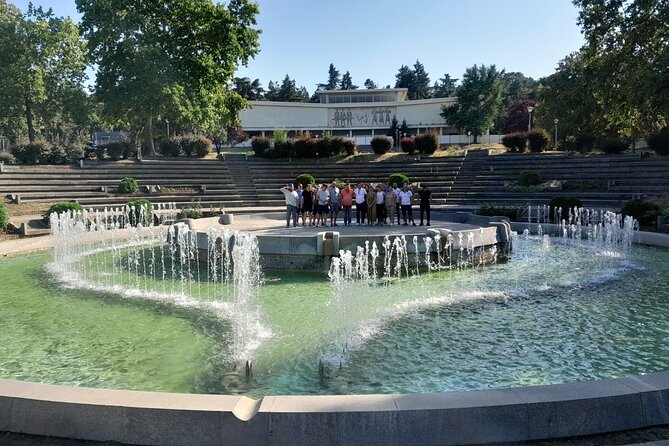
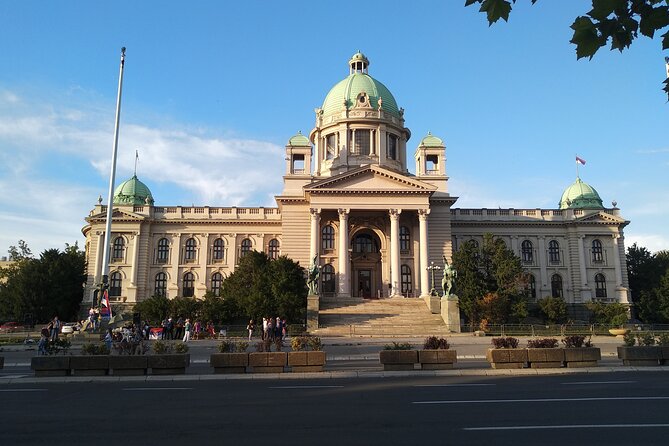
The route continues to the House of the National Assembly of the Republic of Serbia on Nikola Pašić Square. The building was completed in 1936 and served as the home of the Parliament of Yugoslavia and later the Parliament of Serbia and Montenegro until 2006. It is now the seat of Serbia’s National Assembly.
The stop lasts around 15 minutes. Like Dom Sindikata, it is an outdoor visit, but its importance is more directly political.
This building lets you connect different state formations in one place. It has served several versions of the country, from the pre-communist period through socialist Yugoslavia and the later union of Serbia and Montenegro. The building itself did not change countries, but the institutions inside it did.
I appreciate stops like this because they prevent the tour from treating communism as an isolated chapter. The route shows that Belgrade’s political identity developed through several overlapping states. That is especially helpful if you are still sorting out the difference between Yugoslavia, Serbia and Montenegro, and today’s Republic of Serbia.
You should also expect city traffic and public activity around this part of the route. The tour is about reading the city as much as looking at monuments, so the setting is part of the experience.
Something different for your next free day:
- Northern Serbia: Sremski Karlovci and Novi Sad Full-Day Tour from Belgrade
★ 5.0 · 425 reviews - Day Trip from Belgrade: Gems of Eastern Serbia
★ 5.0 · 424 reviews - Belgrade Nightlife Bar Pub Club Crawl with Drinks
★ 5.0 · 277 reviews - Taxi to/from Belgrade Airport to/from Belgrade City Center
★ 5.0 · 241 reviews
Kneza Miloša Street and the machinery of government
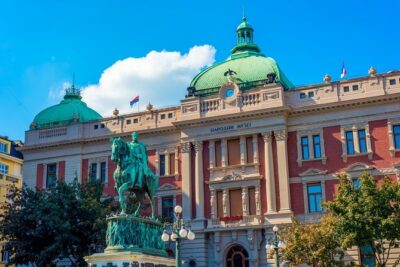
Kneza Miloša Street receives about 20 minutes, slightly longer than several of the other outdoor stops. It was once the city’s main korzo, or promenade, and is now a major traffic artery lined with national institutions and more embassies than any other street in Belgrade.
This is one of the stops where the guide’s explanation matters more than a single landmark. You will learn how a social promenade became a major administrative and diplomatic corridor. The street links everyday urban life with the institutions that shaped Yugoslavia and later Serbia.
For you, the practical point is that this portion involves moving through the city rather than entering a museum room. Comfortable shoes are sensible, and you should be ready to listen in an active urban setting. The provided details do not specify the exact walking distance, so I would not treat this as a strenuous hiking tour, but it is still a walking experience.
Kneza Miloša also prepares you for the next stop. After seeing the institutions and diplomatic presence along the street, the tour turns to the Yugoslav military establishment and the building most closely associated with the 1999 bombing.
Generalštab, a damaged symbol of the 1999 bombing
The Generalštab, also called the Yugoslav General Staff, was formerly occupied by the Yugoslav Ministry of Defence. It is considered a major example of post-war architecture, but the building was heavily damaged during the NATO bombing of Yugoslavia in 1999.
The visit lasts about 15 minutes and admission is free. You should expect to view the structure from outside. The supplied details do not indicate interior access, and the building’s damaged exterior is central to the stop.
This is likely to be one of the most memorable moments of the tour. The building is not presented only as an architectural work or only as a war relic. It connects military planning, international conflict, Serbian memory, and the physical marks left on Belgrade.
The subject requires care. People hold strong and differing views about the NATO intervention and the wars surrounding the breakup of Yugoslavia. A good guide should explain the sequence of events and competing perspectives without pretending that the subject is emotionally neutral. The strongest feedback about this tour has praised exactly that quality of presentation.
If you want to understand how the 1990s still shape public discussion in Serbia, this stop gives you a direct starting point. It may also be the point where you most want to ask questions, so keep them in mind before the group boards the trolleybus.
The trolleybus ride to the Museum of Yugoslavia
From Generalštab, the group takes a trolleybus to the Museum of Yugoslavia. The ride lasts about 15 minutes, and the ticket is included in the tour price.
This is more than a transfer. It gives the afternoon a useful change of pace and shows you one ordinary part of Belgrade’s transport system. Michael has been praised for explaining the transit system well, which matters here because the ride is built into the route rather than treated as an afterthought.
You should stay with the group and keep your ticket arrangements simple, since the operator includes the fare. The tour does not list a private vehicle, so public transport is an important part of the experience.
The trolleybus also makes this tour feel less like a chain of disconnected sights. The route moves from central government buildings to the museum complex associated with Tito and Yugoslav memory. That change in setting mirrors the change in subject, from public institutions and military conflict to personal legacy and national remembrance.
One hour at the Museum of Yugoslavia
The final stop is the Museum of Yugoslavia, where the group spends about one hour. Admission is included, and the tour ends in front of the museum at Mihaila Mike Jankovića 6.
The museum covers the Kingdom of Yugoslavia, Socialist Yugoslavia, and the life of Josip Broz Tito. One of its buildings, the House of Flowers, contains Tito’s grave. The museum receives around 120,000 visitors annually and is described as the most visited museum in Serbia.
This is the tour’s most substantial stop. The earlier locations give you public symbols and political context. The museum gives you objects, displays, and a more personal connection to Tito and the states he led.
One hour is enough for a guided introduction, but it is not enough to see every part of a major museum at a slow pace. You will need to follow the guide’s priorities. If you become especially interested in one section, you may want to return independently at another time, though the tour details do not state whether a same-day return is possible.
The House of Flowers is particularly important for understanding Tito’s public memory. His grave turns a broad political subject into something personal and ceremonial. You can think about how a leader is remembered, how a state presents its former ruler, and how that memory changes after the state itself disappears.
The museum also makes the tour suitable for people with limited background knowledge. Milan has been praised for presenting distant and recent events objectively, while Stefan has been praised for explaining modern Serbian history with nuance and suggesting books and documentaries for further study. Those are useful qualities at a museum where the amount of information could otherwise feel overwhelming.
Guide quality and the value of a small group
The guide is the main reason to book this experience rather than simply visit the listed sites on your own. The route is easy to map, but the political connections are not always obvious from the buildings alone.
Stefan has been praised for fact-based explanations, strong English, and broad command of the subject. Michael has been praised for his enthusiasm and for helping the group understand Belgrade’s transit system. Milan has been praised for an objective presentation of both older and more recent events.
You should not assume that a particular guide will lead your departure unless that is confirmed at booking. Still, these comments show the standard you can reasonably hope for: clear English, a sympathetic manner, and an effort to separate historical explanation from personal campaigning.
The maximum group size is 15. That is small enough to make questions practical, though it is not a private tour. If you want a personal conversation at every stop, this may feel structured. If you want a focused introduction without paying private-tour prices, the size is a good compromise.
Is $24.03 a fair price?
At $24.03 per person, the tour offers solid value. Your fee covers the professional guide, entry to the Museum of Yugoslavia, and the trolleybus ticket. The outdoor stops have no admission charge, so you are mainly paying for interpretation and organization.
That distinction matters. You could walk past several of these buildings without understanding why they matter. The guide links Tito’s political system, Yugoslavia’s international position, the 1990s conflicts, the NATO bombing, and democratic change into one afternoon.
Group discounts may make the price more appealing if you are booking for several people. The tour is also booked about 16 days ahead on average, so you should not assume that a last-minute place will always be available.
The value is strongest for first-time visitors to Belgrade who want political context. If you already have a strong academic background in Yugoslavia and have visited the museum before, the tour may repeat material you know. For most visitors, though, the combination of guide and museum makes the price reasonable.
Who should book this three-hour experience?
I would choose this tour if you:
- Want a clear introduction to Yugoslavia and modern Serbian politics
- Prefer a guide who explains difficult subjects rather than glossing over them
- Are interested in Tito and the Non-Aligned movement
- Want to see the General Staff building and discuss the 1999 bombing
- Have not yet visited the Museum of Yugoslavia
- Prefer a small group to a large organized excursion
I would think twice if you want a relaxed walk with little political discussion. The route includes war, state collapse, military action, and contested memory. It is worthwhile, but it asks you to pay attention.
The 3 p.m. start works well if you want to spend the morning on another Belgrade activity. You should allow the full afternoon, since the route includes several outdoor stops, public transport, and an hour in the museum.
Free cancellation is available if you cancel at least 24 hours before the start time. Changes or cancellations inside that window are not accepted for a refund. The experience also requires a minimum number of participants, and if that minimum is not reached, you will be offered another date or experience, or a full refund.
Should you book the Communist Tour in Belgrade?
Book it if you want the political key to Belgrade. The best parts are the clear route from Republic Square to the Museum of Yugoslavia, the damaged Generalštab building, the included trolleybus ride, and the chance to learn from guides such as Stefan, Michael, or Milan.
The tour cannot cover every part of Yugoslavia in three hours, and the outdoor stops are brief. Still, it gives you a strong working outline, then places Tito’s life and grave at the center of the final museum visit. At $24.03, that is a practical and fairly priced way to make sense of a difficult but essential part of Serbia.
FAQ
Where does the Communist Tour in Belgrade start?
The tour starts at Trg Republike, also known as Republic Square, in Belgrade.
What time does the tour begin?
The scheduled start time is 3 p.m.
How long does the tour last?
The tour lasts approximately three hours.
Where does the tour end?
The tour ends in front of the Museum of Yugoslavia at Mihaila Mike Jankovića 6, Belgrade 11000, Serbia.
Is entrance to the Museum of Yugoslavia included?
Yes. Museum admission is included in the tour price.
Is the trolleybus ticket included?
Yes. The trolleybus ticket for the ride from Generalštab to the Museum of Yugoslavia is included.
What language is the tour offered in?
The tour is offered in English.
How large is the tour group?
The group can include a maximum of 15 travelers.
Is the tour suitable for most people?
Yes. The available information states that most travelers can participate and that the tour is near public transportation.
Can I cancel for a full refund?
Yes, if you cancel at least 24 hours before the experience starts. Cancellations made less than 24 hours before the start time are not refunded.
Just added around Belgrade
- Private Wine Tasting by Party in Belgrade★ 5.0 · 3 reviews
- Private Walking Tour of Belgrade and Old Zemun★ 5.0 · 3 reviews
- E-Scooter Serbian Food Tour★ 5.0 · 3 reviews
- Belgrade: The White Emigration in Serbia in the Wake of the Russian Revolution★ 5.0 · 3 reviews
- Feel Belgrade Welcome tour★ 4.5 · 3 reviews
- Zica and Studenica monastery From Belgrade★ 5.0 · 3 reviews
- Belgrade Private Driving & Walking Tour★ 5.0 · 4 reviews
- Novi Sad Saturday Full day trip★ 4.0 · 4 reviews
Communist & Yugoslav History Tours, compared.
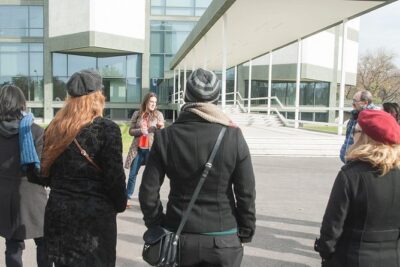
Architecture of New Belgrade – Brutalism Decoded
Read our review →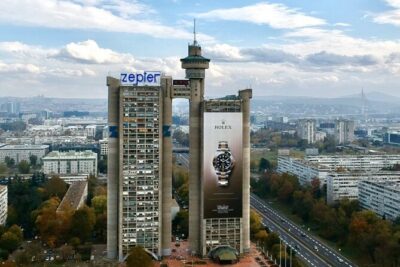

Browse the lists this tour appears in