
Reviewed · HISTORICAL TOURS
History and Culture in my Belgrade
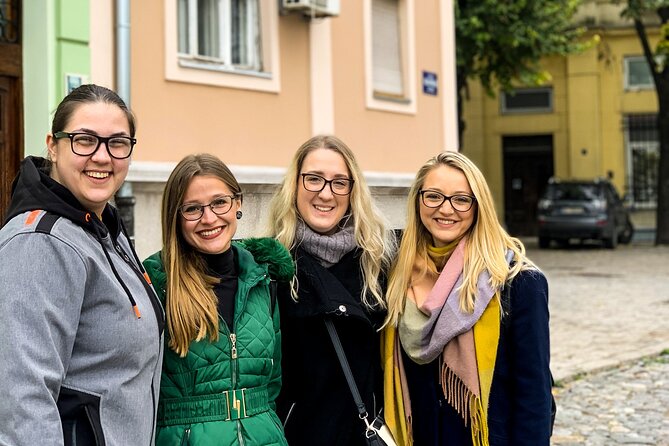
Belgrade rewards a walking tour with range. This experience links Serbian history and daily life in about three hours, moving from Orthodox church customs and Yugoslavia to rakija, street art, cafés, and river views. I like the small-group focus, advertised at no more than six people, and I like that guide Marija explains difficult subjects in plain language. The main drawback is pace: twelve named stops, plus several passing sights, leave little time for lingering or lengthy interior visits.
I also like the route’s local flavor. You do not simply tick off monuments. You taste Serbian products in a small shop, see the scars of the 1999 bombing, walk through Dorcol, and end above the Sava River. At $90.11 per person, it is not a bargain walking tour, but the private-feeling group size, food and drink tasting, and early orientation to Belgrade help explain the cost.
In This Review
- What makes this Belgrade walk worth your time
- Starting at St. Mark Church with Serbia’s long story
- The 1999 bombing and modern Serbia at RTS
- Tasmajdan Park and the political center
- A Serbian tasting in Čumićevo sokače
- Republic Square, the pedestrian zone, and university life
- Dorcol and the surviving Bajrakli Mosque
- Kafana tradition at the Question Mark
- Kosančićev Venac and the final Sava view
- Pace, group size, and value at $90.11
- Is this Belgrade tour a good choice?
- FAQ
- Where does the tour begin?
- Where does the tour end?
- How long does the experience last?
- What language is the tour offered in?
- How much does the tour cost?
- Is food and drink included?
- How large is the group?
- Can I cancel for a full refund?
What makes this Belgrade walk worth your time
- A compact route with real range: Cover central Belgrade, Dorcol, Kosančićev Venac, major squares, religious sites, political landmarks, and a river viewpoint in roughly half a day.
- A tasting stop with Serbian character: Try rakija, wine, natural juices, jam, slatko, honey, and other handmade products while learning how people say cheers in Serbia.
- History without a single narrow theme: The guide moves from medieval rulers and Ottoman rule to Yugoslavia, the 1990s, modern protests, education, and present-day customs.
- A guide-led experience: Marija is repeatedly praised for her clear explanations, warm manner, enthusiasm, and ability to connect past events with modern Belgrade.
- Useful first-day orientation: Three start times make it easier to fit into an arrival day, and the guide offers advice for the rest of your Serbian holiday.
- A useful cancellation window: You can cancel for a full refund up to 24 hours before the start time.
Starting at St. Mark Church with Serbia’s long story
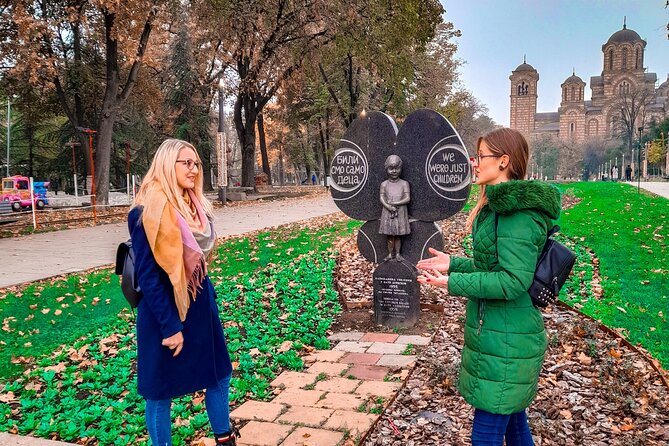
The meeting point is in front of St. Mark Orthodox Church on Bulevar kralja Aleksandra. This is a sensible place to begin because the church gives the guide a clear opening into Serbian history, religion, and national identity.
You spend about 20 minutes here. The plan includes going inside, learning about Orthodox customs, and seeing the remains of one of Serbia’s major medieval rulers. The church is the second largest in Belgrade, so it provides an impressive first stop without requiring a long detour.
I would pay attention to the cultural explanation here rather than treating the church as a quick photo stop. Serbian religious traditions can be unfamiliar if you have not visited the Balkans before, and the guide’s role is to explain what you are seeing in a practical way.
The church visit also sets the tone for the rest of the walk. This is not only a monument tour. You are meant to understand how faith, politics, memory, and ordinary life overlap in Serbia.
More Historical Tours in Belgrade:
- A Crash Course through Serbian History
★ 5.0 · 58 reviews - NATO Bombing of Belgrade Historical Tour
★ 5.0 · 17 reviews - Football tour: Red Star and Partizan Ultras History
★ 5.0 · 14 reviews
The 1999 bombing and modern Serbia at RTS
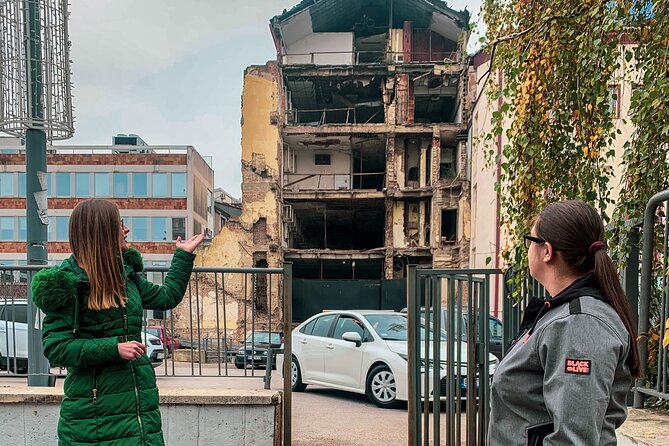
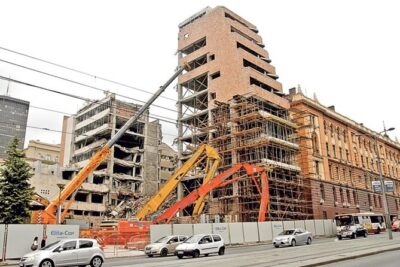
The walk then turns to the Radio Television of Serbia buildings. Here, you see structures damaged during the 1999 bombing and hear about the tragic events of the 1990s.
This stop lasts about 20 minutes, but its subject carries more weight than the time suggests. The conversation includes Yugoslavia, the Serbian economy, and contemporary life, so you get a basic frame for understanding the country beyond old churches and royal buildings.
I appreciate that the route does not smooth over uncomfortable parts of recent history. Belgrade can look energetic and relaxed today, but the physical reminders near RTS show how close the past remains. If you prefer tours that avoid politics, this may feel heavy. If you want a more honest introduction to the city, it is one of the most useful stops.
The guide’s approach matters here. Several comments about Marija praise her ability to make difficult subjects easy to follow. That skill is especially valuable when a short city walk has to cover wars, the breakup of Yugoslavia, and modern Serbian life without becoming a lecture.
Tasmajdan Park and the political center
Tasmajdan Park provides a change of mood. After the sober RTS stop, you spend around 15 minutes in a green public space known for a calmer atmosphere, mysteries, and underground passages.
This is not a long park visit. Think of it as a pause that adds texture to the city. You hear local stories while getting a break from traffic and stone buildings.
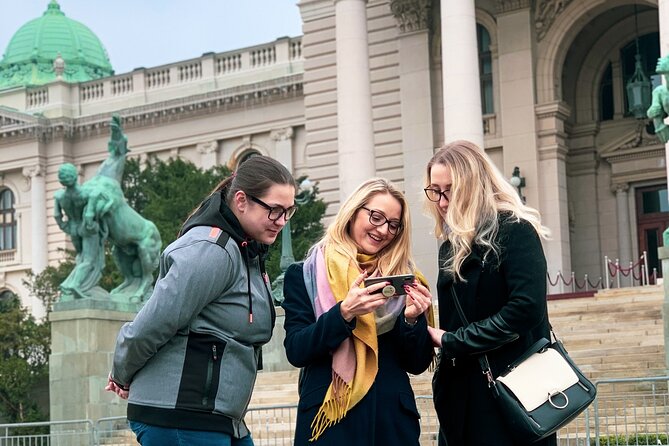
From there, the route continues to the House of the National Assembly of the Republic of Serbia. The monumental building is tied to major political events, including the country’s biggest protests. The guide also explains why it became known for Game of Thrones, a playful reference that gives the formal building a lighter angle.
Nikola Pasic Square follows, with about 10 minutes at the city’s youngest square. Its fountain is connected with unusual contemporary customs among young people in Belgrade. This is exactly the kind of detail that a basic sightseeing route often misses. You see not only official Serbia, but also the habits and jokes that shape local public spaces.
The walk also passes the only hotel in Serbia included on the worldwide list of historic hotels. The supplied details do not name the hotel or include a formal visit, so treat it as a sight you will see along the way rather than a dedicated stop.
A Serbian tasting in Čumićevo sokače
The tasting at Čumićevo sokače is the tour’s strongest local touch. Located in the Belgrade design district, the small store offers a chance to try handmade Serbian flavors and hear about hospitality, older customs, and local life.
You may sample:
- Domestic rakija
- Serbian wine
- Natural juices
- Jam and slatko
- Honey
- Other traditional handmade products
The tasting lasts about 30 minutes, making it the longest single stop after the church. You are not simply handed a drink and sent on your way. The guide explains how Serbs say cheers and gives context for the foods and drinks.
Rakija is especially important to the experience. It is a familiar part of Serbian hospitality, but the tasting lets you approach it as a cultural item rather than just a strong spirit. If you do not drink alcohol, the natural juices and other products still give you something to try. The information does not specify substitutions or dietary arrangements, so ask about those before booking if they matter to you.
This stop also helps justify the price. A standard city walk may include free sights only. Here, part of your payment supports a tasting and a more personal exchange with local products. I would still regard $90.11 as a premium for three hours, but this is the part that makes the experience feel less like a checklist.
Something different for your next free day:
- Northern Serbia: Sremski Karlovci and Novi Sad Full-Day Tour from Belgrade
★ 5.0 · 425 reviews - Day Trip from Belgrade: Gems of Eastern Serbia
★ 5.0 · 424 reviews - Belgrade Nightlife Bar Pub Club Crawl with Drinks
★ 5.0 · 277 reviews - Taxi to/from Belgrade Airport to/from Belgrade City Center
★ 5.0 · 241 reviews
Republic Square, the pedestrian zone, and university life
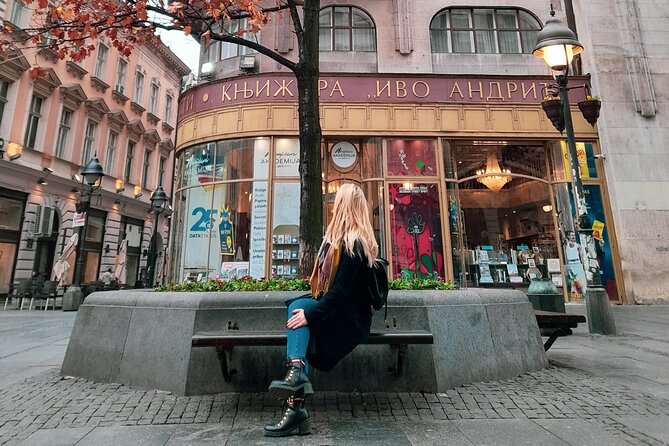
Republic Square brings you back into the center of Belgrade. You spend about 10 minutes here, taking in the city’s best-known square and its active public atmosphere.
The route crosses the main pedestrian zone afterward. This area is known for street musicians, cafés, and a lively flow of people. It is a useful introduction to how Belgrade feels between its formal sights. You get a better sense of the city’s social rhythm than you would from a bus or a museum-only visit.
At the University of Belgrade, the group pauses around Students’ Square and its park. The guide discusses education in Serbia, adding another part of modern life to the tour’s story.
These stops are brief, so do not expect a full architectural study of the university or a long café break. Their value lies in the connections. You move from national politics to public gathering spaces, then to student life, while the guide explains how the city works today.
Dorcol and the surviving Bajrakli Mosque
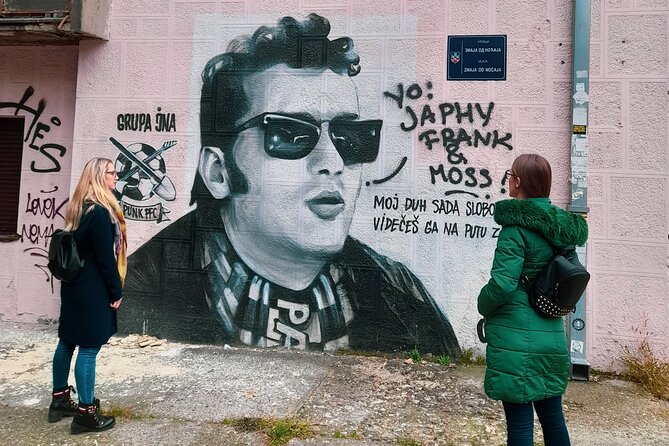
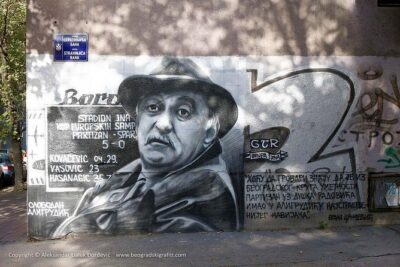
Dorcol gives the walk a more neighborhood-based feel. You pass through streets with distinctive graffiti and hear stories from the area’s past. The supplied details do not promise a particular mural route, so the appeal is the combination of street art and storytelling rather than a formal art tour.
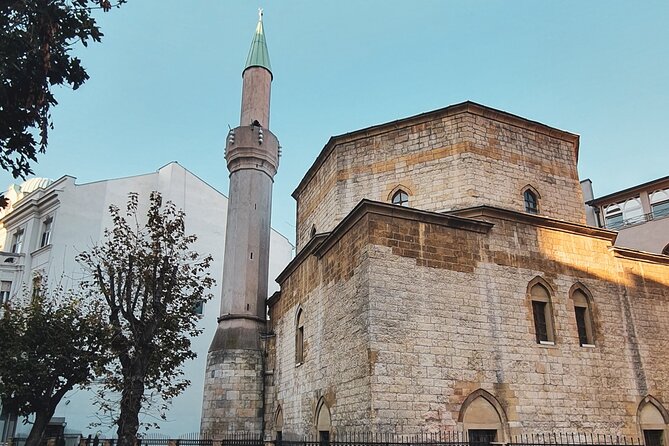
Next comes Bajrakli Mosque, also called Bayraklee Mosque. It is the only preserved mosque in Belgrade from the 273 that once existed in the city. The stop lasts about 15 minutes and focuses on the nearly five centuries of Ottoman influence in Serbia.
This is an important counterpoint to the Orthodox opening. Belgrade’s culture was shaped by several empires, faiths, and political systems, and the mosque helps you see that history in physical form. The route does not present Serbia as a single, unchanging tradition.
You should also note the wording of the itinerary: the mosque is described as a place to see and discuss, not as a guaranteed extended interior visit. Dress and behavior should be respectful at any religious site, and follow the guide’s instructions.
Kafana tradition at the Question Mark
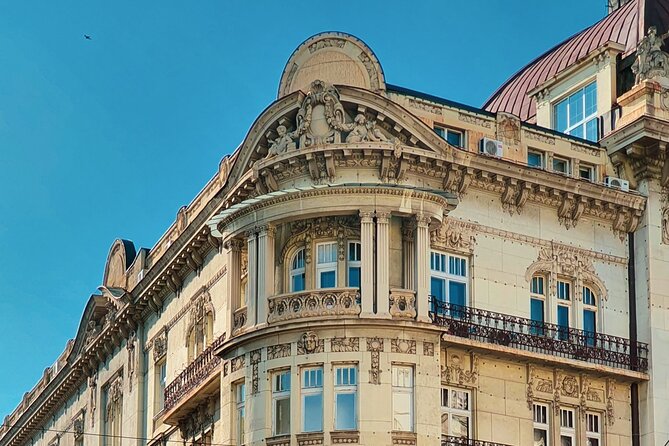
Znak Pitanja, or the Question Mark, is associated with the oldest kafana in Belgrade. A kafana is a traditional Serbian restaurant and social space, so this stop adds an everyday cultural layer to the church and political landmarks.
The architecture is the main focus during the roughly 10-minute visit. You learn how these establishments fit into Serbian life and see a building tied to an old dining and meeting tradition.
I like this kind of stop because food culture often explains a city better than another grand façade. Still, you should not expect a full meal here. The dedicated tasting takes place earlier in Čumićevo sokače, while the Question Mark stop is an architectural and cultural look at the kafana tradition.
Kosančićev Venac and the final Sava view
The tour ends in Kosančićev Venac, one of Belgrade’s oldest areas. You walk along a cobblestoned street, see distinctive cultural heritage and an Orthodox church, and finish at a viewpoint.
The panorama includes New Belgrade, the Sava River, and traditional Serbian splavs, the floating river venues that are part of Belgrade’s identity. After the churches, bombed buildings, parks, squares, and neighborhoods, this final view gives you a wider sense of how the city is arranged.
The ending is well chosen. You have moved through old and new Belgrade, formal and informal spaces, religious and secular sites, and painful history alongside present-day customs. The tour finishes at Kosančićev venac 22 rather than returning to St. Mark Church, so plan your next move from the end point.
Pace, group size, and value at $90.11
The advertised highlight is a maximum of six people, which would make a real difference on narrow streets and during the tasting. A small group also gives you more room to ask Marija about Serbia, local customs, or plans for the rest of your trip.
One practical detail needs clarification. The additional information gives a maximum of 15 participants, while the tour description says the group is limited to six. I would confirm the expected group size before paying, especially if a quiet, personal walk is central to your decision.
Three start times make the tour easy to place into a short Belgrade stay. A morning departure can orient you before independent sightseeing, while a later start may work better if you arrive in the city that day. The duration is approximately three hours, but the number of stops means you should wear comfortable shoes and expect steady walking.
At $90.11 per person, the experience costs more than a simple free city walk. The value comes from Marija’s interpretation, the small-group format if confirmed, and the Serbian tasting. You are also getting a strong first look at places you might otherwise pass without understanding.
The perfect audience is someone visiting Belgrade for the first time who wants history explained alongside ordinary life. It also suits visitors who have only half a day and want practical tips for the rest of Serbia. It is less suitable if you want long museum visits, extensive church interiors, or a slow photography walk.
The tour is offered in English, includes a mobile ticket, and is near public transportation. Most people can participate. Free cancellation is available up to 24 hours before the start time, but changes or cancellations inside that window are not refunded.
Is this Belgrade tour a good choice?
I would book this experience if you want a fast but thoughtful introduction to Belgrade. Marija’s warm, clear style is its biggest strength, and the route covers far more than the usual central squares. The tasting, Ottoman-era mosque, RTS memorial, Dorcol graffiti, and Sava viewpoint give the walk a human scale.
Before booking, confirm the group size and consider the price. If six people or fewer are expected, the cost is easier to defend. If the group may reach 15, you may prefer a cheaper general city walk. For a first visit, though, this route gives you useful context, local flavors, and a good map of what to explore next.
FAQ
Where does the tour begin?
The meeting point is in front of St. Mark Orthodox Church at Bulevar kralja Aleksandra 17, Belgrade, Serbia.
Where does the tour end?
The tour ends at Kosančićev Venac 22, Belgrade 11000, Serbia.
How long does the experience last?
The tour lasts approximately three hours.
What language is the tour offered in?
The tour is offered in English.
How much does the tour cost?
The listed price is $90.11 per person.
Is food and drink included?
The tour includes a tasting of Serbian products such as domestic rakija, wine, natural juices, jam, slatko, and honey.
How large is the group?
The tour highlights a maximum of six people, but the additional information gives a maximum of 15 participants. Confirm the expected group size when booking.
Can I cancel for a full refund?
Yes. You can cancel at least 24 hours before the experience start time for a full refund. Cancellations or changes made less than 24 hours before the start time are not refunded or accepted.
Just added around Belgrade
- Private Wine Tasting by Party in Belgrade★ 5.0 · 3 reviews
- Private Walking Tour of Belgrade and Old Zemun★ 5.0 · 3 reviews
- E-Scooter Serbian Food Tour★ 5.0 · 3 reviews
- Belgrade: The White Emigration in Serbia in the Wake of the Russian Revolution★ 5.0 · 3 reviews
- Zica and Studenica monastery From Belgrade★ 5.0 · 3 reviews
- Belgrade Private Driving & Walking Tour★ 5.0 · 4 reviews
- Feel Belgrade Welcome tour★ 4.5 · 3 reviews
- Novi Sad Saturday Full day trip★ 4.0 · 4 reviews
Historical Tours, compared.
Football tour: Red Star and Partizan Ultras History
Read our review →
Full-Day Private Royal Heritage Tour to Oplenac With a Winery Visit
Read our review →Browse the lists this tour appears in