
Reviewed · WALKING TOURS
Belgrade Walking Tour in French
Belgrade rewards curious walkers. This French-language tour with journalist Nenad mixes major sights, local stories, Serbian culture, and current life in a way that feels more like a conversation than a standard sightseeing script. I especially like the focus on lesser-known corners of the fortress and the chance to connect Belgrade with its long Francophone ties. The small maximum of eight people is another strong point.
The main consideration is the pace. Three and a half hours on foot, with hills, stone paths, and several stops, may feel long if you prefer a quick overview. The tour also suits French speakers best, since its value depends on the detail and humor delivered in French.
In This Review
- Key points at a glance
- Why this French tour feels different
- Starting at Republic Square at 9:30 a.m.
- Skadarlija, Belgrade’s bohemian street
- Dorćol and the clues written in Cyrillic
- Ružica Church inside the citadel
- Kalemegdan Park and the Sava-Danube view
- France and Serbia at the Monument of Gratitude
- The French Embassy and King Peter I Street
- What $43.94 buys you
- Who should book this walk
- Should you book Belgrade Walking Tour in French?
- FAQ
- What language is the tour conducted in?
- How long does the walking tour last?
- Where does the tour begin?
- Where does the tour finish?
- What time does the tour start?
- How many people can join the tour?
- Can I cancel for a full refund?
Key points at a glance
- French-speaking journalist as guide: Nenad brings professional storytelling, current events, and personal anecdotes to Belgrade’s past.
- A route with a Francophone thread: Begin near rue de France and finish near rue de Paris, with stops at the Monument of Gratitude to France and the French Embassy.
- More than postcard sights: The walk includes Dorćol, the only mosque in town, unusual addresses, fortress corners, and clues to reading Cyrillic.
- Belgrade’s great meeting point: Kalemegdan Park and the fortress offer wide views over the meeting of the Sava and Danube.
- Small group format: The tour accepts no more than eight people, which should make questions and conversation easier.
- Useful first-day timing: The 9:30 a.m. start leaves much of the afternoon available for museums, food, or a second look at the city.
Why this French tour feels different
A good city walk gives you landmarks. A better one gives you a way to understand the city. This experience aims for the second kind, using Belgrade’s streets to explain Serbian identity, Ottoman influence, Yugoslav memory, French-Serbian friendship, and present-day life.
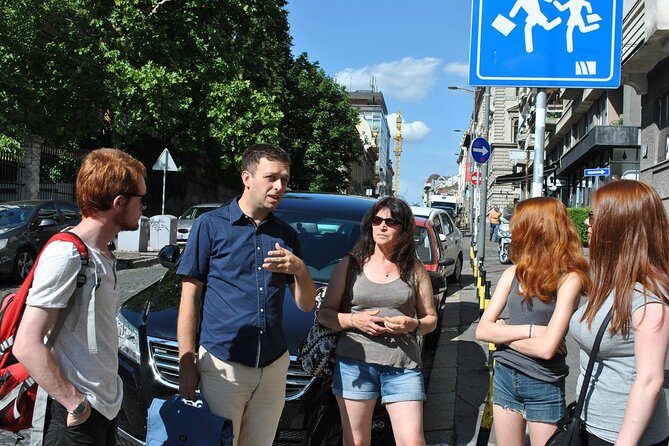
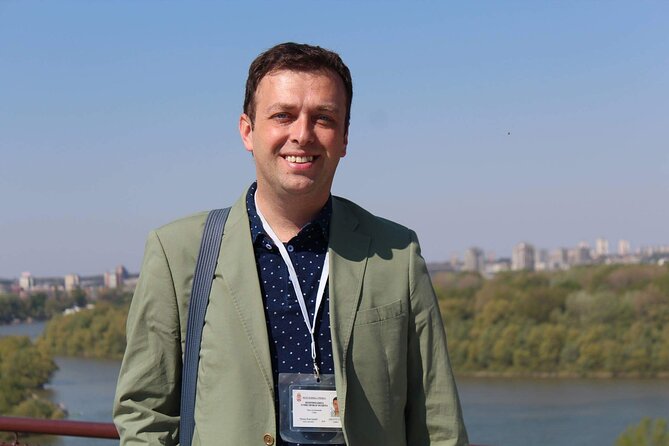
That broader approach is the tour’s main appeal. Nenad works as a journalist, so the commentary is not limited to dates and architectural labels. You can expect anecdotes from his work, explanations of what life in Serbia is like now, and pointers toward places that a standard guidebook may skip.
I also like the way the route links physical places with a clear theme. It starts at Republic Square, passes through rue de France and Skadarska Street, reaches Dorćol and the fortress, then returns to the French connection near the end. The route is not simply a list of monuments. It tells a story about how France and Serbia have viewed one another.
Six published ratings give the experience a perfect five-star average, and the praise centers on the same qualities: Nenad’s ability to explain Belgrade, answer questions, adapt to interests, and introduce places that are easy to miss alone. One French-speaking couple even used his services for two days, which suggests the guide can work well beyond a single orientation walk.
More Walking Tours in Belgrade:
- Belgrade: 3-Hour Small Group Walking Tour
★ 5.0 · 180 reviews - Half-Day Sightseeing and Walking Tour of Belgrade City
★ 5.0 · 37 reviews - Belgrade Private Walking Tour with a Local
★ 5.0 · 19 reviews
Starting at Republic Square at 9:30 a.m.
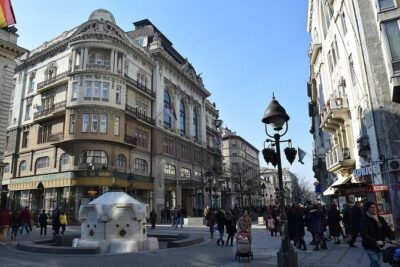
The meeting point is Republic Square, at Trg republike 3. This is a sensible place to begin because several important buildings face the square, including the National Theatre and National Museum, along with the monument to Prince Mihailo.
You will spend about 15 minutes here, but the square provides more than a quick photo stop. It introduces the political and cultural center of modern Belgrade. The monument of Prince Mihailo points to Serbia’s national story, while the theatre and museum show how the capital presents its cultural life.
I find an opening stop like this useful because it gives you orientation before the walking becomes more varied. Nenad can establish the basic timeline, then add the details that make the city less tidy and more interesting. Belgrade has been shaped by different powers and eras, and Republic Square is a good place to begin that conversation.
The central location also makes the start practical. The tour is near public transportation, and confirmation is provided when you book. You should arrive ready for a walking morning rather than treating Republic Square as a simple meeting photo.
Skadarlija, Belgrade’s bohemian street
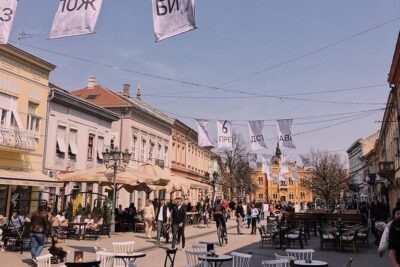
From Republic Square, the route moves toward Skadarska Street, in the neighborhood known as Skadarlija. The district developed its bohemian character in the 19th century and is often compared with Montmartre in Paris.
The connection is not just a loose nickname. Skadarska is described as the only street twinned with Montmartre, which gives this part of the tour a direct French angle. You will spend about 10 minutes here, though the walk between points adds more time and lets the neighborhood become part of the experience.
Skadarlija is important because it shows another side of Belgrade. Instead of grand political buildings and fortress walls, you get a street tied to artists, cafés, and the city’s social life. Nenad’s anecdotes should be especially useful here, since a bohemian quarter can look picturesque without explaining why it matters.
The short scheduled stop means you should not expect an extended meal or a long café break. Think of it as a compact introduction. If Skadarlija catches your interest, you can return later on your own.
Dorćol and the clues written in Cyrillic
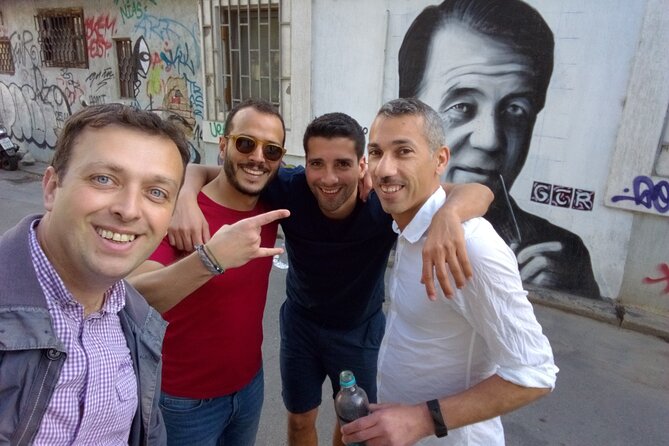
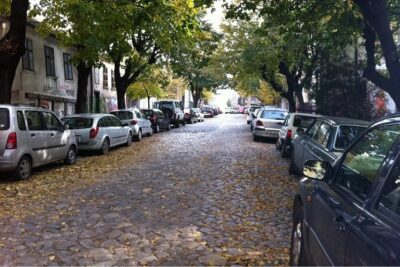
The route continues into Dorćol, one of old Belgrade’s central districts. Its buildings show an unusual mix of architectural styles, and the neighborhood gives Nenad room to talk about the city at street level rather than only through famous monuments.
One particularly unusual stop is the only mosque in town. This is a useful reminder that Belgrade’s story includes Ottoman rule and the long presence of different cultural and religious traditions. The tour also pays attention to signs and plaques, using them to help you read the Cyrillic alphabet.
That practical touch is one of the best parts of the experience. You do not just hear about Serbia from a distance. You begin to recognize the writing on street signs, building names, and public notices. Even a short lesson can make the rest of your stay easier and more rewarding.
Dorćol also seems to be where the tour’s promise of Belgrade’s underside becomes clearest. That phrase points toward stories and addresses you might not encounter on a basic city walk. Since the exact unusual stops are not fixed in the details provided, you should expect the guide to shape some of this section around the group and the questions that come up.
Something different for your next free day:
- Northern Serbia: Sremski Karlovci and Novi Sad Full-Day Tour from Belgrade
★ 5.0 · 425 reviews - Day Trip from Belgrade: Gems of Eastern Serbia
★ 5.0 · 424 reviews - Belgrade Nightlife Bar Pub Club Crawl with Drinks
★ 5.0 · 277 reviews - Taxi to/from Belgrade Airport to/from Belgrade City Center
★ 5.0 · 241 reviews
Ružica Church inside the citadel
Inside the Belgrade citadel, Ružica Church offers one of the tour’s most unusual pieces of history. The building began as a gunpowder warehouse before being converted into a military church between 1867 and 1869.
The scheduled visit lasts about 10 minutes. That is enough for a focused explanation, but not for a long interior visit or a detailed art lecture. The appeal is the building’s changing purpose. A military storage building becoming a church tells you something about how Belgrade repeatedly adapted its structures to new political and religious needs.
I like stops such as this because they reward attention. Ružica may not be the first sight you write on a city checklist, yet its past is easy to remember. Ask Nenad how the church fits into the fortress story, and you will likely get more from it than you would by passing through alone.
The citadel section also changes the feel of the walk. You leave the tight streets of central Belgrade and enter a larger historic area with open views, walls, paths, and several layers of the city’s past.
Kalemegdan Park and the Sava-Danube view
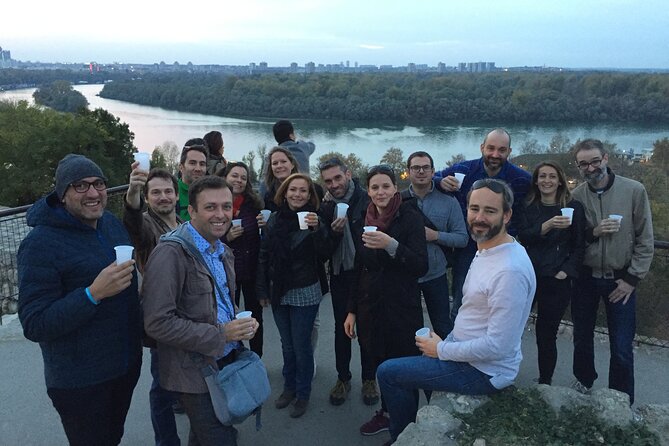
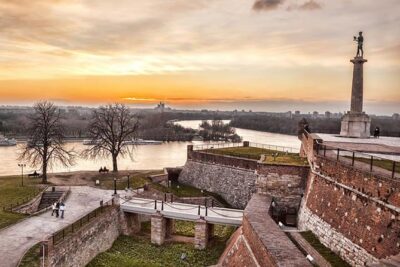
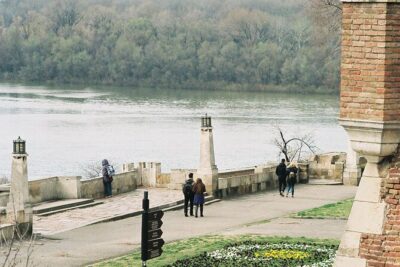
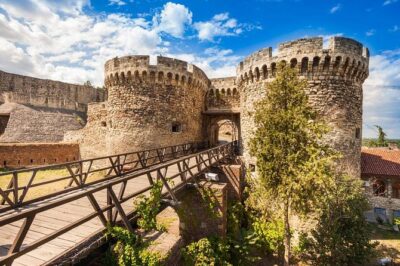
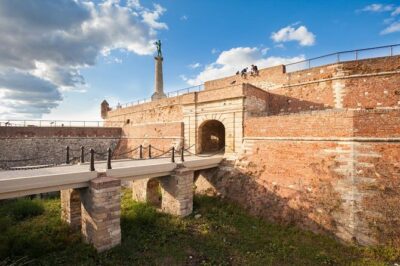
The main scenic moment comes at Kalemegdan Park and Belgrade Fortress. From the fortress, you can look toward the meeting point of the Sava and Danube, one of the defining views in the capital.
The stop is listed at about 15 minutes, but the fortress and park form a substantial part of the walking route. You should not expect to explore every section in three and a half hours. Instead, Nenad will use selected points to explain the fortress, the Ottoman era, and the influence of Ottoman rule on Serbian culture.
This is where a guide adds real value. Fortress walls are easy to photograph and easy to misunderstand. A short explanation can show why the site mattered, how control of Belgrade changed hands, and why Ottoman influence still matters to Serbian culture.
The view is also a welcome pause after the city streets. You will have a chance to see how the rivers frame Belgrade and why this high ground has always mattered. Wear comfortable shoes, since a fortress walk can involve uneven surfaces and changing grades. The tour is described as suitable for most people, but its length and outdoor setting still call for ordinary walking fitness.
France and Serbia at the Monument of Gratitude
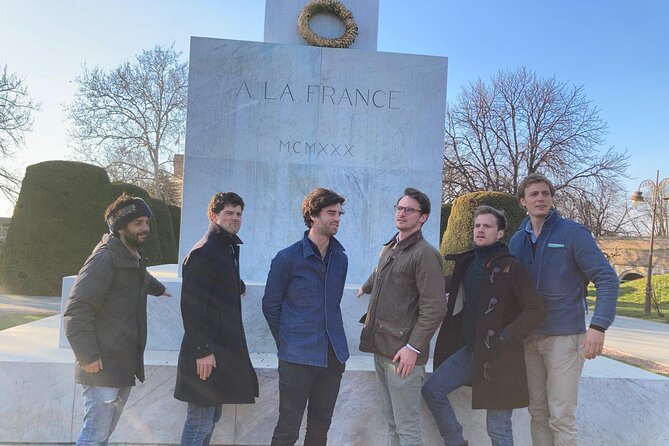
Near the end, the tour turns back toward the connection between France and Serbia at the Monument of Gratitude to France. Here, Nenad explains the friendship between the two countries, including its links to the First World War.
This is not just a decorative monument stop. It gives French-speaking visitors a specific way into Serbian history, while also showing that international relationships are part of Belgrade’s public spaces. The planned stop lasts about 10 minutes, so the explanation should be focused rather than exhaustive.
I appreciate the fact that the French theme does not appear only in the tour’s language. It is built into the route and supported by real places. That makes the experience more meaningful for visitors who want to understand the Francophone connection in Serbia rather than simply receive general commentary translated into French.
The French Embassy and King Peter I Street
The walk continues past the French Embassy, a refined interwar building shaped by monumental classicism and detailed sculpture. Nenad adds stories and anecdotes here, giving you a chance to look beyond the official façade.
The route then follows King Peter I Street. The street is tied to King Peter, a French-speaking Serbian king, and includes several notable buildings. You will pass the oldest restaurant in Belgrade, Princess Ljubica’s mansion, and other historic structures.
This final section sounds especially good for people who enjoy architecture and civic history. It brings the tour back from the fortress and older religious influences to the city’s urban institutions, royal connections, and international links.
The ending is at Kneza Mihaila 49, at the crossroads of Kneza Mihaila and Kralja Petra streets. That is a useful central location. You can continue exploring, stop for lunch, or return to a place that deserves more time.
What $43.94 buys you
At $43.94 per person, this is not the cheapest way to walk through Belgrade. The value depends heavily on your ability to follow French and your interest in detailed interpretation.
For that price, you receive approximately three and a half hours with a French-speaking guide, a maximum group size of eight, and a route covering central Belgrade, Skadarlija, Dorćol, the fortress, Kalemegdan, and several French-Serbian sites. There are no separate admission charges listed for the stops, so the cost is mainly paying for the guide’s time and perspective.
I think the price is easier to justify if you are staying only a short time, want a strong first orientation, or prefer detailed conversation to a large group lecture. It is also a good fit if you have already read about Belgrade and want someone to connect the facts to real streets.
The value is weaker if you speak little French, dislike long walks, or plan to rush through the city independently. You would still see many of the exterior sights without a tour. What you would miss is the context, the anecdotes, the Cyrillic help, and the unusual addresses Nenad brings into the route.
Who should book this walk
I would choose this tour if I were a French-speaking visitor who wanted a human introduction to Serbia rather than a checklist of monuments. It suits couples, families with older children, and small groups who enjoy asking questions. The six published five-star ratings also point to a consistent strength: Nenad makes people appreciate Belgrade and Serbia as a whole, not only the city center.
It is especially useful on your first morning or first full day. The 9:30 a.m. start gives you a framework for later sightseeing, and the central ending leaves the afternoon open.
You should think twice if you need a slow pace, lots of sitting, or a tour conducted in another language. The group is small, but the walk still covers a lot of ground. The supplied information does not give a detailed accessibility assessment, so anyone concerned about uneven fortress paths or walking endurance should ask before booking.
Free cancellation is available up to 24 hours before the 9:30 a.m. start time. Changes or cancellations inside that period are not accepted for a refund.
Should you book Belgrade Walking Tour in French?
Book it if French is your comfortable tour language and you want Belgrade explained through both its famous sights and its less obvious corners. The strongest reasons are Nenad’s journalistic storytelling, the small group, the Cyrillic introduction, and the route’s unusual blend of Ottoman, Serbian, and French connections.
Skip it if you only want a brief monument tour or prefer to explore without a schedule. For everyone else, $43.94 buys a thoughtful first look at a complicated city, with enough local detail to shape what you do next.
FAQ
What language is the tour conducted in?
The tour is conducted in French and is led by a French-speaking journalist named Nenad.
How long does the walking tour last?
The tour lasts approximately three hours and 30 minutes.
Where does the tour begin?
It begins at Republic Square, Trg republike 3, in Belgrade.
Where does the tour finish?
It finishes at Kneza Mihaila 49, at the crossroads of Kneza Mihaila and Kralja Petra streets.
What time does the tour start?
The start time is 9:30 a.m.
How many people can join the tour?
The maximum group size is eight people.
Can I cancel for a full refund?
Yes. You can cancel at least 24 hours before the experience start time for a full refund. Cancellations or changes made less than 24 hours in advance are not accepted for a refund.
Just added around Belgrade
- Private Wine Tasting by Party in Belgrade★ 5.0 · 3 reviews
- Private Walking Tour of Belgrade and Old Zemun★ 5.0 · 3 reviews
- E-Scooter Serbian Food Tour★ 5.0 · 3 reviews
- Belgrade: The White Emigration in Serbia in the Wake of the Russian Revolution★ 5.0 · 3 reviews
- Belgrade Private Driving & Walking Tour★ 5.0 · 4 reviews
- Feel Belgrade Welcome tour★ 4.5 · 3 reviews
- Zica and Studenica monastery From Belgrade★ 5.0 · 3 reviews
- Belgrade Fashion and Design Tour – Discover Local Designers★ 5.0 · 4 reviews
Walking Tours, compared.
Half-Day Sightseeing and Walking Tour of Belgrade City
Read our review →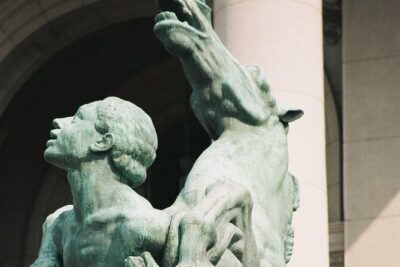
Browse the lists this tour appears in