
Reviewed · WALKING TOURS
Belgrade City Walk, Gathering and Sightseeing
Belgrade reveals itself one story at a time. This small-group walking tour links major sights with Serbian history, royal politics, religion, and local customs, making it a useful first look at the capital. I like the broad route and the included coffee or tea, especially the chance to pause at Hotel Moskva. The main drawback is that the tour can touch on politics and may not always follow the advertised route exactly.
With a maximum of six people, the experience should feel more like a guided conversation than a march behind a flag. Guide Aleksandar Bastic earns repeated praise for his clear explanations, local insight, and easy pace. I also like that the walk ends near Knez Mihailova Street, where you can continue exploring on your own.
In This Review
- Key points to know before you book
- Why this Belgrade walk works well on a first day
- Crkva Svetog Marka and the path to Serbian autonomy
- The National Assembly and Serbia’s royal center
- The Old Palace and Hotel Moskva
- Republic Square, Serbian customs, and everyday Belgrade
- Nebojsa Tower and the fortress story
- France, Kalemegdan, and the meeting of two rivers
- Pobednik, Belgrade’s most recognizable symbol
- What $38.41 buys you
- Practical details that affect your morning
- Who should book this walk?
- Should you book Belgrade City Walk?
- FAQ
- Where does the Belgrade City Walk begin?
- What time does the tour start?
- Where does the tour finish?
- How long does the experience last?
- How much does the tour cost?
- Is transportation included?
- Is a drink included?
- What language is the tour offered in?
- How many people can join the tour?
- Can I cancel for a full refund?
Key points to know before you book
- A compact introduction to central Belgrade: In two to three hours, you see churches, royal buildings, squares, monuments, Kalemegdan Park, and Belgrade Fortress.
- Coffee is part of the culture: The complimentary hot drink is more than a refreshment. Serbian coffee comes with its own ritual, and the pause at Hotel Moskva can be a highlight.
- A very small group: The tour accepts no more than six people, allowing Aleksandar to adjust his explanations and notice what interests you.
- The route ends at a useful location: You finish near the Belgrade City Library on Knez Mihailova Street, close to shops, cafés, and more central sights.
- Strong value for a first visit: At $38.41 per person, the price is fair if you want orientation, historical context, and a long list of sights without paying for transport.
- Allow for a flexible interpretation of the route: One past participant found the discussion more political than expected and said the stated itinerary was not followed closely.
Why this Belgrade walk works well on a first day
Belgrade is not a city you understand from one grand monument. Its story is spread across churches, Ottoman and Serbian memories, royal buildings, socialist-era politics, military sites, and everyday gathering places. This walk gives you a useful framework before you return to the sights that deserve more time.
The route begins at Kosovska 47 at 11 a.m. and finishes near the center. That timing makes sense for a first or second day in town. You start with the government and religious heart of central Belgrade, then move toward the old fortress and the meeting point of the Sava and Danube rivers.
I see the biggest benefit as orientation with context. You are not simply shown a church, square, and monument. You hear why each place matters, how Serbia’s modern state took shape, and how Belgrade’s public spaces still function today.
The experience lasts about two to three hours. That is long enough to cover plenty of ground but short enough to leave room for lunch or a return visit. Since no transportation is included, you should expect to walk between the stops. The pace is described as easy, but comfortable shoes remain a sensible choice.
More Walking Tours in Belgrade:
- Belgrade: 3-Hour Small Group Walking Tour
★ 5.0 · 180 reviews - Half-Day Sightseeing and Walking Tour of Belgrade City
★ 5.0 · 37 reviews - Belgrade Private Walking Tour with a Local
★ 5.0 · 19 reviews
Crkva Svetog Marka and the path to Serbian autonomy
The first stop is Crkva Svetog Marka, one of the more important religious and historical points on the route. The church contains the graves of Milan Obrenovic, identified as the eldest son of Milos Obrenovic, and King Alexander I Obrenovic with Queen Draga.
The site also carries a political memory. In 1830, an edict from the Ottoman sultan announcing Serbian autonomy within Turkey was read here. That detail gives the church more weight than its impressive exterior alone suggests. It links a modern city street to the long process by which Serbia gained greater self-rule.
You spend about 20 minutes here, with admission included. That is enough time for an explanation and a look around, though it is not a long church visit or a detailed architectural study. If religious art is a major interest, you may want to return later at your own pace.
The National Assembly and Serbia’s royal center
The House of the National Assembly follows, with about 15 minutes outside the building. Built between 1907 and 1936, it is one of the grandest buildings connected with the former Kingdom of Yugoslavia.
Its long construction story mirrors the country’s own unsettled political life. The project began with architect Konstantin A. Jovanovic, then moved forward under Jovan Ilkic after political and financial problems caused delays. Later modifications and the involvement of several important architects add another layer to the story.
The building’s value on this walk is mainly visual and historical. Admission is not included, and the tour does not promise an interior visit. You should think of this stop as a chance to understand the building’s place in Serbian parliamentary life, not as a palace tour.
The guide’s explanations matter here. A quick look at a government building can feel dry without context. With a good explanation, the architecture becomes a record of changing governments, national ambitions, and interruptions.
The Old Palace and Hotel Moskva
The Old Palace sits at the corner of Kralja Milana and Dragoslava Jovanovica streets. Built from 1882 to 1884 for the Obrenovic dynasty, it now houses the City Assembly of Belgrade.
Its exterior is associated with 19th-century Serbian academic architecture. The stop takes around 15 minutes and is free. This is another short visit, but the palace helps you read the city’s central streets as a former royal district rather than just a modern commercial area.
Next comes Hotel Moskva on Terazije Square. Opened in 1908, this four-star landmark has 123 rooms and a distinctive Russian secession design. It is protected as a cultural monument and is known for its café, restaurant, and spa. Names connected with the hotel include Albert Einstein and Robert De Niro.
The included coffee or tea is served as part of the tour’s cultural experience. That pause is one of the most appealing details here. Serbian coffee is treated as a ritual, not merely a quick caffeine stop, and Hotel Moskva gives the break a suitably historic setting.
I would not book this walk solely for the beverage, but it adds warmth to an otherwise information-heavy morning. One participant called the coffee at Hotel Moskva the highlight. The hotel itself may also tempt you to linger, but food, extra drinks, and any personal purchases are not listed as included.
More City Tours in Belgrade:
- Taxi to/from Belgrade Airport to/from Belgrade City Center
★ 5.0 · 241 reviews - Belgrade Private City Tour
★ 5.0 · 41 reviews - Belgrade Airport to City Center Transfers
★ 5.0 · 39 reviews - Your Own Belgrade: Unexpected Treasures of the City
★ 5.0 · 16 reviews
Republic Square, Serbian customs, and everyday Belgrade
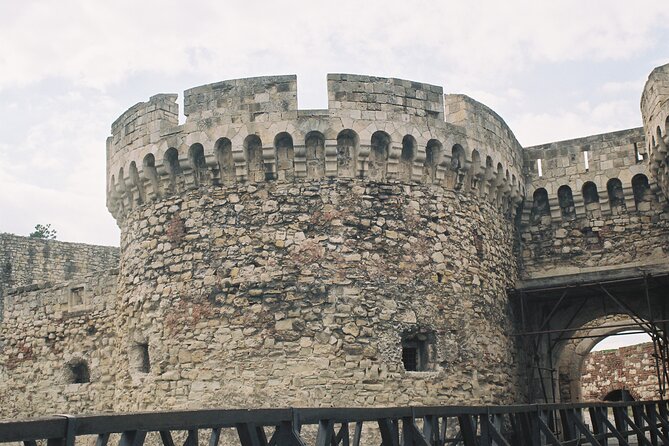
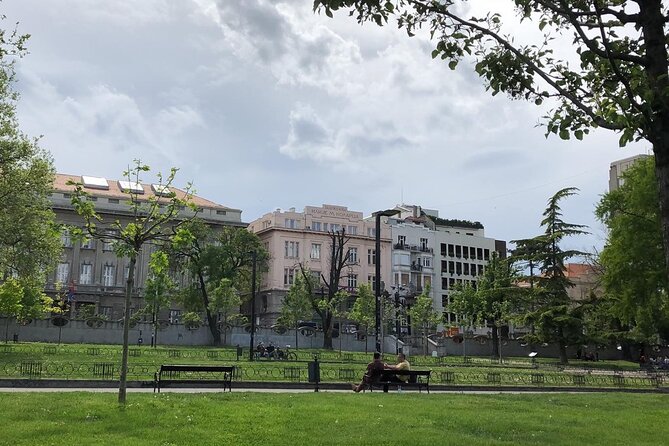
Republic Square is the city’s main meeting place. It occupies ground where gates once led into Belgrade, so the square connects present-day city life with the older defensive town.
This is a good place to understand how Belgrade works socially. You are not just looking at a statue or open pavement. You are seeing a place where people meet, arrange their day, and use the center as a reference point.
The tour also promises discussion of Serbian roots, religion, mentality, history, and heritage. It includes special customs and celebrations observed in Serbia. These subjects can make the walk feel more personal than a standard list of dates and buildings.
Here, guide style becomes especially important. Aleksandar Bastic is praised for being warm, clear, and passionate about Serbia. He has also been described as responsive to individual interests, which is useful in a group of six or fewer.
There is one point to keep in mind. A past participant felt the tour became more political than historical and said the guide moved away from the listed route. That does not cancel out the otherwise strong response, but it tells you what sort of experience this is: a conversation about Serbia’s identity and past, not a purely neutral architectural circuit.
Nebojsa Tower and the fortress story
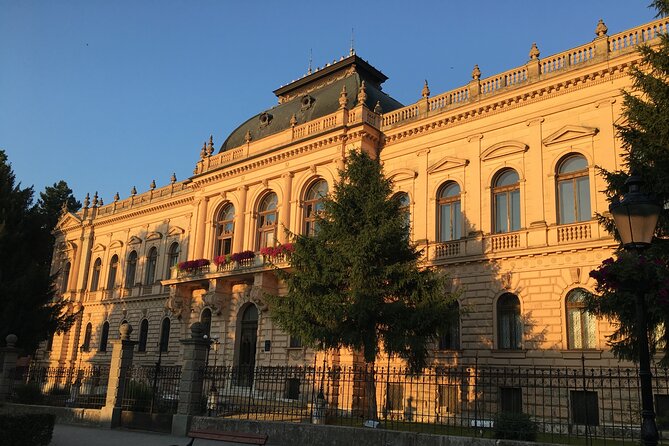
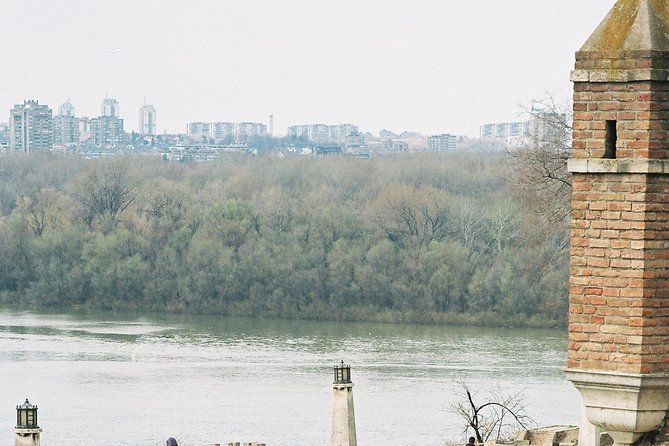
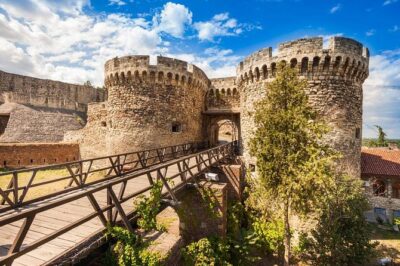
Nebojsa Tower brings the walk toward Belgrade’s defensive past. The stop is listed at about 25 minutes, with admission free.
The tower is part of the broader fortress area, where Belgrade’s position at the meeting of major rivers made control of the city so important. The tour uses this point to discuss customs and celebrations that are specific to Serbia, adding cultural material to the military setting.
Because the supplied details do not promise an interior visit, you should not assume you will receive a full museum tour inside the tower. The value is in the setting and the guide’s interpretation.
This portion of the walk may be especially useful if you want to understand how Serbia’s traditions connect with its political and religious past. Aleksandar’s ability to explain lesser-known facts is one of the strongest reasons to choose a guide-led walk rather than simply follow a map.
France, Kalemegdan, and the meeting of two rivers

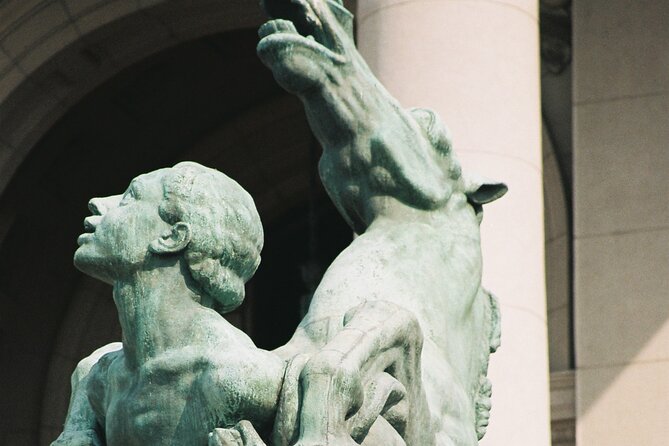
The Monument of Gratitude to France is positioned at the end of the main avenue through Kalemegdan Park. Sculptor Ivan Mestrovic created it, and it was erected in 1930.
The monument reflects the relationship between Serbia and France after the First World War. You spend around 10 minutes here, and admission is not included, although the monument is viewed as part of the public route.
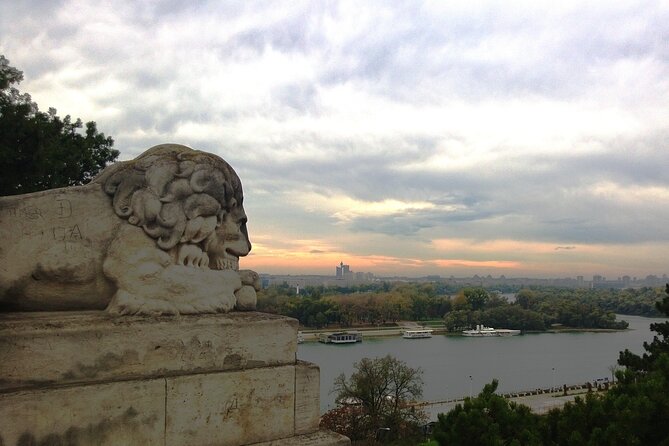
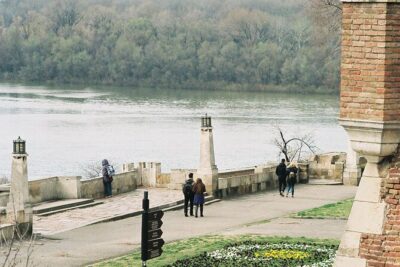
From there, the walk reaches Kalemegdan Park and Belgrade Fortress. This is the longest stop, at roughly 45 minutes, and it is the visual center of the tour. The fortress includes the old citadel, while Kalemegdan Park surrounds the historic core above the confluence of the Sava and Danube.
This is where the route pays off. You get military history, city views, open space, and a clear sense of why Belgrade has mattered for so long. The fortress is not a single building with one story. It is the historic core of the capital, layered over centuries and now woven into the city’s daily life.
Admission to the park and fortress area is free. Still, 45 minutes is only enough for a guided overview. If you want to explore towers, museums, walls, or every viewpoint, plan to return after the tour.
Pobednik, Belgrade’s most recognizable symbol
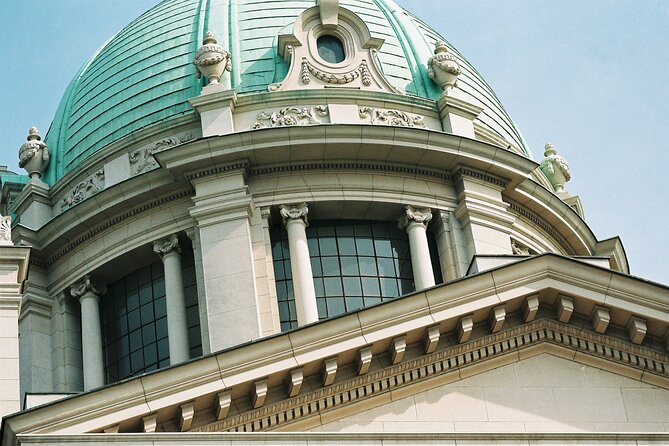
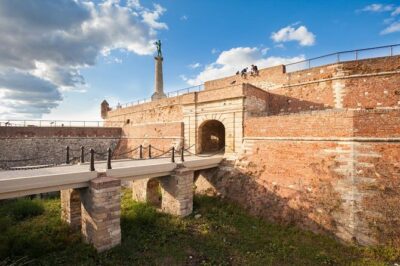
The final listed stop is Pobednik, the Victor monument. It is often treated as Belgrade’s clearest symbol, and its location gives you a strong closing view of the fortress area and river junction.
The story behind it is unusual. Ivan Mestrovic first designed the figure as part of a fountain intended for Terazije Square. The project was conceived before the First World War to honor the Serbian army’s victories in the Balkan Wars.
The figure holds a sword in his right hand, representing war, and a falcon in his left, representing peace. The fountain was never completed as planned, and the figure eventually became the monument seen at the fortress.
The stop lasts about 15 minutes. Admission is not included, and the experience does not indicate that you enter the monument itself. The guide’s account is the real reason to pause here, since the symbolism and relocation explain why the statue means more than its simple outline suggests.
What $38.41 buys you
The price is $38.41 per person. For a two to three-hour private-feeling walk with a maximum of six people, a local guide, a broad central route, and a complimentary hot drink, I consider that reasonable.
You are paying for explanation and access to local perspective, not for transportation or a series of interior admissions. That distinction matters. If you prefer to move quickly between sights or want museum entry included, this may feel less complete.
If you are new to Belgrade, the value is stronger. The walk helps you decide where to spend your remaining time, and several stops are easy to revisit independently. The route covers enough ground that you could save money by exploring on your own, but you would lose the connections between Serbian autonomy, royal rule, parliamentary life, religious tradition, and the fortress.
The small group also changes the value calculation. With six people or fewer, you can ask questions and potentially discuss your own interests. Aleksandar has been praised for adapting to what captures your attention, though you should be comfortable with a guide who may include political interpretation.
The tour is commonly booked about eight days ahead. That is useful planning information, particularly if your Belgrade schedule is fixed. Confirmation arrives at booking, and free cancellation is available up to 24 hours before the 11 a.m. start time. A minimum number of participants is required, so a cancellation by the operator can result in another date, another experience, or a full refund.
Practical details that affect your morning
Meet at Kosovska 47 in Belgrade at 11 a.m. The published end point is in front of the Belgrade City Library near Knez Mihailova Street, with both 54a Kneza Mihaila and 56 Knez Mihailova shown in the directions. I would confirm the exact end address when booking, though both references place you in the same central area.
No transportation is included. The walk uses central city streets and the fortress area, so plan for an active morning on foot. Most people can participate, service animals are allowed, and the meeting point is near public transportation.
The tour is offered in English. If the weather turns gray or lightly rainy, the experience can still work, since much of the value comes from the guide’s stories. Bring suitable clothing, however, because substantial portions take place outdoors.
The experience has a 4.8 rating from 19 ratings, with 95 percent of participants recommending it. The praise focuses on Aleksandar’s local knowledge, clear explanations, objectivity, friendly manner, and enthusiasm. Several people describe the walk as one of the highlights of a Belgrade visit, while one person found the political emphasis and route changes disappointing.
Who should book this walk?
I would choose this tour if you are visiting Belgrade for the first time and want a quick mental map of the center. It suits people who enjoy history, local customs, architecture, and conversation more than those who need long interior visits.
It also works well for solo visitors and couples who prefer a small group. The easy pace and limited group size make it less impersonal than a large coach excursion.
You may want a different option if you dislike political discussion, need a tightly fixed itinerary, or want every attraction to include admission. The route is broad rather than exhaustive. It gives you a strong start, then leaves you to return to the places that catch your interest.
Should you book Belgrade City Walk?
Yes, if you want a friendly, compact introduction to Belgrade and value a guide’s interpretation more than a checklist of interiors. The combination of royal buildings, Serbian religious history, Republic Square, Kalemegdan Fortress, and the coffee stop offers good variety for the price.
Book with realistic expectations. This is an orientation walk, not a full museum tour, and the political and historical discussion may be more prominent than you expect. If that sounds appealing, Aleksandar Bastic’s clear and personal style makes this a strong choice for your first morning in Belgrade.
FAQ
Where does the Belgrade City Walk begin?
The tour begins at Kosovska 47, Beograd 11000, Serbia.
What time does the tour start?
The scheduled start time is 11 a.m.
Where does the tour finish?
The tour ends near the Belgrade City Library on Knez Mihailova Street. The directions identify the location as both Kneza Mihaila 54a and 56 Knez Mihailova.
How long does the experience last?
The walk lasts approximately two to three hours.
How much does the tour cost?
The listed price is $38.41 per person.
Is transportation included?
No. Transportation is not included, so the experience takes place as a walking tour.
Is a drink included?
Yes. Coffee or tea is included. The tour presents Serbian coffee as an important cultural ritual.
What language is the tour offered in?
The experience is offered in English.
How many people can join the tour?
The group has a maximum of six participants.
Can I cancel for a full refund?
Yes, if you cancel at least 24 hours before the experience start time. Cancellations or changes made less than 24 hours before the start are not refunded or accepted.
Just added around Belgrade
- Private Wine Tasting by Party in Belgrade★ 5.0 · 3 reviews
- Private Walking Tour of Belgrade and Old Zemun★ 5.0 · 3 reviews
- E-Scooter Serbian Food Tour★ 5.0 · 3 reviews
- Belgrade: The White Emigration in Serbia in the Wake of the Russian Revolution★ 5.0 · 3 reviews
- Feel Belgrade Welcome tour★ 4.5 · 3 reviews
- Zica and Studenica monastery From Belgrade★ 5.0 · 3 reviews
- Belgrade Private Driving & Walking Tour★ 5.0 · 4 reviews
- Belgrade Fashion and Design Tour – Discover Local Designers★ 5.0 · 4 reviews
Walking Tours, compared.
Half-Day Sightseeing and Walking Tour of Belgrade City
Read our review →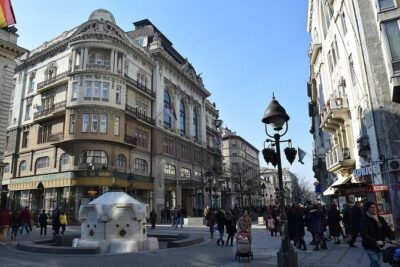
Browse the lists this tour appears in