
Reviewed · WALKING TOURS
Belgrade Old City 2-Hour Walking Tour
Belgrade reveals itself one layer at a time. This private walking tour links the city’s grand squares, Ottoman traces, Jewish history, Orthodox churches, fortress walls, and river views into a useful first look at Serbia’s capital. I like the excellent range of sights and the way the route connects famous landmarks with quieter streets such as Kosančićev Venac. I also like that your guide can explain modern Belgrade, not just recite dates.
The main drawback is the pace. You cover a lot of ground in roughly two to three hours, with hills, cobblestones, steps, and long stretches outdoors. You will get a strong orientation rather than a slow museum-style visit, and the $60.08 per-person price makes the most sense if you value a private English-speaking guide and want to ask plenty of questions.
In This Review
- Key Things to Know Before You Book
- Starting at Republic Square with Serbia’s Modern Story
- Studentski Trg and the Minds of Belgrade
- Dorćol, Trade, and Belgrade’s Jewish Community
- Bayrakli Mosque and Ottoman Belgrade
- Kalemegdan and the Fortress Walls
- Ružica Church and Its Unusual Military Interior
- The Upper Town and the Sava-Danube View
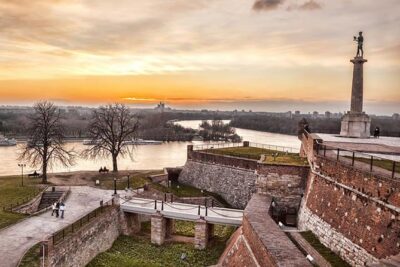
- Pobednik, Belgrade’s Best-Known Landmark
- Gates, Towers, and the Route Back Through Kalemegdan
- Kosančićev Venac and Belgrade’s Oldest Streets
- King Peter’s Street and Knez Mihailova
- Guides, Group Size, and the Value of $60.08
- Who Should Book This Belgrade Walk?
- Final Verdict: A Good First Introduction to Belgrade
- FAQ
- How long does the Belgrade Old City walking tour last?
- What is the price of the tour?
- Is the tour private?
- What language is the tour offered in?
- Where does the tour begin?
- Where does the tour end?
- Are hotel pickup and drop-off included?
- Can I cancel for a full refund?
Key Things to Know Before You Book
- The tour is private: Only your group takes part, which gives you more freedom to ask questions and set the pace within the planned route.
- The route covers Belgrade’s essentials: You see Republic Square, Dorćol, Bayrakli Mosque, Kalemegdan, the fortress, Pobednik, and Kosančićev Venac.
- Ružica Church is a memorable stop: Its chandeliers use spent cartridges, cannon ammunition, officers’ swords, and soldiers’ pistols from the Salonika Front.
- The fortress delivers the big view: From the Upper Town, you look toward the meeting point of the Sava and Danube rivers.
- Guides receive strong praise: Jelica, Aleksandar, and Melissa are singled out for clear English, helpful explanations, and answers to many questions.
- You need moderate fitness: Expect a sustained city walk over uneven streets, park paths, and some uphill sections.
Starting at Republic Square with Serbia’s Modern Story
The tour begins at Republic Square, in front of the monument to Prince Mihailo. This is a sensible meeting point because it sits in the heart of central Belgrade and is easy to recognize.
Your guide starts with the National Museum and National Theatre, two major buildings facing the square. The short introduction to Prince Mihailo also gives you a useful key to Serbia’s modern political story. This first stop lasts about 10 minutes, so do not expect a full history lecture. Instead, you get the basic context needed to understand why the square matters.
I like this opening because it puts you in the city center before taking you into older quarters. If you have just arrived in Belgrade, the square helps you get your bearings quickly. It is also a practical place to return to later, since the tour ends here.
More Walking Tours in Belgrade:
- Belgrade: 3-Hour Small Group Walking Tour
★ 5.0 · 180 reviews - Half-Day Sightseeing and Walking Tour of Belgrade City
★ 5.0 · 37 reviews - Belgrade Private Walking Tour with a Local
★ 5.0 · 19 reviews
Studentski Trg and the Minds of Belgrade
A short walk brings you to Studentski Trg, or Student Square. The square is described as Belgrade’s oldest urban city square, and its park is surrounded by important academic buildings.
The Faculty of Philosophy, Faculty of Philology, and Faculty of Mathematics and Natural Sciences are all nearby. The most impressive building is Captain Miša’s Edifice, home to the University of Belgrade. Your guide explains Captain Miša’s generosity and his support for education, along with stories about important Serbian scientists and thinkers.
This stop adds something many quick city walks leave out: a look at the people and institutions that shaped Serbian public life. You spend about 10 minutes here, enough to understand the setting and take in the classical architecture without getting bogged down in a long academic talk.
For me, this is one of the tour’s best choices. Belgrade is not only a city of armies, rulers, and battles. Studentski Trg shows you its intellectual side.
Dorćol, Trade, and Belgrade’s Jewish Community
The route continues into Dorćol, one of the city center’s most interesting neighborhoods. Today, it is known for cafes, galleries, restaurants, and museums, with a strong local identity among its residents.
The name comes from a colloquial Turkish term meaning crossroads. During Ottoman rule, Dorćol was an active trading point. That single detail helps explain why this quarter feels like a meeting place between different periods and cultures.
The guide stops near the Jewish community center to discuss Belgrade’s Jewish community, daily life, work, and its terrible fate during World War II. This is an important part of the tour because it treats the city’s past as more than a procession of monuments. You are asked to think about the people who lived in these streets, not only the rulers who controlled them.
Plan on about 15 minutes here. The subject is serious, and the stop may feel more reflective than the earlier squares. That balance is useful. A city tour should not smooth away painful history simply because the schedule is short.
Bayrakli Mosque and Ottoman Belgrade
Bayrakli Mosque is the only remaining mosque in Belgrade. The building dates to the 16th century, and it offers a direct link to the city’s Ottoman period.
The guide uses this stop to explain how Belgrade looked and functioned under Ottoman rule. You spend about 15 minutes here, mainly listening outside and taking in the setting. The mosque is not presented as an isolated religious building. It is part of the wider story of trade, government, faith, and daily life in an Ottoman city.
This is a valuable stop for anyone who wants more than a Serbian national narrative. Belgrade has repeatedly changed hands, and its buildings reflect those shifts. The mosque gives you a clear reminder of that layered past.
More tours and experiences worth your time
- 2 hours / Sightseeing Boat cruise Drinks Included
★ 5.0 · 31 reviews
Kalemegdan and the Fortress Walls
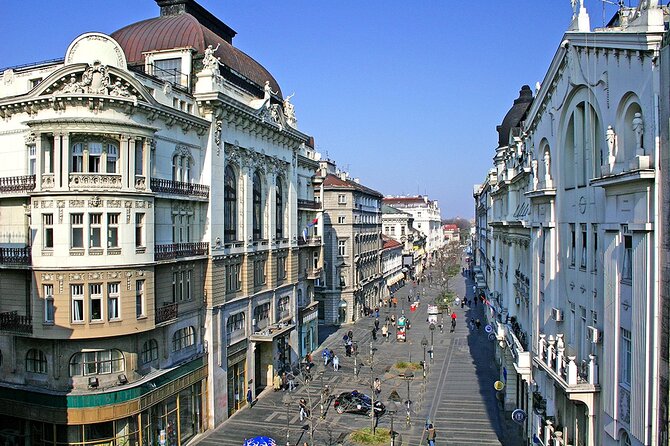
From Dorćol, you move into Kalemegdan, Belgrade’s oldest and largest central park. The park is also the setting for the Belgrade Fortress, where Roman, medieval, Ottoman, and later military remains occupy the same broad area.
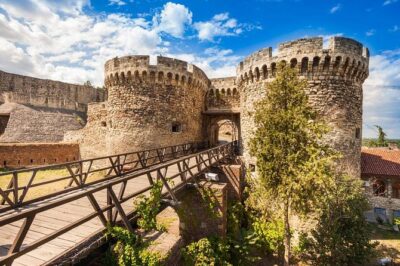
The route begins near Leopold’s Gate and passes remains of the Roman castrum Singidunum. Medieval walls were built over and around the earlier Roman site. You then see Zindan Gate, Despot’s Gate, and Jakšića Tower, all connected with the fortress’s 15th-century defenses.
The tour also includes the Chapel of St. Petka and Ružica Church. The listed schedule gives about 15 minutes to the fortress section before another 15 minutes at Ružica, but the entire fortress visit involves more walking and several separate points of interest.
You should pay attention to your footing here. This is not a polished indoor attraction with level floors. The fortress area includes old stone surfaces, park paths, and uneven sections. Comfortable shoes matter more than fashionable ones.
Ružica Church and Its Unusual Military Interior
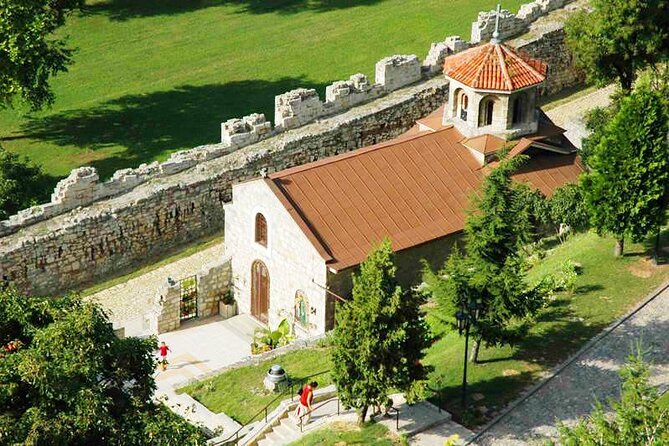
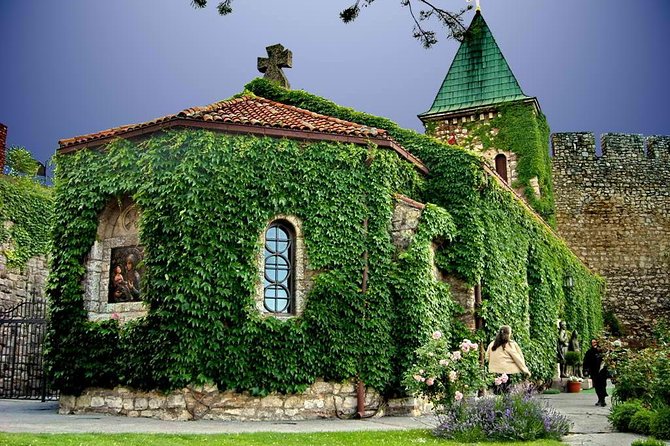
Ružica Church is one of the most distinctive stops on the route. The Church of the Holy Mother of God was built as a church around 1875, but the building previously served as a gunpowder magazine and military school.
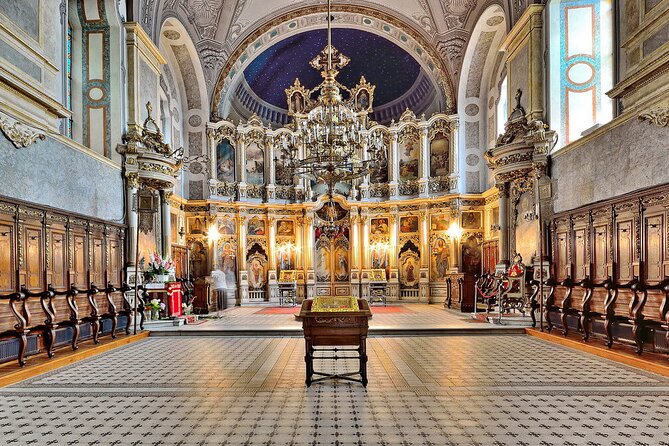
It is described as Belgrade’s oldest Orthodox church, and its interior is especially unusual. Three chandeliers are made from spent cartridges, cannon ammunition, officers’ swords, and soldiers’ pistols from the Salonika Front.
This is the point where a short city walk becomes a more personal experience. The building is not simply old or ornate. Its decoration connects worship with the memory of war, making it unlike the standard church visit you might find on a European city tour.
Be respectful inside. One person on the tour had the chance to sit quietly during a service, and the guide correctly explained that photographs would not be suitable at that moment. That is a good example of why a private guide can help. You get context, but you also get guidance about local manners.
The Upper Town and the Sava-Danube View
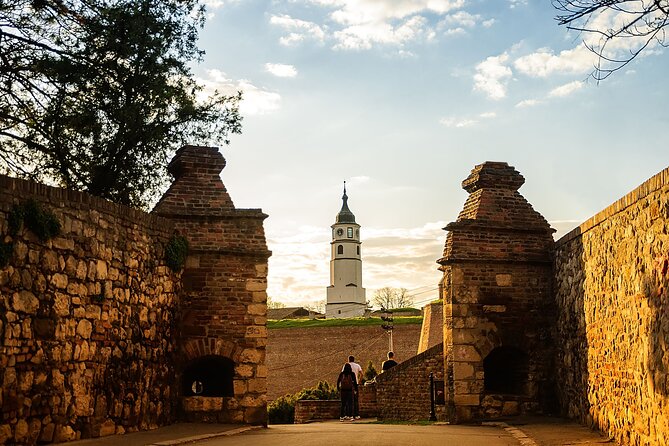
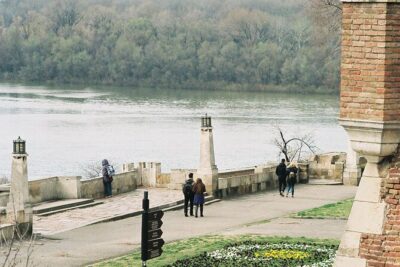
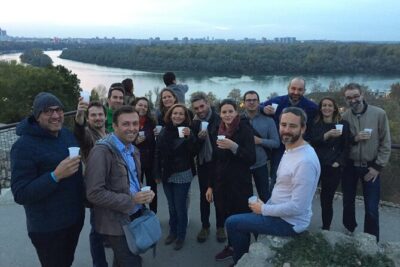
The route climbs into the fortress’s Upper Town, where the major visual reward arrives: the confluence of the Sava and Danube rivers.
You pass the Mehmed-pasha Sokolović Fountain and Defterdar’s Gate, then look down toward the Lower Town. From above, you can see the Main Gunpowder Storage, Karl VI’s Gate, and Nebojša Tower.
This section is less about entering every structure and more about reading the fortress as a defensive system. Gates, towers, walls, and river edges all make more sense when you see how the site controlled movement through the city.
The river view also gives the walking tour a needed pause. After several history-heavy stops, you can simply look outward and understand Belgrade’s position at an important meeting point of waterways. Bring water in warm weather. A guide once directed a participant toward ice cream after the walk during temperatures of about 36 degrees Celsius, which is practical advice worth following.
Pobednik, Belgrade’s Best-Known Landmark
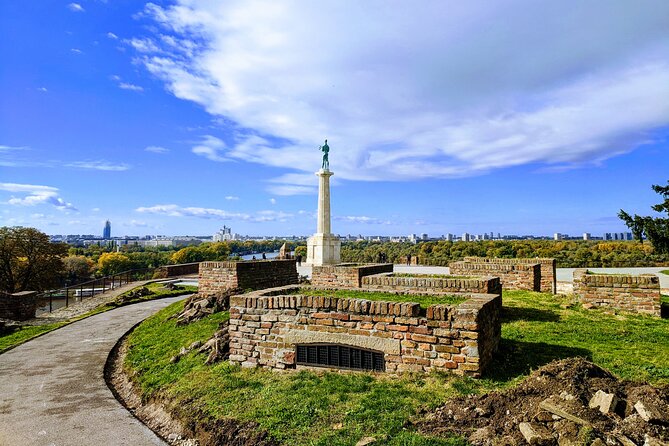
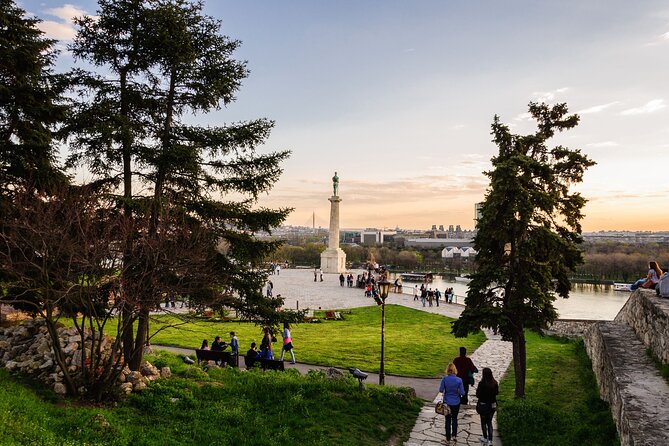
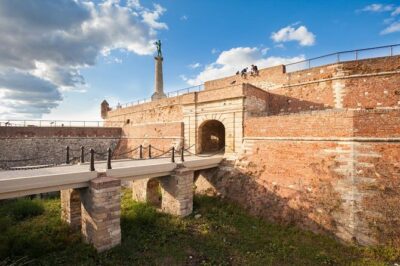
The path through the Upper Town leads to Pobednik, or the Victor monument. Created by Ivan Meštrović in 1928, it commemorates Serbia’s victory over the Ottoman and Austro-Hungarian empires.
The monument is one of Belgrade’s most photographed sights, but the guide gives it more meaning than a quick picture stop. Its location, posture, and historical purpose all connect to Serbia’s effort to honor military success and national independence.
The stop lasts about 15 minutes. That is enough time to hear the explanation, take photographs, and enjoy the open view. If you want detailed sculpture analysis or a long discussion of Meštrović’s work, this tour will not provide that. Its goal is to connect the monument to the city’s wider story.
Gates, Towers, and the Route Back Through Kalemegdan
The fortress circuit continues past the Roman Well, King’s Gate, Sava Promenade, Damat Ali Pasha’s Tomb, and the Clock Gate with its Clock Tower. You also pass the Military Museum and leave through Istanbul Gate, also called Stambol Gate.
Back in Kalemegdan Park, the route includes the Monument of Gratitude to France, another work by Ivan Meštrović, along with busts of notable Serbian writers and cultural figures.
This portion is useful because it fills in the fortress after the headline stop at Pobednik. You see how many different powers left their mark on the site. The Roman Well, Ottoman tomb, military museum, clock tower, and national memorials are not all from the same period, and that mixture is the point.
Kosančićev Venac and Belgrade’s Oldest Streets
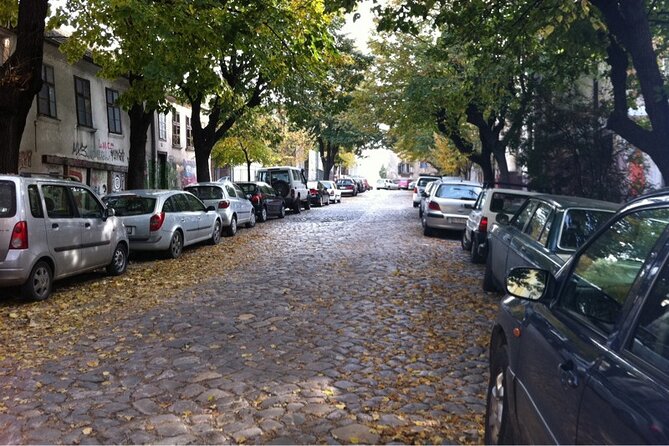
After Kalemegdan, the tour heads toward Varoskapija and Kosančićev Venac. This is one of the most atmospheric parts of the walk, with cobblestone streets and a quieter feel than the central squares.
Nearby are the Serbian Orthodox Patriarchy, Belgrade Cathedral, the old tavern called The Question Mark, and the Residence of Princess Ljubica. The residence is an elegant Balkan-style building and gives you a look at domestic life and court culture rather than military power.
Kosančićev Venac is also associated with artists, galleries, sculptors, photographers, and art schools. It is sometimes called Belgrade’s Montmartre, a comparison that helps you understand its creative character, though the neighborhood remains distinctly Serbian.
The guide also points out the former site of the National Library of Serbia, destroyed during the Nazi bombing of Belgrade in 1941. This is another somber reminder that the city’s cultural history includes major losses.
At about 40 minutes, this is the longest scheduled stop. That makes sense. There is more to see, and the cobblestone streets reward a slower pace. It may also be the best section for photographs, though uneven ground can make it less comfortable for anyone with mobility concerns.
King Peter’s Street and Knez Mihailova
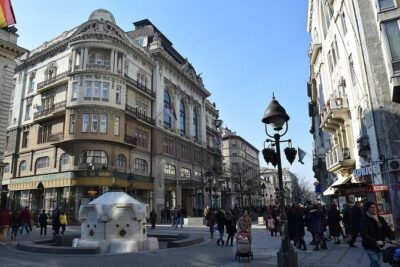
The route climbs back toward the center along King Peter’s Street. You pass King Peter the First Elementary School, the Neo-Renaissance palace of the National Bank of Serbia, and an Art Nouveau department store.
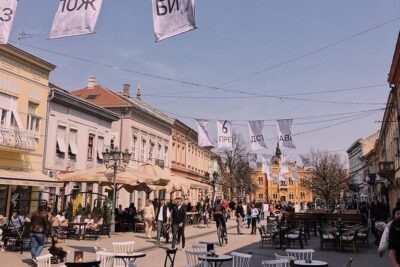
Then you enter Knez Mihailova, Belgrade’s main pedestrian street. The walk back to Republic Square brings more examples of 19th and 20th-century civic architecture, including the Serbian Academy of Sciences and Arts.
This final section works as a visual recap. You have seen fortress walls and Ottoman traces, then returned to the formal streets and institutions of modern Serbia. The tour finishes at Republic Square, the same place where it began.
The route is long enough to help you decide where to spend more time later. One guide, Melissa, was especially praised for answering many questions and helping identify places worth revisiting. That is exactly how I would use this tour: treat it as a first pass, then return independently to the sites that catch your interest.
Guides, Group Size, and the Value of $60.08
The tour costs $60.08 per person and includes a professional English-speaking guide. Hotel pickup and drop-off are not included, so you need to reach Republic Square on your own.
The private format is the biggest factor in the price. Only your group participates, which means you can ask about Serbian and Balkan history without waiting through questions from a large crowd. The guide can also adjust explanations to your interests, within the fixed route and time.
The guide team receives particularly strong praise for clear English, warmth, and the ability to bring complicated history into plain language. Jelica is noted for making Belgrade’s past and present feel connected. Aleksandar is praised for explaining complex Serbian history during an interesting few hours. Melissa is noted for answering many questions and helping identify places to revisit.
At 93 percent recommended and a 4.9 rating from 15 reviews, the feedback is very positive, though the sample is small. One three-star assessment still found the tour good value and effective at covering the major buildings and events. That is a fair description of what you are buying: a broad, well-organized introduction rather than an intimate specialist tour of every interior.
Who Should Book This Belgrade Walk?
I would choose this tour if you are visiting Belgrade for the first time, have only a short stay, or want a clear historical framework before exploring alone. It suits curious adults, couples, families with older children, and small groups who prefer a private guide.
It is also a good fit if you want to ask questions. The route covers difficult subjects, including occupation, war, religious change, and the destruction of the National Library. A private setting makes those conversations easier.
I would hesitate if you dislike walking on uneven surfaces or want extensive time inside museums and churches. Most stops are outside, admission is not listed as included, and the schedule is full. The tour can also feel quick if you want to linger at every fortress gate or study each building in detail.
Free cancellation is available up to 24 hours before the start time. The experience requires a minimum number of participants, and service animals are allowed. Children receive a child rate only when sharing with two paying adults.
Final Verdict: A Good First Introduction to Belgrade
Book this tour if you want Belgrade’s major sights tied together by one clear story. The combination of Studentski Trg, Dorćol, Bayrakli Mosque, Kalemegdan, Ružica Church, Pobednik, and Kosančićev Venac gives you far more than a simple monument checklist.
The strongest reasons to go are the private format, the English-speaking guides, and the unusual mix of Ottoman, Orthodox, Jewish, Roman, military, and modern Serbian history. The main caution is the pace and physical effort. Wear solid shoes, carry water, and keep some time afterward for the sites you want to revisit.
For a first look at Belgrade, $60.08 per person is reasonable if your group wants personal attention and a guide who can make a complicated past easier to follow.
FAQ
How long does the Belgrade Old City walking tour last?
The tour lasts approximately two to three hours.
What is the price of the tour?
The listed price is $60.08 per person.
Is the tour private?
Yes. Only your group will participate.
What language is the tour offered in?
The tour is offered in English with a professional English-speaking guide.
Where does the tour begin?
It begins at Republic Square, Trg Republike 3, Belgrade 11000, in front of the Prince Mihailo horseman statue.
Where does the tour end?
The tour ends back at Republic Square, the starting point.
Are hotel pickup and drop-off included?
No. Hotel pickup and drop-off are not included.
Can I cancel for a full refund?
Yes. You can cancel for a full refund up to 24 hours before the experience start time. Cancellations made less than 24 hours in advance are not refunded.
More City Tours in Belgrade
- Taxi to/from Belgrade Airport to/from Belgrade City Center
★ 5.0 · 241 reviews - Belgrade Private City Tour
★ 5.0 · 41 reviews - Belgrade Airport to City Center Transfers
★ 5.0 · 39 reviews - Belgrade City Walk, Gathering and Sightseeing
★ 5.0 · 19 reviews
Just added around Belgrade
- Private Wine Tasting by Party in Belgrade★ 5.0 · 3 reviews
- Private Walking Tour of Belgrade and Old Zemun★ 5.0 · 3 reviews
- E-Scooter Serbian Food Tour★ 5.0 · 3 reviews
- Belgrade: The White Emigration in Serbia in the Wake of the Russian Revolution★ 5.0 · 3 reviews
- Zica and Studenica monastery From Belgrade★ 5.0 · 3 reviews
- Belgrade Private Driving & Walking Tour★ 5.0 · 4 reviews
- Feel Belgrade Welcome tour★ 4.5 · 3 reviews
- Belgrade Fashion and Design Tour – Discover Local Designers★ 5.0 · 4 reviews
Walking Tours, compared.
Half-Day Sightseeing and Walking Tour of Belgrade City
Read our review →
Browse the lists this tour appears in