Reviewed · TOURS
Small Group Tour; Belgrade to Tirana 5 Balkan Countries in 8 Days
Five countries, eight busy days, one sweeping road trip. This tour links Belgrade, Sarajevo, Mostar, Kotor, Prizren, Kruja, and Tirana in a compact journey through Serbia, Bosnia and Herzegovina, Montenegro, Albania, and Kosovo. I like the strong mix of major sights and local stops, especially Mrizi i Zanave farm and the food-focused finale in Tirana. I also like the maximum group size of 10, which should make border crossings and city walks easier to manage.
The main tradeoff is the pace. You will cover long distances, particularly on the first day and on some cross-border legs, so this is not a slow, linger-over-lunch holiday. Uneven ground in Sarajevo, early starts, and several hours in the vehicle each day make it best for active people who want broad coverage more than long stays in one place.
In This Review
- Key points to know before booking
- Why this Belgrade to Tirana route works
- Day 1: Belgrade, Zvornik, and the road to Sarajevo
- Day 2: Sarajevo’s layered past and Mostar’s Old Bridge
- Day 3: Kotor’s stone lanes and Bay of Kotor setting
- Day 4: Budva, Sveti Stefan, and Shkoder Castle
- Day 5: Mrizi i Zanave and the cultural heart of Prizren
- Day 6: Gjakova, Dečani Monastery, and Rahovec wine country
- Day 7: Kruja, Albanian resistance, and the old bazaar
- Day 8: Tirana through food, markets, and Bunk’Art 2
- What is included, and what needs budgeting
- Who should book this Balkan road trip?
- Should you book it?
- FAQ
- Where does the tour start and finish?
- How many countries does the tour visit?
- How many people can join the tour?
- Is accommodation included?
- Are meals included?
- Is the tour suitable for people with limited mobility?
Key points to know before booking
- Five countries in eight days: Serbia, Bosnia and Herzegovina, Montenegro, Albania, and Kosovo are all included.
- Small group of up to 10 people: This keeps the experience more personal than a large coach tour.
- Strong historic range: You visit Ottoman, Austro-Hungarian, medieval, communist, and modern Balkan sites.
- Food is part of the journey: Highlights include Mrizi i Zanave farm, Sarajevo specialties, Tirana byrek, qofte, Albanian coffee, and raki.
- Several UNESCO-linked stops: Mostar, Kotor, and Dečani bring major cultural sites into the route.
- Built for active sightseeing: Expect walking, cobbled streets, hilltop viewpoints, border crossings, and long drives.
Why this Belgrade to Tirana route works
I like the basic shape of this trip because it follows a clear westward route instead of sending you back and forth. You begin in Belgrade and finish in Tirana, with each day adding a different layer of Balkan culture.
The route also avoids making the whole experience a parade of capital cities. You get major urban stops, but you also see a riverside town in Zvornik, an agricultural project in northern Albania, Kosovo bazaars, a wine-growing valley, and a traditional mountain city in Kruja.
The small-group format matters here. A vehicle carrying no more than 10 people is better suited to narrow old-town streets and quick photo stops than a full-size coach. It also gives you a better chance to hear the guide during walking tours and ask questions about the complicated history of the region.
The price is $2,754.29 per person, based on two people sharing a room. That works out to roughly $344 per day, including accommodation with breakfast, transport, a professional guide, road costs, fuel, tourist taxes, and listed entry tickets. Lunches, drinks, snacks, souvenirs, and personal spending are extra, so your final cost will be higher.
I see the price as reasonable for a private-feeling, cross-border route that would take considerable planning to arrange independently. It is less attractive if you prefer to control every hotel, meal, and stop yourself. Single occupancy costs an extra 30 euros per night, which is worth adding to your calculation before booking.
Trips other travellers in Belgrade book alongside this one:
- Northern Serbia: Sremski Karlovci and Novi Sad Full-Day Tour from Belgrade
★ 5.0 · 425 reviews - Day Trip from Belgrade: Gems of Eastern Serbia
★ 5.0 · 424 reviews - Belgrade Nightlife Bar Pub Club Crawl with Drinks
★ 5.0 · 277 reviews
Day 1: Belgrade, Zvornik, and the road to Sarajevo
Your tour leader picks you up at your Belgrade hotel at 8:00 a.m. The first city walk begins at Belgrade Fortress and Kalemegdan Park, set above the meeting point of the Sava and Danube rivers.
The fortress gives you one of the best broad views in Belgrade. You will see the Pobednik monument in the Upper Town, dating from 1913, then walk through the park’s trees and quiet paths. From there, the route continues along Knez Mihailova, the city’s main social street, toward Republic Square.
This opening walk is a sensible introduction to Belgrade. You get the river view, an important monument, a green park, and the central pedestrian district without spending the entire day on formal sightseeing. Admission is free.
Then comes the first long drive toward Bosnia and Herzegovina. Zvornik is a one-hour stop on the Drina River, where you have time for lunch or a short walk through town. I would treat this as a useful break rather than a major sightseeing destination. It gives you a chance to eat local food and stretch your legs before continuing to Sarajevo.
The day ends with a drive into Sarajevo. The schedule is ambitious, and the first day may feel especially long if border traffic slows the vehicle. One useful advantage is that the drive gives you reading time, something you will appreciate on a route with so many stops.
Day 2: Sarajevo’s layered past and Mostar’s Old Bridge
Sarajevo receives the attention it deserves on day two. The walking tour covers the city’s origins, the medieval Bosnian Kingdom, and the Ottoman and Austro-Hungarian quarters.
This is one of the tour’s strongest history days. Sarajevo’s religious buildings and markets reflect its long mix of Muslim, Catholic, Orthodox, and Jewish communities. The city is often described as a European Jerusalem, and the route lets you see why through mosques, churches, synagogues, bazaars, and older market streets.
You will also see reminders of the Yugoslav War. Bullet holes and cannon marks remain visible in parts of the city, making the recent past hard to ignore. I value this direct approach, but you should expect a serious tone rather than a light sightseeing stroll.
The itinerary warns that some of the walking is on uneven terrain. Wear firm, comfortable shoes, particularly because Sarajevo’s old streets can be difficult underfoot.
At Latin Bridge, you hear the story of the 1914 assassination of Archduke Franz Ferdinand and its connection to the outbreak of World War I. The bridge itself is modest, but the historical importance is enormous. Its name comes from Latinluk, the Catholic quarter on the right bank of the Miljacka River during Ottoman times.
Sarajevo is also a good place to try local food. Meat dishes and desserts are part of the city experience, though meals are not included in the tour price.
Later, the route continues to Mostar. The Old Bridge, rebuilt after the war, gives the city its famous profile and its enduring message of remembrance. You will wander the Old Bazaar, with cobbled lanes, old mosques, Turkish-style shops, and stones marked with Don’t Forget.
Mostar is a UNESCO site, and the free time here is valuable. I would use it for an unhurried walk, photographs from different bridge viewpoints, and a little browsing in the bazaar. The one-hour listings for the Old Bridge and Mostar should be read as guided visit times, not as the total time you have in the city.
Day 3: Kotor’s stone lanes and Bay of Kotor setting
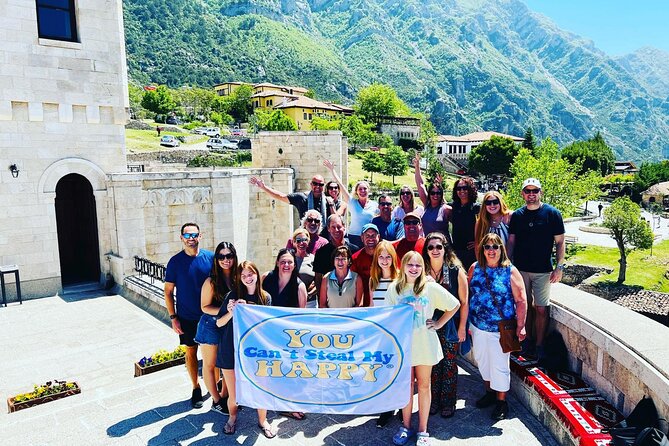
Kotor brings a change of mood. After Sarajevo and Mostar, the focus shifts to Montenegro’s fortified old town and its striking position by the Bay of Kotor.
The old town is a maze of narrow cobbled streets. Its confusing layout was designed to slow intruders, but today it makes wandering part of the pleasure. Old churches and buildings carry small plaques showing their construction dates and former use.
The tour includes St. Luke’s Church, which has special importance for local ideas of unity. This is a short visit on paper, but the three-hour Kotor stop gives you time to explore on your own afterward.
I like this balance between a guided orientation and free time. Kotor is the kind of place where you should put away the schedule for a while and follow the lanes without trying to see every corner. Still, the paving can be hard on your feet, and the route’s repeated old-town walks mean good shoes are essential.
Kotor is also one of the days where you may wish for more time. The town has enough churches, squares, and lanes to fill a full day, but this tour is designed to show you the highlights before moving on.
Something different for your next free day:
- Taxi to/from Belgrade Airport to/from Belgrade City Center
★ 5.0 · 241 reviews - Belgrade Big Tour: Top Attractions and Belgrade Neighborhoods
★ 5.0 · 232 reviews - Along the Danube: Golubac Fortress & Iron Gate Gorge day trip from Belgrade
★ 4.5 · 185 reviews - From Belgrade: Golubac Fortress & Iron Gate Danube Gorge
★ 4.8 · 185 reviews
Day 4: Budva, Sveti Stefan, and Shkoder Castle
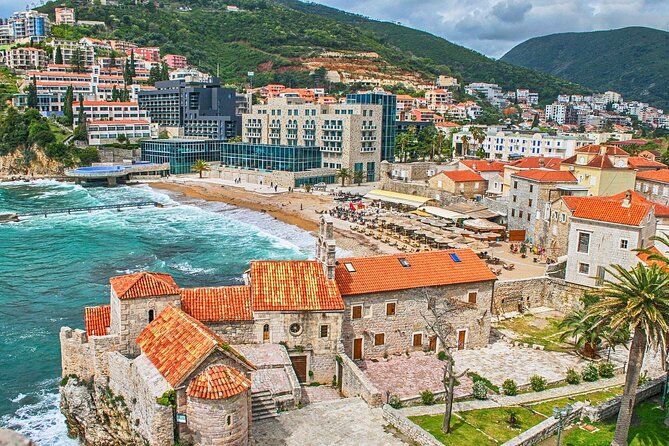
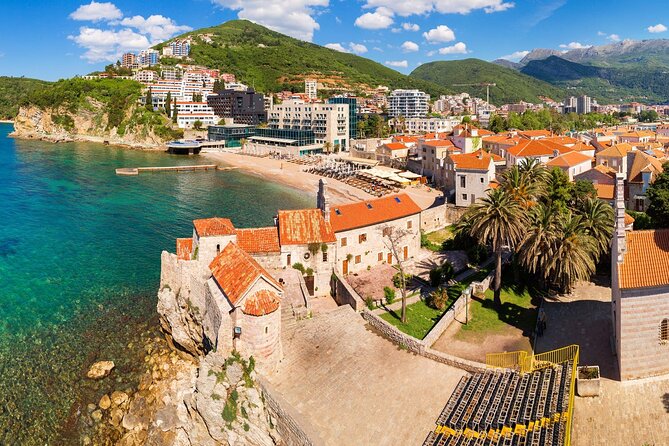
The morning begins in Budva, Montenegro’s best-known coastal resort. The city has a modern section filled with shops, restaurants, bars, and newer buildings, along with a historic old town containing churches and medieval structures.
The old town is the reason to come here. St. Ivan Church, St. Mary’s Church, and the surrounding lanes provide a compact walk through Budva’s past. The one-hour stop is enough for a first look, but it leaves little room for a beach visit or a relaxed meal.
Near Sveti Stefan, you pause for photographs. The former fishing settlement now operates as an exclusive residential resort, and the island cannot be visited. That limitation is worth knowing in advance. This is a viewpoint stop, not an island excursion.
Crossing into Albania, you reach Shkoder, one of the oldest cities in the country. Its long settlement history reaches back to Illyrian times, and the old walls of Rozafa Castle are linked to the first millennium BCE.
The climb or walk around the castle rewards you with views over Lake Shkoder and the meeting point of three rivers before they flow toward the Adriatic. The city also carries Venetian architectural influence, and its handmade carnival masks are a distinctive local craft. If your visit falls in February, the city’s carnival may add another cultural layer, though the tour does not promise festival dates.
Shkoder receives two hours, making it one of the better-paced stops. I would save energy for the castle and use any remaining time for the city itself.
Day 5: Mrizi i Zanave and the cultural heart of Prizren
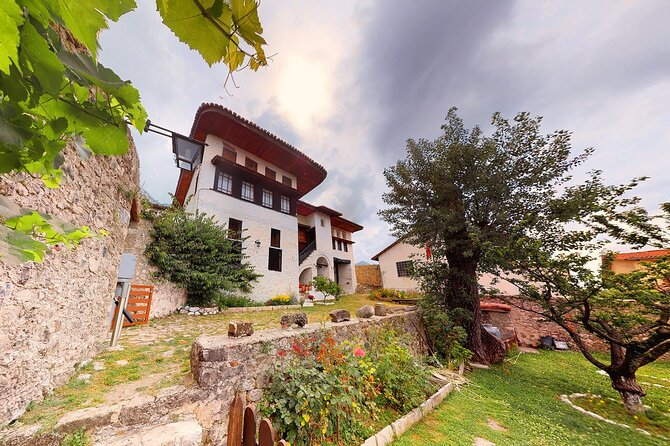
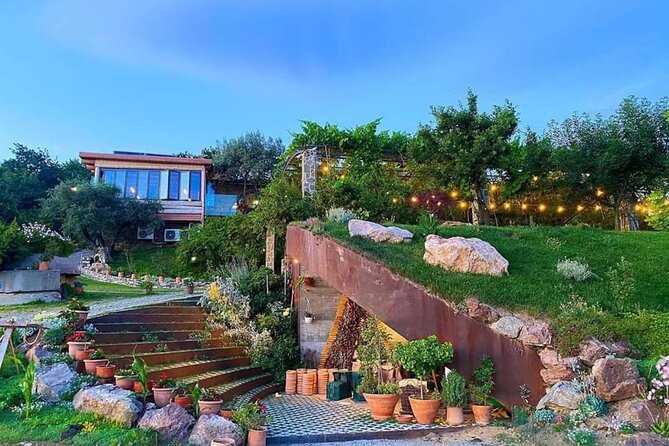
Day five contains one of the most unusual stops on the route: Mrizi i Zanave, a slow-food farm and agro-tourism project in Albania.
You tour the farm, hear how the family business created jobs for more than 400 people in nearby communities, and see how old communist buildings were reused for storage. The farm gathers, prepares, and preserves regional organic products.
This is exactly the sort of stop that adds meaning to a multi-country trip. Instead of only photographing monuments, you see how local food production and rural employment work in practice. You have time for a traditional lunch or to buy fresh produce, though the meal itself is extra.
In the afternoon, you cross into Kosovo and reach Prizren. The city has been shaped by Illyrian settlement, Byzantine rule, and the Ottoman period. The old town is crossed by a river and several bridges, with religious buildings and older streets close together.
The Sinan Pasha Mosque is included, and its colorful arabesque decoration makes it a worthwhile interior visit. Then you climb or walk toward Kalaja Fortress for a wide view over Prizren.
The city is also known for food and cultural events. In August, Dokufest turns Prizren into a major short-film festival setting. The tour does not include festival tickets, but the timing could make the town feel especially active.
The one-hour city visit plus separate mosque and fortress stops gives you a useful introduction. As with Kotor and Mostar, I would gladly accept more free time here, but the route is built around range rather than depth.
Day 6: Gjakova, Dečani Monastery, and Rahovec wine country
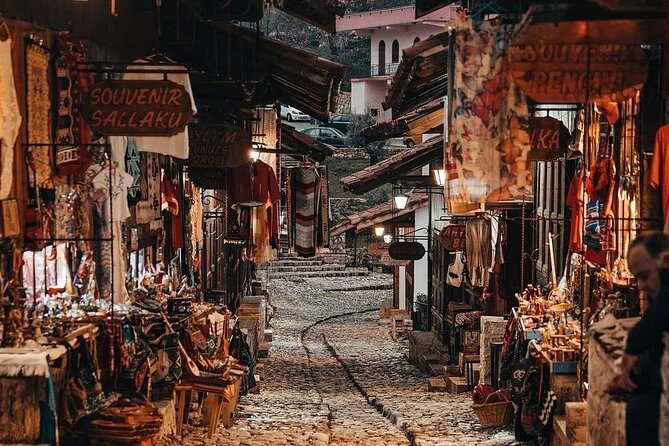
Gjakova offers a quieter look at Kosovo. Its bazaar is described as the oldest and largest in the country, rebuilt after damage from the First Balkan Wars, World War II, and the Kosovo War.
This is a good place to browse traditional crafts and local shops. You can also stop for a meal, although food is not included.
The next stop is the Monastery of Dečani, an Orthodox monastery still inhabited by monks. Its white exterior is notable, but the frescoes are the real reason for the visit. The monastery entered UNESCO recognition in 2004, with paintings showing 14th-century life and the Palaeologan Renaissance in Byzantine art.
The itinerary presents the monastery as a living religious site, not just a museum. That makes the visit more meaningful, but you should approach it respectfully and follow the guide’s instructions.
The final stop is Rahovec Valley, Kosovo’s wine-producing center. Grapes have been grown here since Illyrian times, and vineyards occupy hills at roughly 350 to 520 meters above sea level. The annual wine festival takes place each September.
No wine tasting is promised, so do not book this tour expecting a winery experience. The value is in seeing another part of Kosovo’s economy and agricultural tradition. It is a pleasant contrast to the mosques, fortresses, and war memorials earlier in the week.
Day 7: Kruja, Albanian resistance, and the old bazaar
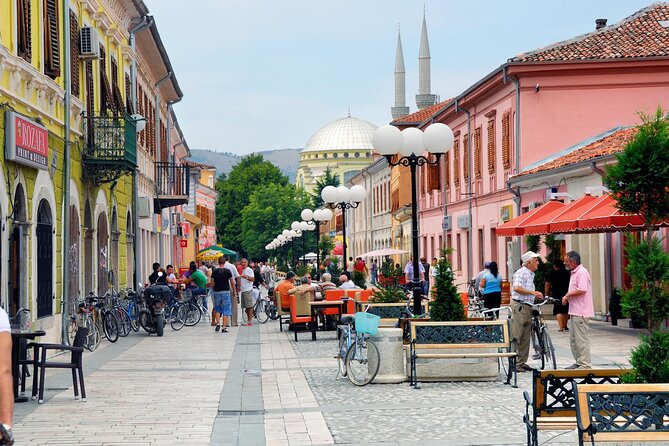
Kruja is one of Albania’s most important historic towns. It sits on rocky ground about 560 meters above sea level, on the slopes of Sarisalltik Mountain.
The town is closely tied to Albanian resistance against Ottoman expansion in the 15th century. That story gives the castle and bazaar more weight than a simple photo stop.
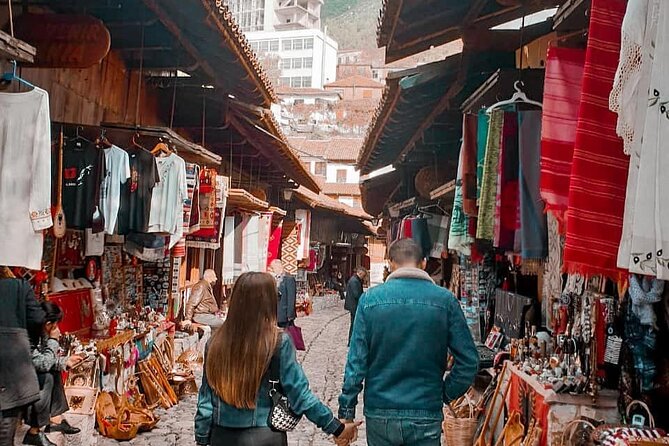
Kruja’s medieval bazaar is one of the oldest and largest in the Balkans. Its narrow streets and wooden houses make it the best shopping stop of the tour for handmade Albanian goods. You might find carpets, jewelry, and other traditional crafts, but prices and quality will vary, so take your time before buying.
The Castle of Kruja dates to the fifth century AD and occupies a defensive hilltop position. Your tour leader takes you along lesser-known paths connected with the castle’s defensive history. Entry is included.
You also have free time for lunch, shopping, and another look around town. This is a well-judged stop because it allows you to combine history with practical browsing instead of rushing straight back to the vehicle.
Day 8: Tirana through food, markets, and Bunk’Art 2
The final day turns to Tirana and uses food as the way into the city. You meet a local companion and begin at a small local place for byrek, the flaky pastry filled with cheese, meat, or spinach.
At Tregu Çam, you can browse clothing, kitchen goods, and other everyday items while bargaining with sellers. This is not polished sightseeing. It is a look at ordinary commerce and a chance to see how locals shop.
The walk continues through side streets, produce markets, and neighborhoods where you can observe daily life. You stop for a traditional dessert and Albanian coffee, giving the morning a relaxed rhythm after several demanding sightseeing days.
At Pazari i Ri, also called the Bicycle Bazaar, you may find secondhand clothing and furniture. The New Bazaar adds food to the program, with qofte, freshly baked bread, Albanian gjize for vegetarians, and a taste of raki.
These food stops are included in the experience, but I would still confirm exactly what is covered if you have dietary restrictions. The tour does identify vegetarian options, which is helpful.
The final visit is Bunk’Art 2, a former nuclear bunker built for Enver Hoxha and senior communist officials during the Cold War. It now houses a video-based museum about the communist army and everyday life under the regime.
Ending underground, with Albania’s communist past in view, gives the trip a strong final note. Entry to Bunk’Art 2 is included, and hotel drop-off in Tirana marks the end of the route.
What is included, and what needs budgeting
The package includes seven breakfasts, accommodation, transport, a professional guide, fuel, road fees, tourist taxes, and entry tickets for the listed included sites. Hotel pickup in Belgrade and hotel drop-off in Tirana are also provided.
You pay separately for lunches, drinks, snacks, souvenirs, and personal purchases. I would budget extra for meals in Sarajevo, Mostar, Kotor, Prizren, Kruja, and Tirana, plus food at Mrizi i Zanave if you choose to eat there.
The tour uses double or twin-room pricing. A single room costs an additional 30 euros per night per person. Tipping the guide and driver is recommended for good service, following common international practice.
Who should book this Balkan road trip?
I would choose this tour if you want to see a large part of the Balkans without arranging five separate countries yourself. It suits an active person who enjoys history, local food, old towns, and changing scenery, and who does not mind spending substantial time on the road.
It is especially useful for first-time visitors who want orientation before returning later for longer stays in Sarajevo, Kotor, Prizren, or Tirana. The guide can handle transport, borders, hotels, and timing while you focus on the places outside the window.
I would not choose it if you want beach time in Budva, extended museum visits, long restaurant lunches, or a flexible schedule. The first day is long, several stops are brief, and border traffic can affect the rhythm.
The tour has a 4.9 rating from eight submitted reviews. The strongest praise centers on organization, guide quality, and support from the Choose Balkans team. Specific guides named in the feedback include Anna, Ana, Juli, and Taulant, while Sirma and Alban are praised for planning and communication. That points to a company that places real weight on guide service, though your own guide will depend on the departure.
Should you book it?
Book this trip if your priority is maximum Balkan coverage with a small group, dependable transport, and a useful mix of famous sights and local encounters. Mrizi i Zanave, Dečani, Rahovec, and the Tirana food walk keep the route from becoming a simple checklist.
Before paying, be honest about the pace, ask about the likely hotel locations, and confirm how much free time you will have in each town. The experience is non-refundable and cannot be changed after booking, so the right decision is to accept the long drives and busy days before you commit.
FAQ
Where does the tour start and finish?
The tour starts in Belgrade, Serbia, with an 8:00 a.m. hotel pickup. It ends in Tirana, Albania, with hotel drop-off provided.
How many countries does the tour visit?
The route visits Serbia, Bosnia and Herzegovina, Montenegro, Albania, and Kosovo.
How many people can join the tour?
The maximum group size is 10 people.
Is accommodation included?
Yes. Accommodation and breakfast are included for the overnight stays. The listed price is based on two people sharing a double or twin room.
Are meals included?
Seven breakfasts are included. Lunches, drinks, and snacks are not included, although the Tirana food walk includes several listed tastings.
Is the tour suitable for people with limited mobility?
Most people can participate, but the Sarajevo walk includes uneven terrain. Several stops also involve cobbled streets, old-town lanes, or hilltop sites, so the tour requires comfortable walking.
Just added around Belgrade
- Private Walking Tour of Belgrade and Old Zemun★ 5.0 · 3 reviews
- Private Wine Tasting by Party in Belgrade★ 5.0 · 3 reviews
- E-Scooter Serbian Food Tour★ 5.0 · 3 reviews
- Belgrade: The White Emigration in Serbia in the Wake of the Russian Revolution★ 5.0 · 3 reviews
- Zica and Studenica monastery From Belgrade★ 5.0 · 3 reviews
- Belgrade Private Driving & Walking Tour★ 5.0 · 4 reviews
- Feel Belgrade Welcome tour★ 4.5 · 3 reviews
- Belgrade Fashion and Design Tour – Discover Local Designers★ 5.0 · 4 reviews
Tours, compared.
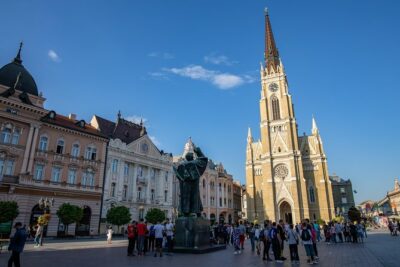
Sremski Karlovci and Novi Sad Full-Day Tour from Belgrade
Read our review →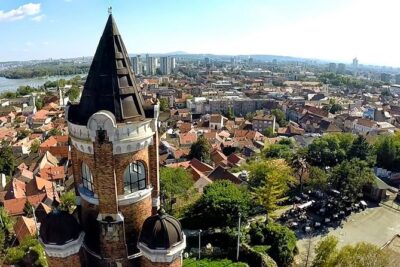
Belgrade Big Tour: Top Attractions and Belgrade Neighborhoods
Read our review →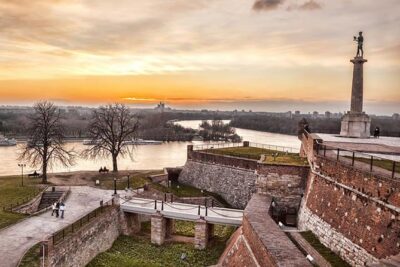
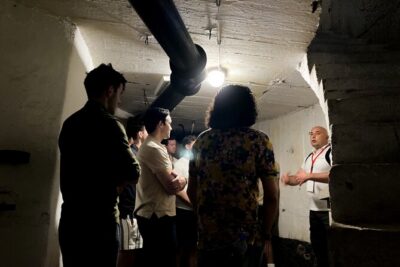
Belgrade Underground Tour w/ Sparkling Wine Along the River
Read our review →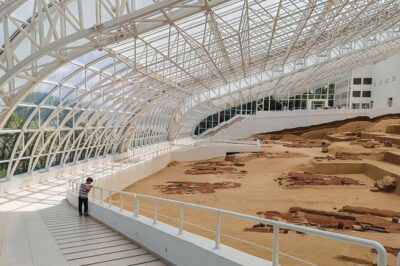
Iron Gate NP Tour with 1-hour speedboat ride + 2 viewpoints
Read our review →
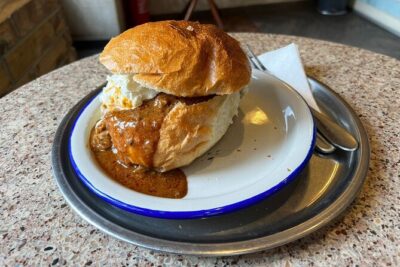
Culinary Tour – get to know the Serbian food. Come hungry!
Read our review →