Reviewed · TOURS
Small Group Balkans Tour; Belgrade to Athens or Corfu in 14 Days
Seven countries, one road, very little wasted motion. This 14-day Balkans tour links Belgrade, Sarajevo, Mostar, Kotor, Prizren, Ohrid, Berat, Meteora, and more, with transport, hotels, breakfasts, and site entries arranged for you. I especially like the small maximum of 10 people and the mix of major sights with local food stops such as Mrizi i Zanave and Tirana’s neighborhood markets. The main drawback is the pace: border crossings, long drives, and frequent hotel changes leave little time for independent wandering.
I also like the route’s range. You move from Ottoman bazaars and Orthodox monasteries to communist-era museums, Adriatic towns, wine country, and Greek mountain monasteries. Guides such as Eri Veseli, Bledi, and Sokol have been praised for their care, history knowledge, and flexibility. At $4,833.96 per person, the tour is not cheap, but the price covers many costly practical details. Room occupancy, lunches, dinners, drinks, and travel insurance remain your responsibility.
In This Review
- Key points at a glance
- Why this route works so well
- Belgrade to Sarajevo: a strong opening day
- Sarajevo and Mostar: war, faith, and Ottoman streets
- Kotor, Budva, and Shkoder along the Adriatic
- Kosovo through food, faith, and hill towns
- Kruja and Tirana: Albania’s past and present
- Ohrid and the springs of St. Naum
- Berat and Gjirokaster: Albania’s stone-built classics
- Ioannina, Meteora, and the final choice
- Is $4,833.96 a fair price?
- Who should book this Balkans tour?
- Should you book it?
- FAQ
- How long is the Balkans tour?
- Which countries does the tour visit?
- What time does the tour begin?
- Is hotel pickup included?
- Are hotels and breakfast included?
- Are lunches and dinners included?
- How large is the group?
- Is the ferry to Corfu included?
- Is travel insurance included?
Key points at a glance
- Seven countries in 14 days: Serbia, Bosnia and Herzegovina, Montenegro, Albania, Kosovo, North Macedonia, and Greece are connected in one southbound route.
- A true small-group format: The maximum is 10 people, which makes border days and walking tours easier to manage than on a large coach trip.
- UNESCO sites form the backbone: Mostar, Kotor, Ohrid, Berat, Gjirokaster, and Meteora give the route real historical weight.
- Food is part of the sightseeing: Expect byrek, qofte, Albanian raki, regional produce, local coffee, and a farm visit at Mrizi i Zanave.
- Two useful endings: You can finish with a hotel drop-off in Athens or continue to Igoumenitsa Port, with ferry tickets included for Corfu.
- The pace favors coverage: This is a see-a-lot tour, not a slow holiday with several free days in each place.
Why this route works so well
The Balkans reward a connected route. Borders, currencies, languages, and recent history change quickly, and arranging every transfer yourself can take time. Here, a professional guide, private company transport, road taxes, petrol, international car insurance, tourist taxes, and hotel transfers are bundled into one plan.
That convenience matters most on the less familiar stretches. You do not need to work out how to get from Kosovo to Albania, from Ohrid to Berat, or from southern Albania into Greece. The tradeoff is that the road is part of the experience. Some days include several stops and border formalities, so you should expect busy mornings and full sightseeing days.
The group size is a major advantage. With no more than 10 people, you can hear the guide in a narrow old-town lane, gather without a long head count, and ask questions as you go. It also creates a more companionable feel, which past feedback connected with guides treating the group like a family.
Accommodation is in three-star hotels, with breakfast included every morning. The price is based on double, twin, triple, or quadruple occupancy, so solo travelers should clarify the room arrangement and any applicable supplement before paying. The tour is non-refundable and cannot be amended after booking, making travel insurance especially sensible.
Trips other travellers in Belgrade book alongside this one:
- Northern Serbia: Sremski Karlovci and Novi Sad Full-Day Tour from Belgrade
★ 5.0 · 425 reviews - Day Trip from Belgrade: Gems of Eastern Serbia
★ 5.0 · 424 reviews - Belgrade Nightlife Bar Pub Club Crawl with Drinks
★ 5.0 · 277 reviews
Belgrade to Sarajevo: a strong opening day
Your first morning begins with hotel pickup in Belgrade at 8:00 am. The Serbian capital gets a focused introduction at Belgrade Fortress and Kalemegdan Park, set above the meeting point of the Sava and Danube rivers.
The fortress gives you an immediate sense of why Belgrade has mattered for centuries. You visit the Upper Town and the Pobednik monument, dating from 1913, then walk through the leafy park before following Knez Mihailova toward Republic Square. This is a good first walk because it moves from military history into everyday city life.
The route then heads toward Bosnia and Herzegovina, with a stop in Zvornik for lunch and a short walk. Its setting along the Drina River offers a quieter break before Sarajevo. The day ends with arrival in Sarajevo, so it is a substantial opening, not a gentle orientation day.
Sarajevo and Mostar: war, faith, and Ottoman streets
Sarajevo deserves careful attention, and the second day gives you a useful framework. The walking tour covers the city’s medieval Bosnian roots, Ottoman quarters, and Austria-Hungarian architecture. Mosques, churches, synagogues, markets, and bazaars appear within a compact area, helping you understand why Sarajevo has long been shaped by several faiths and empires.
You will also see bullet holes and cannon marks left by the Yugoslav War. This is not polished sightseeing. The physical traces make recent history impossible to ignore, and the guide’s explanation can help place those marks in context.
At Latin Bridge, you hear how the assassination of Archduke Franz Ferdinand in Sarajevo helped trigger World War I. The bridge itself is modest, but its importance comes from the event connected to it. Leave room for local food here, especially meat dishes and desserts, which are part of the city’s character.
Mostar brings a different mood. The 16th-century Stari Most, or Old Bridge, is the visual centerpiece and a UNESCO World Heritage site. Its Islamic architectural style and rebuilt history give the bridge more meaning than a quick photograph can convey.
The Old Bazaar is made for walking. Cobblestones, old mosques, Turkish-style shops, and narrow lanes crowd the area around the bridge. Stones marked with Don’t Forget point to the city’s painful past. Wear shoes with a firm sole and watch your footing, since uneven ground is specifically part of the walking program.
Kotor, Budva, and Shkoder along the Adriatic
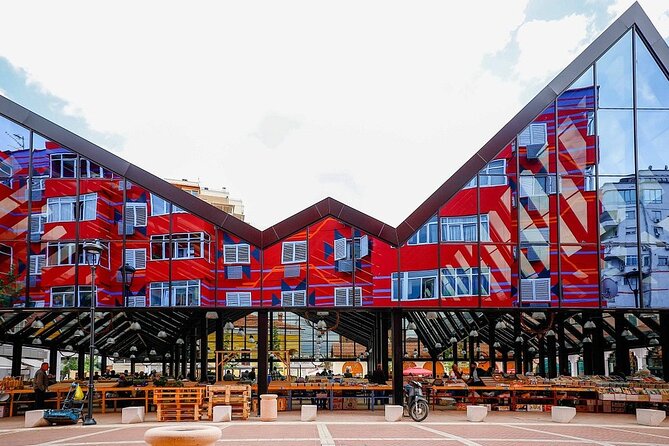
Kotor is one of the tour’s finest arrivals. Its UNESCO-listed old town is a maze of narrow stone streets, and the apparently confused layout was designed to frustrate would-be invaders. Today, that same plan gives Kotor its charm.
You visit St. Luke’s Church, which carries a local message of unity, then have an afternoon to explore independently. This free time is valuable because Kotor’s pleasure lies in small discoveries: a dated stone plaque, a side lane, a quiet church doorway. The tour provides the framework, but you get some room to set your own pace.
Budva follows the next day. The modern section has offices, shopping, restaurants, and bars, while Old Budva keeps its medieval core. The tour focuses on the old churches and historic center. If you want beach time, this schedule may feel too brief, since Budva is also known for its coast and swimming areas.
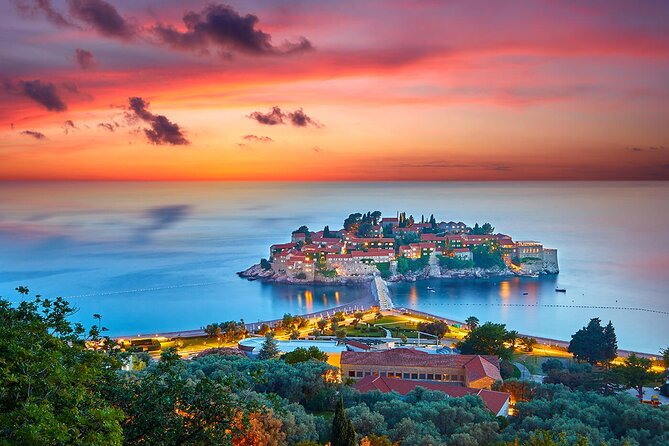
Near the coast, a viewpoint of Sveti Stefan offers one of the route’s classic photographs. The former fishing village now operates as an exclusive residential resort, and the island is not open for ordinary visits. Treat this as a scenic stop, not a day at the beach.
Crossing into Albania, Shkoder gives you a first taste of the country. Rozafa Castle sits above the meeting point of three rivers and provides wide views toward the lake and Adriatic. The city’s architecture reflects Venetian influence, and handmade carnival masks are produced locally. February visitors may also encounter the city’s carnival festival.
Something different for your next free day:
- Taxi to/from Belgrade Airport to/from Belgrade City Center
★ 5.0 · 241 reviews - Belgrade Big Tour: Top Attractions and Belgrade Neighborhoods
★ 5.0 · 232 reviews - Along the Danube: Golubac Fortress & Iron Gate Gorge day trip from Belgrade
★ 4.5 · 185 reviews - From Belgrade: Golubac Fortress & Iron Gate Danube Gorge
★ 4.8 · 185 reviews
Kosovo through food, faith, and hill towns
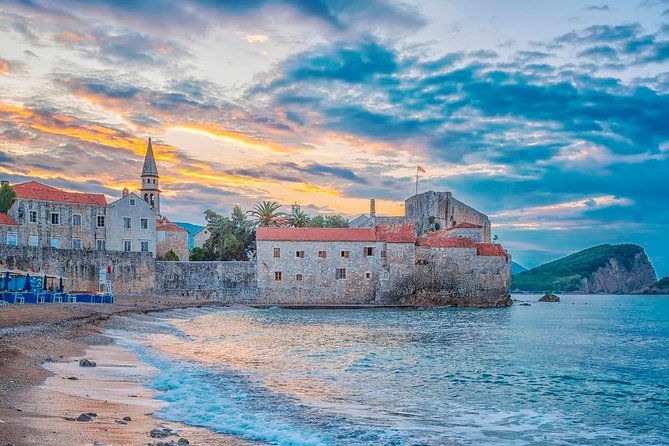
The food stop at Mrizi i Zanave is one of the most distinctive parts of the route. This slow-food farm collects, preserves, and prepares regional organic products. You tour the property, hear how the family adapted old communist buildings for storage, and learn how the project created jobs for more than 400 people nearby.
You can eat a traditional lunch or buy fresh farm products. Lunch is extra, but this is the sort of optional expense that adds real value to the day. It connects food with local employment and rural life rather than treating the Balkans as a parade of monuments.
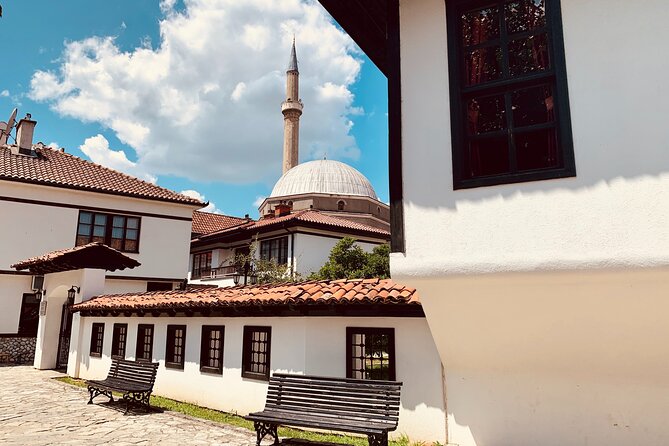
Prizren is Kosovo’s cultural center on this route. The old town grew from its position at the meeting point of Illyrian, Byzantine, and Ottoman influences. The river runs through the center, crossed by old bridges, while mosques, stone streets, and cafes keep the town active into the evening.
Sinan Pasha Mosque is included, with colorful arabesque decoration. The Kalaja Fortress, above town, offers the best broad view and requires an uphill walk. August brings Dokufest, an international short-film festival, so the town can be especially interesting then, though the tour does not state that festival admission is included.
Gjakova has Kosovo’s oldest and largest bazaar. Its repeated destruction during wars and later rebuilding gives the market a particular meaning. You can browse handmade crafts, eat, and see how traditional trades remain part of city life.
At Decan Monastery, Orthodox monks still live and produce organic food, including cheese. The monastery became a UNESCO site in 2004 because of its 14th-century frescoes and their place in Byzantine painting. Since the route includes several religious buildings, respectful clothing and behavior are wise.
The day ends in Rahovec Valley, where grapes have been grown since ancient times. Vineyards cover gentle hills at elevations from 350 to 520 meters. Wine tasting is not listed as included, but the region’s annual September wine festival could add interest if your dates match.
Kruja and Tirana: Albania’s past and present
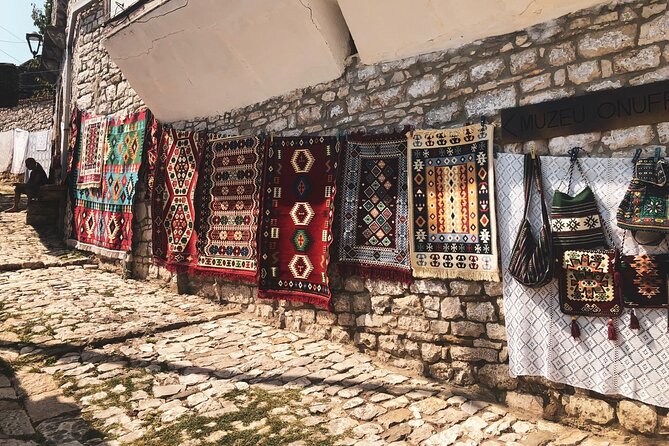
Kruja climbs the slopes of Sarisalltik Mountain and feels more like a hill stronghold than a flat city. Its medieval bazaar has wooden houses and narrow lanes lined with carpets, jewelry, and handmade souvenirs.
The castle occupies a rocky height, where hidden paths once allowed residents to leave without being seen during attacks. The castle stop is brief in the stated schedule, so your time is best spent deciding in advance whether you want shopping, views, or history.
Tirana offers the tour’s most food-focused day. With a local companion, you start with byrek, flaky dough filled with cheese, meat, or spinach. At Çam Bazaar, you can bargain for everyday goods and learn about the Çam community, whose roots lie in the region of Çameria in present-day northwestern Greece.
The food walk continues through local neighborhoods, a pastry shop, a street market, and a cafe serving Albanian coffee. At the New Bazaar, you try qofte with bread, while vegetarians can have bread with Albanian gjize, a cottage cheese. Raki is also included in the tasting.
This is a welcome change from monument-heavy touring. You see daily routines, food stalls, colorful buildings, and market life instead of only grand sites. BUNKART 2 then shifts the tone. The former nuclear bunker, hidden until 2014, is now a museum about the communist army and ordinary life under Enver Hoxha’s regime.
Ohrid and the springs of St. Naum
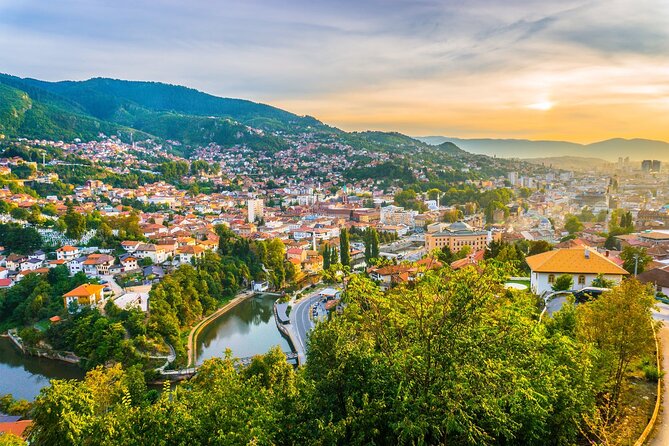
North Macedonia begins at Struga, where you stop for a drink beside the source of the Drini River. Ohrid follows, and this is one of the route’s most scenic sections.
Ohrid and Lake Ohrid have UNESCO status dating to 1980. The lake is linked to the ancient name Lyhnidas, meaning the Light Lake, and the town became an important Orthodox center during the Byzantine period. You visit viewpoints and churches, including St. John and St. Nicolas, along with the Halveti Hayati Tekke mosque.
The next day, St. Naum Monastery sits beside the source of the Crni Drim River, within Galicica National Park. Clear spring water, trees, and mountain peaks make this a calmer stop after several urban walking tours. Entry is included.
Crossing back into Albania, Tushemisht and Drilon National Park offer another pause beside the water. Drilon’s springs form a small lake surrounded by greenery and weeping willows. These stops are shorter and quieter, giving the route some breathing room before Berat.
Berat and Gjirokaster: Albania’s stone-built classics

Berat is known for its many windows stacked across steep hillsides. The old houses create the town’s familiar profile, while people still live within the castle walls, making the historic center feel lived in rather than preserved only for display.
Inside Berat Castle, you find churches, mosques, old houses, museums, and traces of the communist period. The National Iconographic Museum Onufri is included and honors the church painter associated with a hard-to-copy reddish color.
Cross the old Gorica Bridge and walk through the Gorica neighborhood. The route gives you both sides of the river and a fuller view of Berat’s stone architecture.
Gjirokaster, the Stone City, is another UNESCO-listed town, but its feel is more fortified and steep. Houses resemble small strongholds, and the old town rises in narrow stone lanes toward the castle. The bazaar is worth time for local crafts and handmade goods.
The tour allows two hours in Gjirokaster and another hour in the bazaar. That is enough to see the main areas, but the slopes and stones can be tiring. Take your time rather than treating every uphill lane as a race.
Ioannina, Meteora, and the final choice
In Greece, Ioannina offers Byzantine and Ottoman remains, old-town lanes, and a castle enclosing historic buildings and cafes. It is a useful transition from Albania into Greece, with time for local dishes and a walk through the old center.
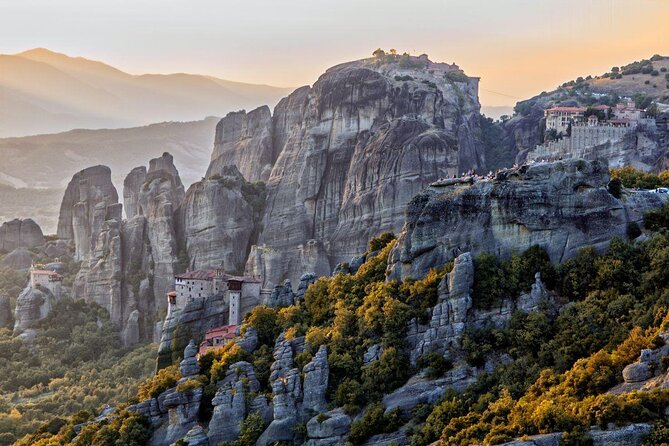
Meteora delivers the route’s grand finale. Monasteries perch on dramatic rock formations, with foundations dating to the 14th and 15th centuries. The schedule includes a sunset visit, but monastery entry is not listed as included, so check exactly which access is planned for your departure.
On day 14, the tour leader drops you at your Athens hotel. If you choose the Corfu ending, you are taken to Igoumenitsa Port and receive the included ferry tickets. Athens is better for continuing a mainland trip, while Corfu makes sense if you want to end with island time.
Is $4,833.96 a fair price?
The price is high for a three-star hotel tour, but it covers 13 breakfasts, transportation, fuel, road taxes, insurance for the vehicle, tourist taxes, guided services, hotel pickup, hotel or port drop-off, ferry tickets to Corfu, and entry to listed sites.
You still pay for every lunch, dinner, drink, snack, souvenir, and personal expense. The tour also uses shared rooms, with the quoted price calculated around double, twin, triple, or quadruple occupancy. For a solo booking, ask about the final room cost before committing.
I see the value in the route rather than luxury. Seven countries in two weeks would be difficult to organize independently, especially with Kosovo, multiple border crossings, and the final Greek transfer. If you prefer four-star hotels, long free afternoons, or choosing every restaurant yourself, the price will feel less attractive.
Who should book this Balkans tour?
I would recommend it if you want strong coverage, organized transport, and a small group. It suits first-time visitors who want context for the region’s Ottoman, Byzantine, Orthodox, Islamic, communist, and wartime past without arranging seven separate national trips.
It also suits curious eaters. Mrizi i Zanave, Tirana’s byrek and qofte stops, Albanian coffee, farm produce, and Rahovec wine country add texture beyond sightseeing.
I would hesitate if you dislike early starts, long road days, uneven streets, uphill fortresses, or frequent hotel changes. Most people can participate, but the itinerary clearly includes walking on uneven terrain. The schedule can also change because of weather, strikes, public holidays, closures, or other forces beyond the company’s control.
Should you book it?
Book this tour if your priority is seeing a large share of the Balkans with the practical work handled for you. The strongest parts are the 10-person limit, the excellent chain of UNESCO sites, and the personal food and farm stops that keep the trip from becoming a monument checklist.
Choose another style of trip if you want to linger. Fourteen days is enough to sample seven countries, not enough to know each one slowly. Before paying, confirm your room arrangement, budget separately for meals and drinks, arrange your own health and travel insurance, and choose Athens or Corfu based on what you plan to do next.
FAQ
How long is the Balkans tour?
The tour lasts approximately 14 days, beginning in Belgrade and ending in Athens or at Igoumenitsa Port for a ferry to Corfu.
Which countries does the tour visit?
The route covers Serbia, Bosnia and Herzegovina, Montenegro, Albania, Kosovo, North Macedonia, and Greece.
What time does the tour begin?
The stated start time is 8:00 am.
Is hotel pickup included?
Yes. Hotel pickup is provided in Belgrade at the beginning of the tour.
Are hotels and breakfast included?
Yes. Accommodation is in three-star hotels, and 13 breakfasts are included.
Are lunches and dinners included?
No. Lunches, dinners, drinks, snacks, souvenirs, and personal spending are not included.
How large is the group?
The tour has a maximum of 10 participants.
Is the ferry to Corfu included?
Yes. The Corfu option includes drop-off at Igoumenitsa Port and ferry tickets.
Is travel insurance included?
No. Each participant is responsible for arranging personal health and travel insurance.
Just added around Belgrade
- Private Wine Tasting by Party in Belgrade★ 5.0 · 3 reviews
- Private Walking Tour of Belgrade and Old Zemun★ 5.0 · 3 reviews
- E-Scooter Serbian Food Tour★ 5.0 · 3 reviews
- Belgrade: The White Emigration in Serbia in the Wake of the Russian Revolution★ 5.0 · 3 reviews
- Feel Belgrade Welcome tour★ 4.5 · 3 reviews
- Zica and Studenica monastery From Belgrade★ 5.0 · 3 reviews
- Belgrade Private Driving & Walking Tour★ 5.0 · 4 reviews
- Belgrade Fashion and Design Tour – Discover Local Designers★ 5.0 · 4 reviews
Tours, compared.
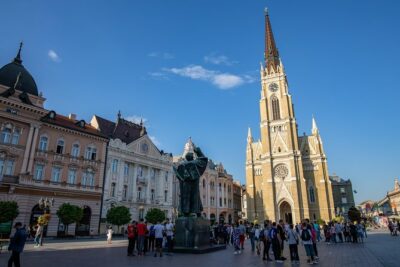
Sremski Karlovci and Novi Sad Full-Day Tour from Belgrade
Read our review →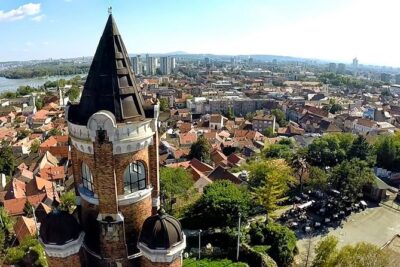
Belgrade Big Tour: Top Attractions and Belgrade Neighborhoods
Read our review →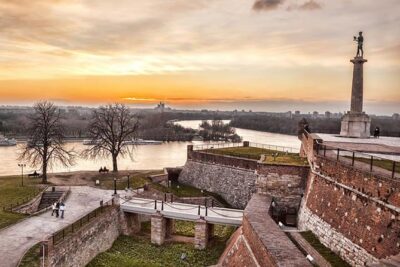
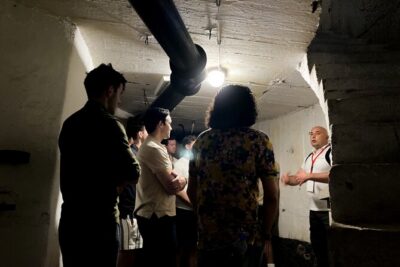
Belgrade Underground Tour w/ Sparkling Wine Along the River
Read our review →
Iron Gate NP Tour with 1-hour speedboat ride + 2 viewpoints
Read our review →
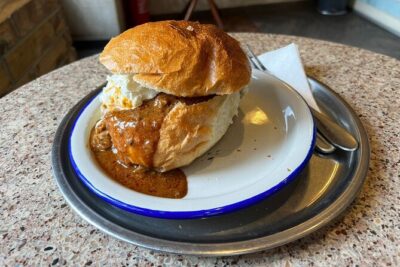
Culinary Tour – get to know the Serbian food. Come hungry!
Read our review →