Reviewed · PRIVATE
Private 4 Hours Space Architecture Tour in Belgrade
See Belgrade from a different angle. This four-hour private tour links the city’s most striking modern buildings, from the mountaintop Avala Tower to the giant concrete forms of New Belgrade. I like the door-to-door pickup and drop-off, and I like how the tour connects architecture with Serbia’s political and social past instead of treating buildings as photo stops. The main drawback is simple: much of the four hours is spent in the vehicle, because these sites are spread widely across Belgrade.
The tour costs $175.14 per group of up to three people, not per person. That makes it a fair deal for a small group that wants a private guide, air-conditioned transport, and access to places that are awkward to reach by public transit. You should also know that this is a brisk program. Several stops last only 15 or 20 minutes, so the focus is on explanation, exterior views, and photography rather than long building visits.
In This Review
- Key points at a glance
- Why this tour works for architecture fans
- Avala Tower: Belgrade from its highest point
- Eastern City Gate: three towers and a socialist vision
- Ada Bridge: a short stop with a big span
- Sava Center: a building made for international politics
- Palace of Serbia: power expressed in late modernism
- Western Gate: the Genex Tower’s unusual split form
- What the private vehicle adds
- Price, group size, and overall value
- Who should book this experience?
- Booking and cancellation details
- Should you book the Belgrade Space Architecture Tour?
- FAQ
- How long is the Space Architecture Tour in Belgrade?
- How much does the tour cost?
- Is the tour private?
- Is pickup from my accommodation included?
- Is transportation included?
- What language is the tour offered in?
- Is admission to Avala Tower included?
- Do the other stops require admission fees?
- Is the tour available every day?
- Can I cancel for a full refund?
Key points at a glance
- Avala Tower reaches beyond central Belgrade: Ride up the city’s tallest mountain for views from the observation deck, with admission included.
- New Belgrade becomes the main subject: The Palace of Serbia, Sava Center, and Western Gate reveal the ambition of Yugoslav-era planning.
- The Eastern City Gate is pure brutalism: Three 85-meter residential towers create one of the city’s most recognizable urban scenes.
- You cover difficult-to-connect sites efficiently: The private vehicle makes a major difference because the stops are far apart.
- Guiding is a major strength: Guides including Stefan, Novica, Nemanja, and Mihailo have been praised for clear explanations of architecture, Serbian history, and Yugoslavia.
- The group stays private: Only your party takes part, with pickup from your address and return to your accommodation.
Why this tour works for architecture fans
Belgrade is a rewarding city for anyone curious about modern architecture, especially the bold concrete buildings created during socialist Yugoslavia. The city’s architectural story is not limited to old churches, Ottoman traces, or Austro-Hungarian facades. It also includes huge civic projects, experimental towers, bridges, and residential blocks that were meant to express a new society.
This tour gives you a compact way to see that side of Belgrade. You move between the old city’s edges, the Sava River, New Belgrade, and Mount Avala. The route is not a walking tour in the usual sense. It is a guided city drive with short stops, and that is exactly why it can reach so much in half a day.
I especially like the way the tour treats buildings as political documents. The Palace of Serbia was created as a major government project after World War II. Sava Center was built for an important international conference. The Eastern City Gate and Genex Tower show how housing and high-rise design could become symbols of a city.
The guides add much of the value. Stefan has been praised for linking architecture with Serbian history, culture, and society. Novica is noted for an entertaining account of the country and the Yugoslav period, while Nemanja has been singled out for thoughtful storytelling and a strong understanding of socialist architectural heritage. Mihailo is also praised for explaining what you see from the moment you enter the vehicle.
You do not need a degree in architecture to enjoy this. The explanations are intended to make the structures understandable, not to bury you in technical terms. Still, people with a serious interest in brutalism, socialist planning, or Yugoslav monuments will get the most from the day.
More tours and experiences worth your time
- Private Red Star-Partizan Stadium Tour in Belgrade
★ 5.0 · 72 reviews - Belgrade Private City Tour
★ 5.0 · 41 reviews - Private Transfer
★ 5.0 · 40 reviews
Avala Tower: Belgrade from its highest point
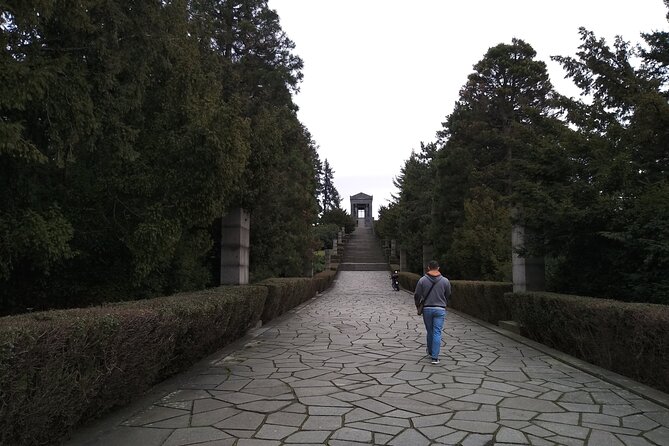
The first major stop is Avala Tower, about 30 to 45 minutes from central Belgrade. The tower sits on Avala, the tallest mountain near the city, so the journey takes you away from central streets and into a very different setting.
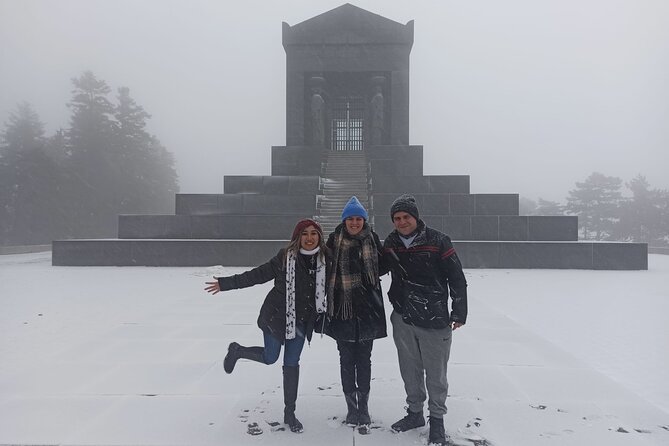
The tower was destroyed during NATO bombing in 1999 and rebuilt in 2010. That fact alone gives the structure a place in modern Serbian memory. You are not simply looking at a communications tower. You are seeing a building that was lost, then reconstructed from its remains and returned to the skyline.
The observation deck provides a broad view over Belgrade. On a clear day, this is a useful first stop because it helps you understand the city’s size and position before you see its individual districts at ground level. You get roughly 45 minutes here, and the entrance fee is included.
The main practical issue is weather. The tower is exposed, and the view depends on visibility. One winter outing still reached Avala despite snow on the ground, but conditions can affect the feel of the stop and the quality of the panorama. Wear sensible shoes if the ground is wet or snowy.
Eastern City Gate: three towers and a socialist vision
From Avala Tower, allow another 30 to 45 minutes in the vehicle to reach the Eastern City Gate, officially called Rudo. The stop lasts about 20 minutes and costs nothing to enter.
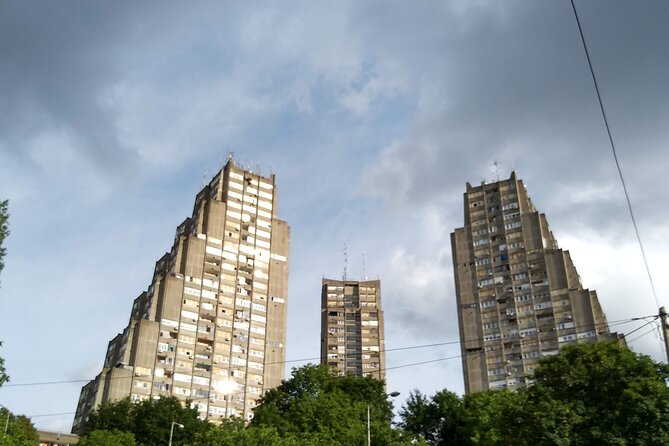
This complex consists of three residential buildings, each about 85 meters high. Their unusual arrangement gives them a strong sculptural quality. They are not graceful in the classical sense, and that is the point. The concrete forms, repeated windows, and imposing height express the confidence of a period when large housing projects were expected to represent progress.
The Eastern City Gate is often treated as one of Belgrade’s symbols and one of the clearest examples of Yugoslav brutalism. Your guide can explain how architecture was tied to the ideals of the former state. The buildings were designed for practical urban life, yet they also carry a strong visual message.
You should not expect a long interior visit here. The value lies in seeing the group as an urban composition and hearing how it fits into Belgrade’s development. A private guide is useful because the complex is not the sort of place most people would naturally include in a first visit to the city.
Ada Bridge: a short stop with a big span
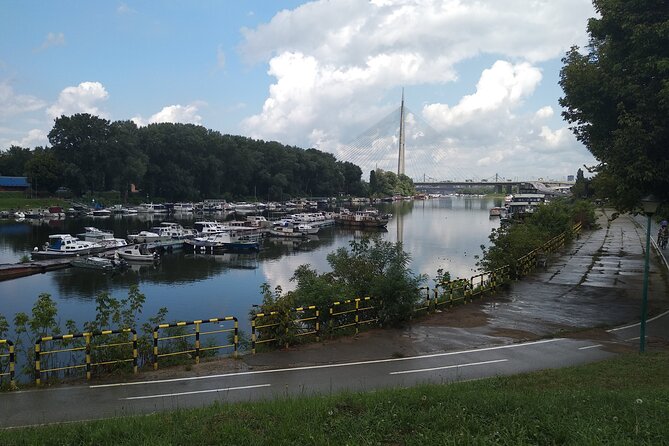
The drive from the Eastern City Gate to Ada Bridge takes about 10 to 15 minutes. You cross the Sava River on the bridge, with around 20 minutes set aside for the stop.
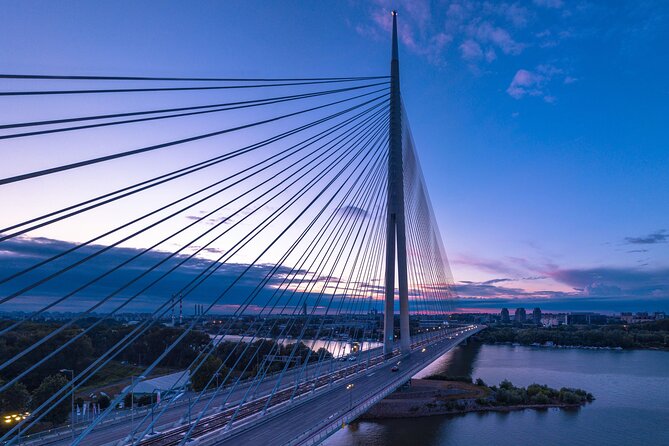
Ada Bridge is a cable-stayed bridge with a single pylon. Its construction was shown on the Discovery Channel, a detail that adds a bit of popular engineering appeal to the visit. The bridge is also described as the highest single-pylon bridge in Europe.
This is one of the shorter stops, so think of it as a chance to appreciate the structure and its position over the river rather than a full engineering visit. You will likely get the most from your guide’s explanation of the bridge’s form, construction, and place in Belgrade’s newer development.
The bridge also helps break up the heavier concrete architecture. After the residential towers at Rudo, you see a piece of infrastructure designed to move people across the city. It shows how Belgrade has continued to reshape itself after the Yugoslav period.
Something different for your next free day:
- Northern Serbia: Sremski Karlovci and Novi Sad Full-Day Tour from Belgrade
★ 5.0 · 425 reviews - Day Trip from Belgrade: Gems of Eastern Serbia
★ 5.0 · 424 reviews - Belgrade Nightlife Bar Pub Club Crawl with Drinks
★ 5.0 · 277 reviews - Taxi to/from Belgrade Airport to/from Belgrade City Center
★ 5.0 · 241 reviews
Sava Center: a building made for international politics
The next drive is only about 10 minutes, and the stop at Sava Center lasts approximately 15 minutes. The center was built for the 1977 Conference on European Security and Cooperation held in Belgrade. It became the first and largest conference center in former Yugoslavia.
Its scale reflects the importance given to international gatherings at the time. The complex was not designed as a modest meeting hall. Its large, polyhedral buildings were meant to handle major events and project a serious public image.
This is a good place to pay attention to structure. The forms are not decorative add-ons. The shape of the complex comes from the demands of a very large public building, while still giving it a distinctive visual identity. Your guide can help you see how the parts fit together.
Fifteen minutes is enough for an introduction and exterior examination, but not for a detailed architectural study. That time limit is typical of this tour. You see many sites, but you must be ready to listen while moving and make quick use of each stop.
Palace of Serbia: power expressed in late modernism
Only about five minutes separate Sava Center from the Palace of Serbia. You spend around 15 minutes in front of the building, officially known in its earlier form as the Federal Executive Council.
This is one of the tour’s strongest examples of architecture serving government. The Palace of Serbia was the first major New Belgrade project after World War II. Its size is enormous, yet the design is intended to remain elegant rather than merely heavy.
The building helps explain the ambitions behind New Belgrade. The postwar city was not being assembled one small street at a time. It was planned on a large scale, with government, housing, conference facilities, and transportation arranged as parts of a new urban center.
You will not spend hours inside the palace, and the stop is free. The exterior view, paired with a good explanation, is the reason to come. I would pay attention to the balance between the building’s imposing scale and its more restrained modernist lines. That contrast says much about how authority wanted to present itself.
Western Gate: the Genex Tower’s unusual split form
The final stop is the Western City Gate, also called Genex Tower. It is about 10 minutes from the Palace of Serbia, with roughly 15 minutes for viewing.
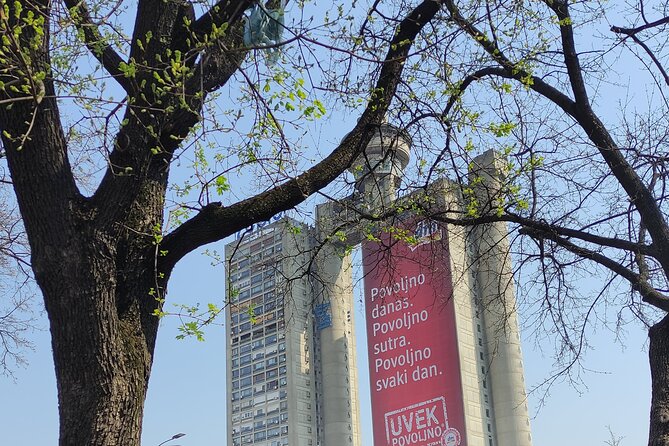
Designed by Mihajlo Mitrović in 1977, the Genex Tower is a 36-story skyscraper in the brutalist style. Its most memorable feature is its divided form: two towers linked by a two-story bridge. That arrangement makes it look less like a conventional office block and more like a piece of giant urban sculpture.
The Western Gate was designed as an entrance marker for Belgrade from the west. Even if you know nothing about the planning behind it, the building is hard to mistake for an ordinary high-rise. Its sharp shapes and massive scale make it one of the most photographed modern structures in the city.
This stop is particularly useful if you want to understand the difference between housing complexes and symbolic city architecture. The Eastern Gate presents a group of residential towers. Genex Tower acts as a city threshold, announcing Belgrade to people arriving from another direction.
Again, expect an exterior-focused visit. The tour gives you the chance to view the tower and hear its story, but it is not a long interior exploration.
What the private vehicle adds
The vehicle is not just a comfort feature. It is what makes this route practical.
The sites are spread across Belgrade and beyond. Avala Tower is outside the central area, while the Eastern City Gate, Ada Bridge, Sava Center, Palace of Serbia, and Genex Tower sit in different parts of the wider city. Public transport could connect some of them, but not in a neat four-hour loop with a guide waiting at each stop.
Pickup is offered from your accommodation, and the tour returns you there afterward. Transportation time is included in the four-hour duration, so the advertised length does not mean four full hours walking around buildings. You should plan for a mix of driving, short visits, and guided commentary.
The air-conditioned vehicle is useful in both warm and cold weather. It also makes the tour easier for anyone who would rather not manage several connections across an unfamiliar city. Service animals are allowed, and the tour information says most people can participate.
Because the activity is private, you can ask questions without worrying about a large group. The guide can also respond to your level of interest. If you want more detail about Yugoslav socialism, brutalist design, or the technical side of a bridge, say so early.
Price, group size, and overall value
The listed price is $175.14 for a group of up to three people. For one person, that is a sizable half-day expense. For three people sharing the cost, it works out to about $58.38 per person.
That price includes pickup, drop-off, an air-conditioned vehicle, a professional guide, and entrance fees. The Avala Tower admission is specifically included, while the other listed stops are free. Personal expenses are not included.
I would judge the value by asking what you would need to arrange alone. You would need to find a way to reach Avala Tower, connect it with several distant sites, manage the timing, and learn enough background to understand why these buildings matter. The private transport and guide remove that work.
The value is weaker if you only want to photograph one or two buildings. In that case, a self-guided outing could cost less. The tour earns its price through the range of locations and the historical explanation between stops.
The four-hour format is also efficient. It gives you a strong introduction without taking an entire day. You can schedule it early in your stay and use the guide’s wider comments to decide which parts of Belgrade you want to explore later.
Who should book this experience?
I would recommend it most strongly to:
- Architecture students and professionals
- People interested in brutalism and late modernism
- Anyone curious about Yugoslav socialist planning
- First-time visitors who want to see beyond the central historic district
- Small groups that value private transport
- Visitors who want history explained through buildings and city design
You do not need to be an architecture specialist. The guides are praised for making the subject clear, friendly, and entertaining. Stefan’s background in history is especially useful for anyone who wants more than dates and building names.
This may not be your best choice if you prefer long walks, leisurely café stops, or extended visits inside museums. The schedule moves quickly, and some stops last only 15 minutes. It is also less suitable for someone who wants a tour focused on medieval Belgrade or traditional Serbian architecture, since the central subject here is modern urban design.
The tour can work in winter, as the route has reached Avala Tower in snowy conditions. Still, weather may affect views and comfort. If seeing the panorama is your top priority, choose a day with good visibility when possible.
Booking and cancellation details
The experience is offered in English and operates Monday through Sunday from 9:00 AM to 5:00 PM during the published operating period of March 29, 2023 through March 11, 2027. Confirmation is provided at booking, and pickup is arranged from your address.
Free cancellation is available if you cancel at least 24 hours before the start time. Cancellations or changes made less than 24 hours before the start time are not accepted for a refund. The cutoff follows local time in Belgrade.
When booking, I would mention your level of interest. One group contacted the company about particular interests in Yugoslav architectural heritage and received a tailored program. The regular route already covers the six listed locations, but early communication may help the guide shape the explanations around what you care about.
Should you book the Belgrade Space Architecture Tour?
Book it if you want to understand why Belgrade looks the way it does beyond its old center. The route covers major structures, difficult-to-reach sites, and several buildings that reveal the ambitions of Yugoslav-era society. The strongest part is the guiding, with Stefan, Novica, Nemanja, Mihailo, and other guides praised for history, warmth, and clear storytelling.
The sensible caution is the pace. You will not linger at every building, and driving takes a noticeable share of the four hours. For a small group of up to three, though, the private vehicle, door-to-door service, and broad route make this a practical and unusual way to see Belgrade.
FAQ
How long is the Space Architecture Tour in Belgrade?
The tour lasts approximately four hours. Driving time between the stops is included in the total duration.
How much does the tour cost?
The price is $175.14 per group, with up to three people included.
Is the tour private?
Yes. Only your group participates in the activity.
Is pickup from my accommodation included?
Yes. Pickup from your address and drop-off at your accommodation are included.
Is transportation included?
Yes. The tour includes an air-conditioned vehicle, and transportation time is part of the four-hour schedule.
What language is the tour offered in?
The tour is offered in English.
Is admission to Avala Tower included?
Yes. The tour includes the admission ticket for Avala Tower and its observation deck.
Do the other stops require admission fees?
The listed stops at the Eastern City Gate, Ada Bridge, Sava Center, Palace of Serbia, and Western Gate have no admission fee.
Is the tour available every day?
The published operating hours are Monday through Sunday, from 9:00 AM to 5:00 PM.
Can I cancel for a full refund?
Yes, if you cancel at least 24 hours before the experience start time. Cancellations made less than 24 hours before the start time are not refunded.
Just added around Belgrade
- Private Wine Tasting by Party in Belgrade★ 5.0 · 3 reviews
- Private Walking Tour of Belgrade and Old Zemun★ 5.0 · 3 reviews
- E-Scooter Serbian Food Tour★ 5.0 · 3 reviews
- Belgrade: The White Emigration in Serbia in the Wake of the Russian Revolution★ 5.0 · 3 reviews
- Belgrade Private Driving & Walking Tour★ 5.0 · 4 reviews
- Feel Belgrade Welcome tour★ 4.5 · 3 reviews
- Zica and Studenica monastery From Belgrade★ 5.0 · 3 reviews
- Belgrade Fashion and Design Tour – Discover Local Designers★ 5.0 · 4 reviews
Private, compared.
Private Red Star-Partizan Stadium Tour in Belgrade
Read our review →
Private Day Tour to Fruska Gora Monasteries, Sremski Karlovci and Novi Sad
Read our review →
Private Novi Sad, Titanic wine tasting and Farmer’s House
Read our review →