
Reviewed · BELGRADE
Get Big Picture of Belgrade at its 2,000 years old Fortress
Belgrade’s best history lesson comes with river views. This 90-minute private walk through the 2,000-year-old fortress links Roman walls, medieval remains, Ottoman and Habsburg battles, Nazi bombing, and Cold War fears. I like the focused route, and I like having an art historian guide who can explain the political meaning behind what you see. The main consideration is pace: ninety minutes is enough for a strong introduction, but not for every corner of Kalemegdan.
The tour works especially well for families and small groups of up to eight people. Guide Igor has a reputation for lively storytelling and thoughtful debate, while Ksenija also leads tours. Sunset adds another reason to book, though the best timing depends on the season and the views can change with the weather.
In This Review
- Key points to know before you book
- Why Belgrade Fortress is the right place to begin
- Starting at Cvijeta Zuzorić Art Pavilion
- Roman walls, gates, towers, and vanished fortresses
- Ottoman and Habsburg Belgrade
- From Nazi bombing to Cold War anxiety
- Kalemegdan Park and the view across two rivers
- What the private format adds
- Practical details for walking the fortress
- Who will get the most from this tour?
- Should you book the Belgrade Fortress tour?
- FAQ
- How long does the Belgrade Fortress tour last?
- How much does the tour cost?
- Is the tour private?
- How many people can join the private tour?
- What language is the tour offered in?
- What is included in the experience?
- Where does the tour start?
- Where does the tour end?
- Can I cancel for a full refund?
Key points to know before you book
- A private tour for up to eight people: You get your own guide rather than joining a large walking group.
- History with a political edge: The route moves from Roman rule to Ottoman and Habsburg power, the Second World War, and the Cold War.
- An art historian leads the walk: Igor is praised for his passion, clear explanations, and willingness to discuss difficult parts of Serbian history.
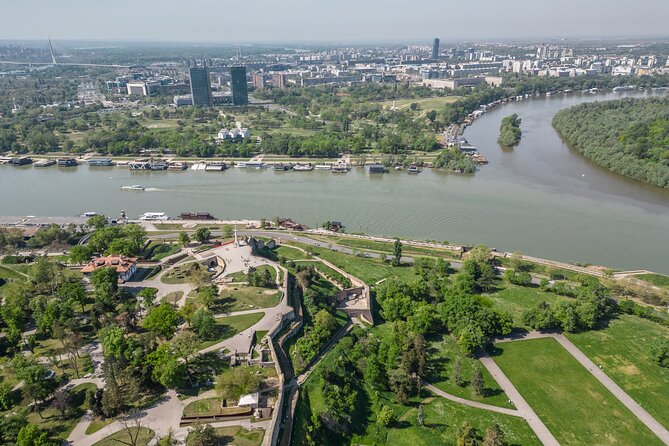
- Big views in a short time: You look across the Sava and Danube, their meeting point, New Belgrade, and Zemun.
- Sunset can improve the experience: The fortress becomes a fine place for watching the light change over the rivers.
- Moderate fitness is needed: This is a walking tour through gates, walls, towers, park paths, and historic remains.
Why Belgrade Fortress is the right place to begin
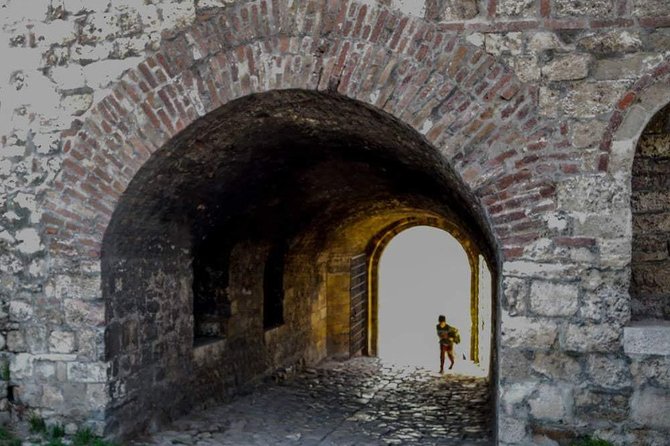
Belgrade Fortress is not just one old building. It is a layered site where different powers built, destroyed, repaired, and reused the same strategic patch of ground. Its position above the meeting point of the Sava and Danube explains much of Belgrade’s story. Control the hill, and you gain a commanding view of movement along both rivers.
That setting gives the tour more weight than a standard city stroll. You are not only hearing dates and rulers. You are seeing why armies wanted this place, why borders shifted around it, and why the city repeatedly had to rebuild.
The walk also passes through Kalemegdan Park, which softens the military setting with trees and open paths. That mix is useful when you are short on time. You get fortifications, city views, greenery, and a political introduction to Belgrade without spending half a day inside a museum.
The experience costs $66.01 per person. That is not the cheapest way to see the fortress, but the private format changes the value. If you are traveling with several people and can share the guide’s attention across your group, the price buys flexibility and conversation. It is especially worthwhile if you care about history, politics, architecture, or the way modern Serbia interprets its past.
Trips other travellers in Belgrade book alongside this one:
- Northern Serbia: Sremski Karlovci and Novi Sad Full-Day Tour from Belgrade
★ 5.0 · 425 reviews - Day Trip from Belgrade: Gems of Eastern Serbia
★ 5.0 · 424 reviews - Belgrade Nightlife Bar Pub Club Crawl with Drinks
★ 5.0 · 277 reviews
Starting at Cvijeta Zuzorić Art Pavilion
The meeting point is the Art Pavilion Cvijeta Zuzorić at Mali Kalemegdan 1. The tour ends near the Embassy of France at Pariska 11, which puts you on the edge of central Belgrade rather than sending you back to the starting point.
That one-way route matters. You can continue into the city afterward instead of retracing your steps. Since the walk is near public transportation, it is also practical to fit into a day of sightseeing.
Your guide should set the tone early. The strongest reports about Igor describe a guide who treats history as a subject for discussion, not a list to memorize. He is especially suited to people who want to ask why events happened and how the past still affects Serbian politics and public life.
Do not expect a quiet, purely architectural tour. The focus includes intrigue, war, diplomacy, religion, and political change. That makes it rewarding for curious adults and older children, though younger children may need help staying interested during the more complicated historical sections.
Roman walls, gates, towers, and vanished fortresses
The first part introduces the physical setting and the major views. You pass through the fortress area while looking toward the Sava and Danube, their confluence, New Belgrade, and Zemun.
New Belgrade carries the story of socialist Yugoslavia, while Zemun has a more Central European feel. Seeing both from the fortress helps you understand that Belgrade is not a single architectural idea. The city stretches across different periods, political systems, and cultural influences.
The guide traces the site back to the ancient Romans and follows the powers that fought over it. Along the way, expect references to gates, walls, dungeons, and towers. The appeal is in the connections. A wall is not simply old stone. It marks a military need, a change in power, or a decision made by people who believed the fortress could protect their city.
One particularly worthwhile detail is the foundation of the medieval castle. Another is the Roman wall, which gives you a visible link to the earliest period covered by the tour. These remains can be easy to overlook if you walk through the park alone, so having someone point them out adds real value.
The route also includes a church built from a former military magazine. That kind of reuse tells you how the fortress changed after its military purpose shifted. Religious life, defense, and everyday city life have all occupied the same ground.
Ottoman and Habsburg Belgrade
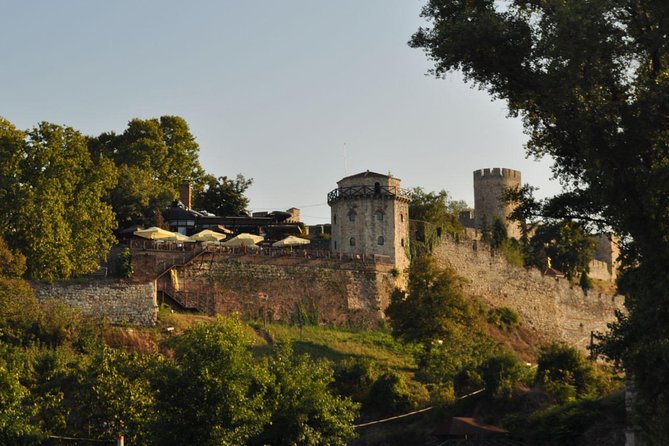
The fortress has changed hands many times, and the tour gives special attention to Ottoman and Habsburg rule. This is where the walk becomes more than an old-town orientation.
You hear about sultans, kings, battles, and the long contest for control of Belgrade. One story concerns the Ottoman ruler who called the fortress his Contemplation Hill. That phrase gives a human angle to a site usually described in military terms. The fortress was a place to command from, but also a place to look out from and think.
The tour also explains why the noon bell heard in churches across Europe is linked to Belgrade. It is an unusual detail, exactly the sort of story that helps a short tour stay in your memory. It connects a local siege and a city’s fate with a daily sound heard far beyond Serbia.
This section suits you if you like history with surprising links. It also requires attention, since the story crosses languages, empires, religions, and centuries in a short time. A private guide helps because you can stop and ask for clarification instead of simply trying to keep up with a group.
Something different for your next free day:
- Taxi to/from Belgrade Airport to/from Belgrade City Center
★ 5.0 · 241 reviews - Belgrade Big Tour: Top Attractions and Belgrade Neighborhoods
★ 5.0 · 232 reviews - Along the Danube: Golubac Fortress & Iron Gate Gorge day trip from Belgrade
★ 4.5 · 185 reviews - From Belgrade: Golubac Fortress & Iron Gate Danube Gorge
★ 4.8 · 185 reviews
From Nazi bombing to Cold War anxiety
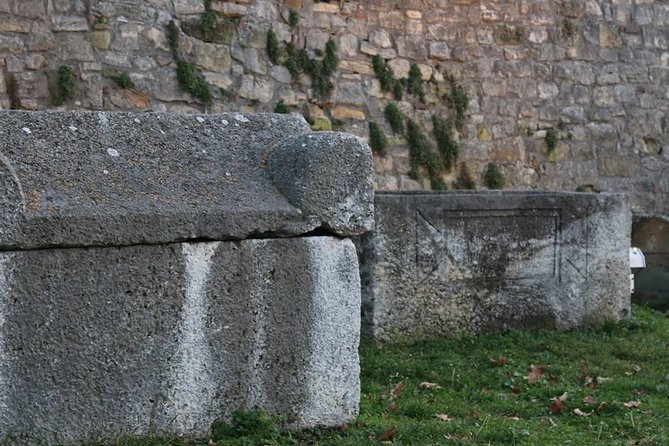
The fortress is not frozen in medieval time. The tour moves into the twentieth century, including the Nazi bombing of Belgrade in 1941 and the Soviet invasion threat in the 1950s.
Those subjects give the site a more modern and uncomfortable edge. The fortress becomes part of the story of a city caught between major powers, not just a relic from distant wars. You also hear about how Belgrade dealt with fear and political pressure after the Second World War.
An intriguing question involves a filmmaker who said he felt inspired after going underground. The tour uses underground spaces and chambers to open a discussion about the fortress’s atmosphere and its place in modern culture. The supplied details do not identify the filmmaker, so you will need to hear the story directly from the guide.
This is one reason I would choose the private format. The twentieth-century material can raise questions about ideology, memory, and Serbia’s position between larger powers. Igor is praised for welcoming conversation and even a little debate, so you are not limited to a polished official version of events.
Kalemegdan Park and the view across two rivers
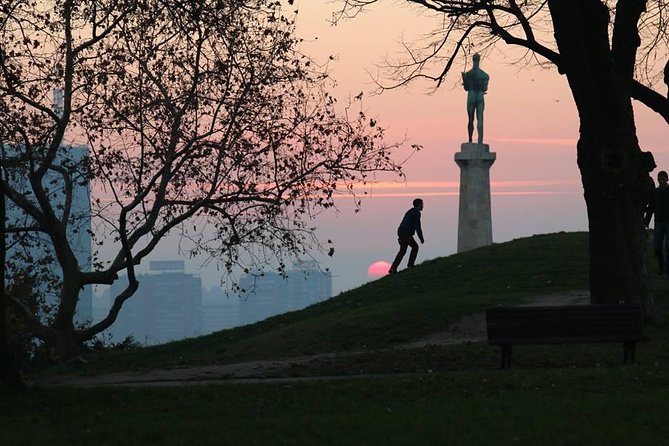
The final section brings you into Kalemegdan Park and back to the broad panorama. From the fortress, you can see the Sava and Danube, the point where they meet, New Belgrade, and Zemun.
The view is more than a photo stop. New Belgrade was once the capital of socialist Yugoslavia, while Zemun offers a quieter Central European character. From this height, you can compare the two areas and place them within the wider story of Belgrade.
The park also gives you a break from stone walls and historical detail. Greenery, open space, and river air make the final part feel less like a military tour and more like a city orientation.
Sunset is the natural choice for romantics and photographers. Belgrade’s sunset is around 5:30 p.m. in autumn, 4:30 p.m. in winter, about 6 p.m. in April and May, and after 7 p.m. in summer. Check the timing when you book, since a sunset schedule can make the experience feel special, while a morning tour gives you a clear start to the day.
The tradeoff is simple. Sunset may offer the prettiest light, but daytime skies are useful if your main goal is seeing New Belgrade and Zemun clearly. One account of a morning visit praised the panorama, so you should not assume evening is the only good option.
What the private format adds
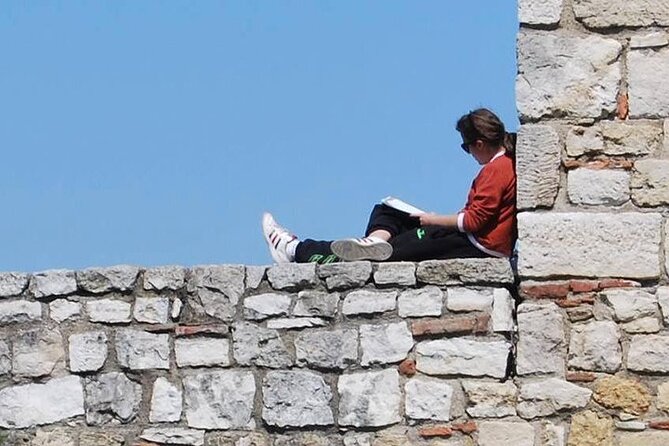
A private tour means only your group takes part, with a maximum of eight people. That is a major advantage if you want to ask questions or adjust the conversation toward art, military history, religion, or politics.
It is also a good fit for families. You can ask the guide to explain a complicated event in simpler terms, pause when someone needs a break, or spend more time on the fortifications that interest your group.
The main limitation is that a private tour is only as strong as the guide and the match between guide and group. The praise for Igor centers on passion, conversation, and detail. If you prefer a fast checklist of sights with very little interpretation, this may feel too talkative.
The route lasts about an hour and a half. That is enough to see the key areas and form a clear picture of the fortress, but you should not expect a full archaeological examination of every tower or underground space. Think of it as a thoughtful introduction that may leave you wanting to return on your own.
Practical details for walking the fortress
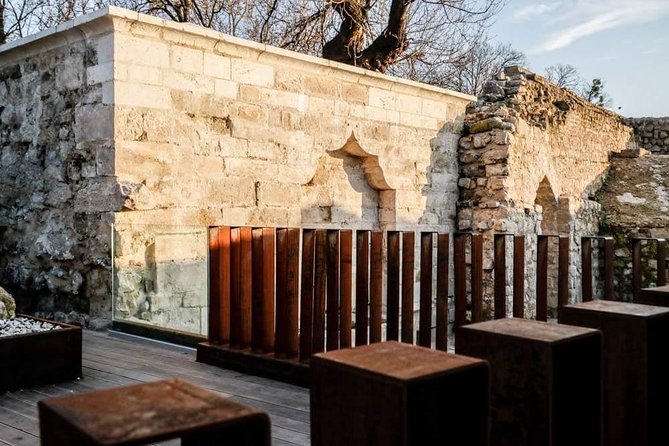
The tour is offered in English and includes a professional art historian guide. Admission is included, and no additional tour charge is listed. You receive confirmation at booking, and mobile tickets make the arrangement simple.
You should have a moderate level of physical fitness. The walk includes historic gates, walls, towers, dungeons, park paths, and uneven areas associated with a fortress complex. The exact route details are not specified, so comfortable walking shoes are a sensible choice.
Service animals are allowed, and the meeting area is near public transportation. The finish at Pariska 11 is useful because you can continue into central Belgrade after the tour.
Free cancellation is available if you cancel at least 24 hours before the start time. A cancellation or change made less than 24 hours in advance is not accepted for a refund, and the cut-off follows local time.
Who will get the most from this tour?
I would choose this experience if you have limited time in Belgrade but want more than a quick look at the fortress walls. It is particularly good for people who enjoy political history, military sites, architecture, and local interpretation.
It also suits a small private group that wants a shared experience without strangers. Families with older children may appreciate the stories about sultans, underground chambers, bombing, and Cold War danger.
I would be more cautious if you need a fully accessible route, since the information only specifies moderate physical fitness and does not provide detailed accessibility notes. I would also look elsewhere if you want a long museum visit, because this is a walking tour through the fortress and park.
The strongest reason to book is the guide’s storytelling. The most praised qualities are Igor’s passion, his ability to explain difficult history, and his willingness to discuss present-day controversies. Ksenija also leads tours, and the experience can work well with a guide who encourages questions rather than rushing from one stop to the next.
Should you book the Belgrade Fortress tour?
Book it if you want the fortress explained rather than merely photographed. For $66.01 per person, the price makes the most sense for a private group of several people, a family, or anyone who values a personal conversation with an art historian.
Choose a morning or daytime departure if clear views are your priority. Choose sunset if you want the rivers, park, and city skyline in softer light. Either way, allow yourself extra time afterward, because ninety minutes may give you a strong appetite for more of Belgrade’s complicated story.
FAQ
How long does the Belgrade Fortress tour last?
The tour lasts approximately 1 hour and 30 minutes.
How much does the tour cost?
The listed price is $66.01 per person.
Is the tour private?
Yes. Only your group participates in the activity.
How many people can join the private tour?
The tour can be booked for a group of up to eight people.
What language is the tour offered in?
The tour is offered in English.
What is included in the experience?
The experience includes a professional art historian guide, a private tour, and admission tickets where required.
Where does the tour start?
The meeting point is Art Pavilion Cvijeta Zuzorić at Mali Kalemegdan 1 in Belgrade.
Where does the tour end?
The tour ends at the Embassy of France at Pariska 11, Belgrade 11000.
Can I cancel for a full refund?
Yes, if you cancel at least 24 hours before the experience start time. Cancellations or changes made less than 24 hours before the start time are not accepted for a refund.
Just added around Belgrade
- Private Wine Tasting by Party in Belgrade★ 5.0 · 3 reviews
- Private Walking Tour of Belgrade and Old Zemun★ 5.0 · 3 reviews
- E-Scooter Serbian Food Tour★ 5.0 · 3 reviews
- Belgrade: The White Emigration in Serbia in the Wake of the Russian Revolution★ 5.0 · 3 reviews
- Zica and Studenica monastery From Belgrade★ 5.0 · 3 reviews
- Belgrade Private Driving & Walking Tour★ 5.0 · 4 reviews
- Feel Belgrade Welcome tour★ 4.5 · 3 reviews
- Novi Sad Saturday Full day trip★ 4.0 · 4 reviews