
Reviewed · 1-DAY TOURS
Belgrade Sightseeing Half-Day Trip Old and New Belgrade
Belgrade reveals itself in layers. This private three-hour tour connects Kalemegdan Fortress and the old city with New Belgrade’s bold socialist architecture, then adds Saint Sava Temple, Dedinje, royal palaces, and Republic Square. I like the efficient route, and I like having a guide explain Serbia’s complicated 20th-century story while you ride between sights. The main tradeoff is pace: you see a great deal, but several places are photo stops rather than long visits.
The tour costs $150.85 per person, which is a serious price for three hours. It makes better financial sense for a small group sharing a private vehicle than for one person alone. Pickup, transport, a professional English-speaking guide, fuel, parking, water, and entry to Saint Sava Temple are included, so you are paying for convenience as well as commentary.
In This Review
- Key points at a glance
- Why this route works for a first look at Belgrade
- Kalemegdan and the fortress: Belgrade’s best opening chapter
- Pobednik and the Upper Town: statues, gates, and river views
- New Belgrade: a sharp change in architecture
- Dedinje, football, and Tito’s Yugoslavia
- Saint Sava Temple: the visual high point
- Government streets and royal Belgrade
- Republic Square: a practical finish
- Price, transport, and the question of value
- Who should book this Belgrade tour?
- Should you book it?
- FAQ
- How long does the Belgrade sightseeing tour last?
- What time does the tour start?
- Is hotel pickup included?
- Is pickup from Belgrade Airport available?
- Is this a private tour?
- What is included in the price?
- What language is the tour offered in?
- Can I cancel for a full refund?
Key points at a glance
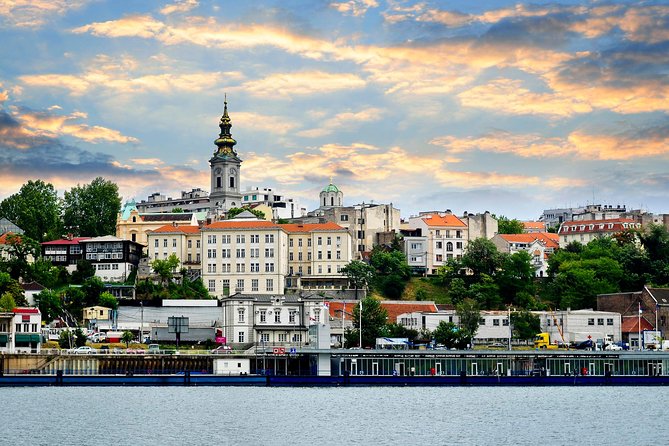
- Walk through Belgrade Fortress: See Roman and medieval remains, Orthodox chapels, historic gates, and the meeting point of the Sava and Danube.
- Compare old and new Belgrade: The route moves from fortress walls to New Belgrade’s concrete modernism, including Genex Tower and Sava Center.
- Reach Saint Sava Temple: Enter one of the world’s largest Orthodox churches and see its huge dome and decorated crypt.
- Travel in a private vehicle: A sedan serves one to three people, while a minivan handles four to seven.
- Hear Serbia’s 20th-century story: Dedinje, Tito’s former resting place, royal buildings, football rivalry, and socialist architecture all add context.
- Good for a first visit: The route gives you a broad city picture quickly, especially if you have only a morning or a short stopover.
Why this route works for a first look at Belgrade
Belgrade is spread across several distinct areas. The old center sits near the confluence of the Sava and Danube, while New Belgrade lies across the river and Dedinje stretches south through quieter residential streets. Seeing these districts in one outing gives you a useful map in your head.
I especially like the contrast built into the route. You begin with Roman and medieval Belgrade, move through the concrete architecture of socialist Yugoslavia, pass wealthy Dedinje, and finish among the central squares and government buildings of modern Serbia.
The format also suits a first morning in town. You are not left trying to decode bus routes or work out how far the fortress is from Saint Sava Temple. The guide and driver handle the connecting roads, while you walk only at the main stops.
The private setup matters. Your group is the only group on the tour, and several guides have adjusted the pace for individual interests, hot weather, or limited mobility. Alexander, Ivan, Milosh, Vladimir, Stefan, and Aleksandar are among the guides praised for clear explanations, patience, and friendly service. Guide names can vary, but the pattern is useful: expect a personal experience rather than a fixed script.
More tours and experiences worth your time
- Half-Day Sightseeing and Walking Tour of Belgrade City
★ 5.0 · 37 reviews - “Golden Standard” Private Half-Day Sightseeing Tour of Belgrade
★ 5.0 · 5 reviews - Private Half Day Serbia Tour Novi Sad and Petrovaradin Fortress
★ 5.0 · 3 reviews
Kalemegdan and the fortress: Belgrade’s best opening chapter
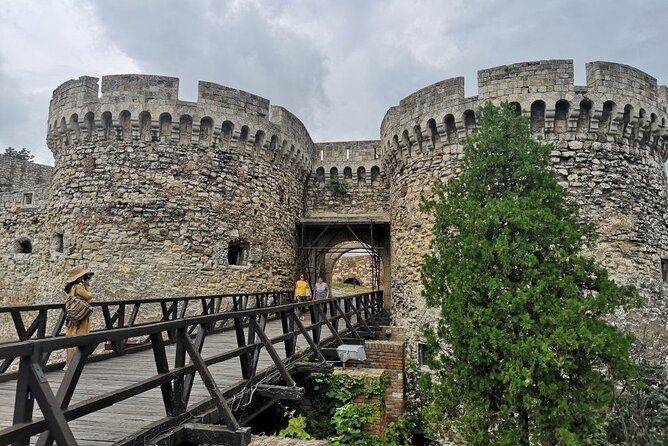
Your pickup is followed by a short drive to Kalemegdan Park, the city’s oldest and largest central park. The walking portion begins near Leopold’s Gate and leads into Belgrade Fortress, built on the site of the Roman castrum Singidunum.
This is the most substantial walking section of the tour. You pass the Zindan Gate, Despot’s Gate, and Jakšića Tower, all tied to the fortress’s medieval defenses. The remains show how Belgrade grew layer by layer, with later walls built over earlier Roman foundations.
Two small Orthodox churches add a more intimate side to the fortress. You visit the Chapel of Saint Petka and Ružica Church, also known as the Church of the Virgin Mary. They provide a quieter counterpoint to the broad defensive walls and open parkland.
The best moment comes in the Upper Town. From here, you get the famous view toward the meeting of the Sava and Danube. It is one of the places where the city’s geography suddenly makes sense. The rivers explain Belgrade’s military importance and also its long role as a meeting point between different powers.
Plan for about 30 minutes in this first section, though the actual pace may depend on your guide, weather, and walking ability. The ground is not presented as a strenuous hike, but you should still wear sensible shoes. The tour requires a moderate level of physical fitness, and the fortress section is the part most likely to feel demanding if your knees or balance are troublesome.
Pobednik and the Upper Town: statues, gates, and river views
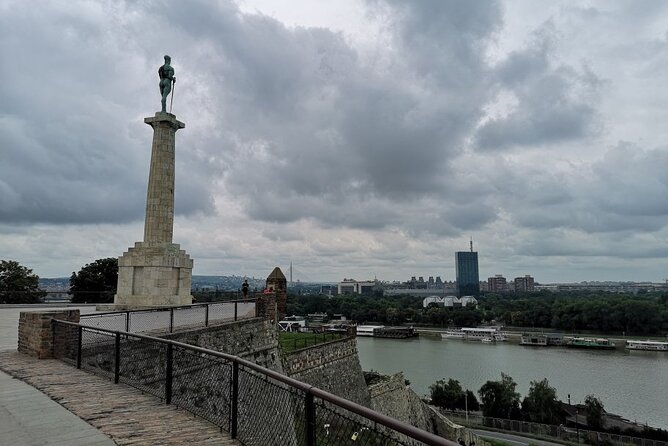
The walk continues through the Upper Town to Pobednik, the Victor monument by sculptor Ivan Meštrović. This is one of Belgrade’s most recognizable symbols, with the figure looking out over the rivers and city.
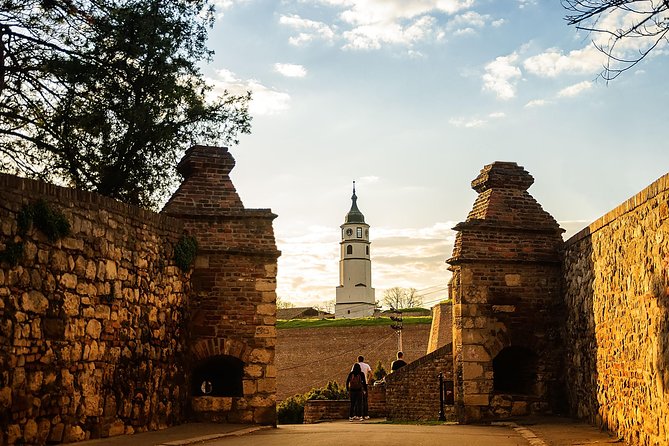
The route also passes the Roman Well, King’s Gate, the Sava Promenade, the Damat Ali Pasha Tomb, Sahatkapija Clock Gate, and Sahatkula Clock Tower. You then pass the Military Museum and leave through Istanbul Gate, also called Stambol Gate.
Back in Kalemegdan Park, you see Meštrović’s Monument of Gratitude to France and busts honoring Serbian writers. This section is useful because it mixes military history, public monuments, and national culture without requiring a separate museum visit.
After this walk, you return to the vehicle. That change of pace is welcome. The tour is designed as a mix of short walks and drives, not as a continuous city hike.
New Belgrade: a sharp change in architecture
Across the river, New Belgrade gives you a completely different view of the capital. Developed after World War II under socialist Yugoslavia, it is known for large public buildings, broad planning, and concrete modernism.
The route includes the former Central Committee of the Communist Party, the Palace of the Federation, Genex Tower, and Sava Center. Genex Tower, also called the Western Gate of Belgrade, is particularly memorable for its unusual paired-tower form.
New Belgrade’s architecture once attracted enough attention for New York’s Museum of Modern Art to feature it in an exhibition called Toward a Concrete Utopia. That context helps you look past the plain surfaces. You are not simply passing large concrete blocks. You are seeing the physical design of a political system and an era that wanted to build a new society from scratch.
The area also shows newer commercial construction beside older brutalist buildings. You pass Novak, the restaurant owned by Novak Djokovic’s family, and Belgrade Arena, the city’s major sports venue.
This part is mainly viewed from the vehicle, so it is best approached as a guided architectural ride. If you want to study buildings closely or photograph every detail, three hours will feel short. If you want to understand why Belgrade looks unlike many European capitals, New Belgrade earns its place on the route.
Something different for your next free day:
- Northern Serbia: Sremski Karlovci and Novi Sad Full-Day Tour from Belgrade
★ 5.0 · 425 reviews - Day Trip from Belgrade: Gems of Eastern Serbia
★ 5.0 · 424 reviews - Belgrade Nightlife Bar Pub Club Crawl with Drinks
★ 5.0 · 277 reviews - Taxi to/from Belgrade Airport to/from Belgrade City Center
★ 5.0 · 241 reviews
Dedinje, football, and Tito’s Yugoslavia
After crossing Gazela Bridge, the tour heads toward Dedinje, one of Belgrade’s most prestigious residential districts. The area’s large houses and greenery offer a quieter change from the fortress and city center.
Your guide explains some of the properties and their connection to Serbia’s turbulent 20th century. This is one of the more useful parts of the drive because the buildings are not treated as decoration alone. Their owners, political connections, and changing fortunes help explain how power moved through the city.
You also pass Rajko Mitić Stadium, home of Red Star Belgrade, and the nearby stadium of Partizan Belgrade. Their rivalry has lasted more than 70 years, and the tour connects it to local identity rather than treating football as a side note. Red Star’s 1991 European Cup victory is also part of the story, making this a good stop for anyone interested in sport and Balkan culture.
The route may include the Museum of Yugoslavia and House of Flowers, where Josip Broz Tito is buried. The supplied schedule does not describe a full museum visit, so do not assume you will have time to explore the interiors. The value here is the setting and the explanation of Tito’s place in the history of the second Yugoslavia.
Saint Sava Temple: the visual high point
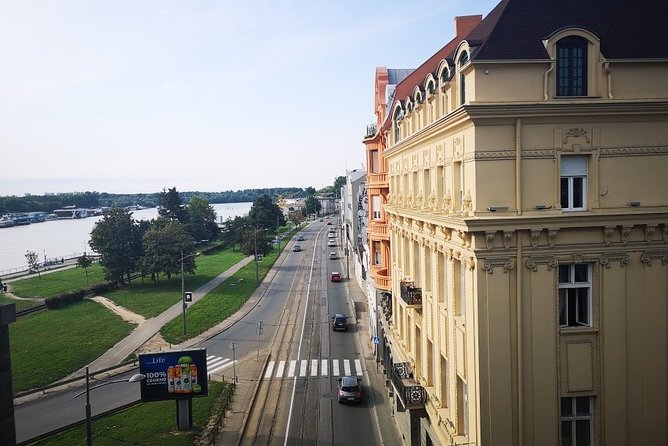
From Dedinje, you continue to Vračar and Saint Sava Temple. The church’s dome can be seen from many parts of Belgrade, but its scale becomes clearer once you are standing in front of it.
Construction began in the 1930s on the site where Ottoman forces burned the relics of Saint Sava. Saint Sava founded the independent Serbian Orthodox Church and remains one of the most important figures in Serbian history.
The church follows a Serbian-Byzantine design. Its floor area measures about 3,500 square meters, with another 1,500 square meters in three first-level galleries. The dome reaches 70 meters, and the central gilded cross adds another 12 meters, bringing the total height to 82 meters.
You are allowed to enter the temple, and admission is included. The decorated crypt beneath the church is an important part of the visit, although the exact amount of time spent inside can vary. This is a place where a guide’s explanation helps, since the scale alone does not tell you why Saint Sava matters so much to Serbian people.
The stop lasts about 30 minutes. That is enough to see the main interior and take photographs, but not enough for a slow architectural study. If Saint Sava Temple is your main reason for coming, you may want to return independently later.
Government streets and royal Belgrade
Once you leave Vračar, the vehicle passes through Slavija Square and Nemanjina Street. This road is lined with important government institutions, including the Government Building, Ministry of Foreign Affairs, General Staff of the Serbian Army, Ministry of Railways, Ministry of Finance, and the State Court.
The buildings also show Belgrade’s prewar architectural character. This drive adds something that a simple monument tour often misses: the city’s institutional face. You see where authority was organized, not just where famous statues were placed.
Kralja Milana Street brings you toward the Old and New Royal Palaces. At Nikola Pasic Square, the guide explains the monument to the first prime minister of the Kingdom of Yugoslavia and the two dynasties that ruled Serbia during the 19th and 20th centuries.
A short stop in front of the National Assembly gives you time for photographs. This is not a full palace or parliament visit, but the explanation links Serbia’s royal past with its present political center.
You then pass Terazije Square, its 19th-century white stone fountain, and the Moskva Hotel, one of central Belgrade’s most admired buildings. From the vehicle, this section works as a compact introduction to the city’s grand central streets.
Republic Square: a practical finish
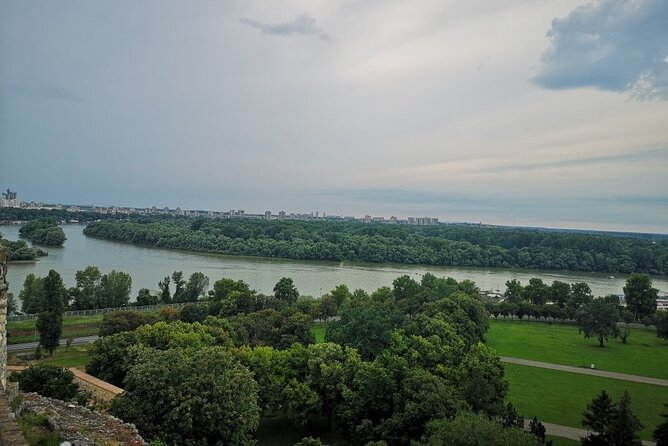
The tour ends at Republic Square, the center of Belgrade’s cultural life. The National Museum and National Theatre face the square, and Prince Mihailo’s monument provides a natural point for the guide to explain his importance in modern Serbian history.
Ending here is practical. You are close to major central sights and can continue exploring on foot after the guide leaves. It also means the tour finishes in a useful part of town rather than at an outlying attraction.
The scheduled stop lasts about 15 minutes. Treat it as an orientation point, not a full cultural visit. You will hear the key facts and identify the buildings, then can return later if you want to enter the museum or theatre.
Price, transport, and the question of value
At $150.85 per person, this is not a budget sightseeing ride. The cost is easier to justify if two to seven people share the private booking, since you receive a dedicated guide, private transport, hotel pickup and drop-off, fuel, parking, water, and Saint Sava Temple entry.
For a solo visitor, the price is harder to defend unless your time is very limited. A layover is a strong use case. One traveler with a short overnight stop found the tour ideal for seeing much of Belgrade before a late afternoon flight. You also avoid losing time arranging taxis between Kalemegdan, New Belgrade, Dedinje, and Vračar.
The vehicle is an air-conditioned sedan for one to three people or a minivan for four to seven. That matters in hot weather, and one guide, Alexander, was praised for finding shade and reminding people to drink water during a very warm outing.
The advertised duration is about three hours, but allow for some variation. Traffic, walking speed, weather, and the amount of discussion can affect the finish time, and some bookings have felt closer to two hours. If you need to reach the airport or catch a train, leave a generous buffer.
Pickup is free from a hotel, Airbnb, or pension within five kilometers of Republic Square, as well as Belgrade port. Pickup between five and ten kilometers costs an extra 10 EUR. Airport pickup costs 15 EUR. Confirm a more distant address directly before booking.
Who should book this Belgrade tour?
I would choose this for a first visit, a short stay, a layover, or anyone who wants a clear city overview before exploring alone. It also suits families and mixed-age groups because the vehicle reduces long walks, while the private format lets the guide adjust the pace.
The tour is a good fit if you want history, architecture, politics, and local football culture in one compact outing. It is less suitable if you prefer long museum visits, slow photography, or several hours in one neighborhood.
The strongest part is the guiding. Past outings have praised Alexander, Aleksandar, Ivan, Milosh, Vladimir, and Stefan for clear English, friendly manners, patience, and the ability to answer questions. One guide adapted the route for a parent who could not walk far, while another adjusted explanations for children aged seven and ten.
You should also know that gratuities are optional and not included. Free cancellation is available up to 24 hours before the start time, but changes or cancellations inside that window are not accepted for a refund.
Should you book it?
Book it if you want a fast, private introduction to Belgrade and value an English-speaking guide more than extended time at each sight. The route is broad, smart, and full of contrasts, from Roman walls and Orthodox chapels to socialist towers, royal streets, and Saint Sava’s vast dome.
Skip it if $150.85 feels too high for a short overview or if your priority is entering museums and lingering inside historic buildings. For most first-time visitors with limited time, though, this is a useful way to get oriented, learn the city’s difficult story, and decide where to return on your own.
FAQ
How long does the Belgrade sightseeing tour last?
The advertised duration is approximately three hours. Actual timing can vary with traffic, walking pace, weather, and the amount of time spent discussing each stop.
What time does the tour start?
The scheduled start time is 9:30 am.
Is hotel pickup included?
Yes. Free pickup is offered from hotels, Airbnbs, and pensions within five kilometers of Republic Square, as well as from Belgrade port.
Is pickup from Belgrade Airport available?
Yes. Airport pickup is available for a supplement of 15 EUR.
Is this a private tour?
Yes. Only your group participates. Transport is by private sedan for one to three people or an air-conditioned minivan for four to seven.
What is included in the price?
The tour includes hotel pickup and drop-off, transport, an English-speaking professional guide, fuel, parking fees, Saint Sava Temple entry, and one bottle of water per person.
What language is the tour offered in?
The tour is offered in English.
Can I cancel for a full refund?
Yes, if you cancel at least 24 hours before the experience start time. Cancellations or changes made less than 24 hours in advance are not refunded or accepted.
Just added around Belgrade
- Private Wine Tasting by Party in Belgrade★ 5.0 · 3 reviews
- Private Walking Tour of Belgrade and Old Zemun★ 5.0 · 3 reviews
- E-Scooter Serbian Food Tour★ 5.0 · 3 reviews
- Belgrade: The White Emigration in Serbia in the Wake of the Russian Revolution★ 5.0 · 3 reviews
- Belgrade Private Driving & Walking Tour★ 5.0 · 4 reviews
- Feel Belgrade Welcome tour★ 4.5 · 3 reviews
- Zica and Studenica monastery From Belgrade★ 5.0 · 3 reviews
- Belgrade Fashion and Design Tour – Discover Local Designers★ 5.0 · 4 reviews
1-Day Tours, compared.
Along the Danube: Golubac Fortress & Iron Gate Gorge day trip from Belgrade
Read our review →
Šargan Eight Railway, Wooden Town & House on Drina river day trip from Belgrade
Read our review →
Full Day Trip from Belgrade: Uvac Nature Reserve Tour
Read our review →
Browse the lists this tour appears in